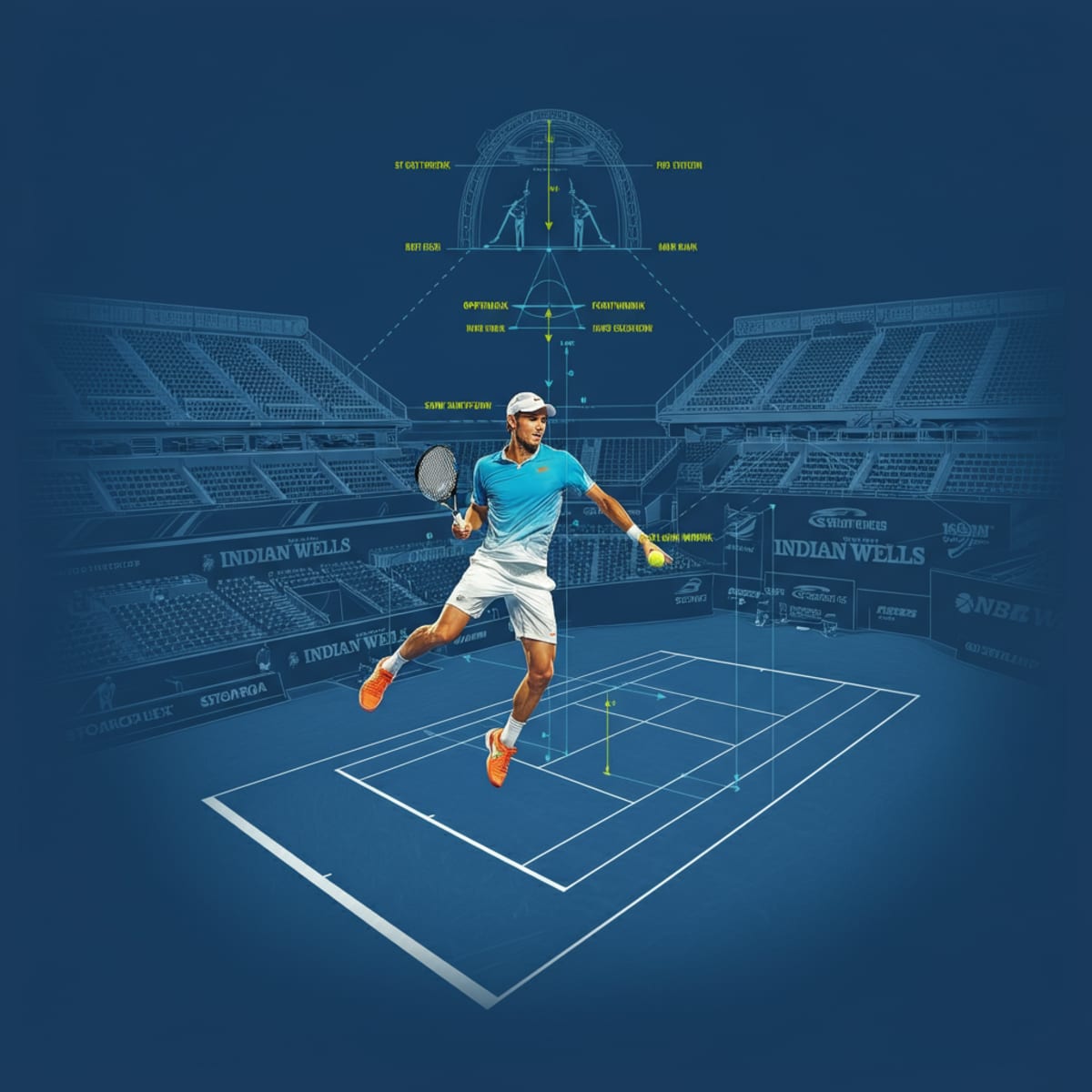
Indian Wells, darling. The 'fifth Grand Slam' as it's so often called. But strip away the sunshine and celeb sightings, and you're left with a beast of a tournament. Forget what you think you know. The first round is underway, and chaos is already brewing. This isn’t your average hard court slam.
Listen to the Second Serve Podcast
Get our daily AI-synthesized audio briefings and match reviews on the go.
Why? Because Indian Wells operates on its own peculiar logic, serving up upsets like overly ripe dates. The courts? Slower than a government committee, favoring grinders and tacticians over pure ball-bashers. Just ask anyone who's tried to blast their way through a week here. The desert air hangs heavy, the ball loses its zip, and suddenly that easy put-away feels like climbing Everest in flip-flops.
And that's before we even get to the pressure cooker atmosphere. The sheer scale of the place, the buzzing crowds… it gets to players. Even the seasoned veterans crack. Remember the 2021 final? Cameron Norrie versus Nikoloz Basilashvili? Proof positive that anything can happen on these sun-baked courts. It’s a tournament renowned for producing unpredictable results. Unpredictable. Let that word sink in.
Why Indian Wells Defies Prediction
So, what makes this patch of California desert such a fertile ground for the unexpected? It's a perfect storm of factors:
- The Courts: These aren't your typical hard courts. They play slow. Players who rely on pace and power need to adjust, and quickly.
- The Atmosphere: The sheer size of the venue, the crowds, the media attention – it all adds up to immense pressure.
- The Transition: Coming off faster surfaces, players often struggle to adjust their game. Timing is off, confidence wavers, and the door opens for the underdogs.
The Tactical Breakdown
The key to navigating Indian Wells? Rally tolerance. This isn't about blasting winners; it's about constructing points, wearing down your opponent, and exploiting those inevitable errors that come from fatigue and frustration. Think of it as tennis trench warfare.
Players like Carlos Alcaraz, while possessing incredible firepower, need to temper that aggression. His game is built around controlled aggression, but the conditions here demand patience and precision. He needs to find the right balance between dictating play and absorbing pressure. The flatter you hit the ball, the more unforgiving these courts are. Topspin is your friend here, folks.
Serve placement becomes paramount. Forget aces; focus on getting the ball into play and setting up advantageous court positioning. Attack the backhand. Always attack the backhand. Historically, players who can effectively target and exploit a weaker backhand wing have thrived here. Angle, depth, and consistency win the day. Net approaches need to be judicious and well-constructed, not just opportunistic. A poorly timed net rush is a quick way to lose momentum.
The Bigger Picture
Indian Wells often acts as a bellwether for the season. A strong showing here can provide a massive confidence boost, while a disappointing result can send a player spiraling. It's a marathon, not a sprint, but a deep run here signals that a player is prepared for the rigors of the tour. It separates the pretenders from the contenders.
While it lacks the official status of a Grand Slam, Indian Wells carries significant weight. It’s a Masters 1000 event, offering valuable ranking points and prestige. For players like Alcaraz, it's an opportunity to solidify their position at the top of the game, while for others, it's a chance to make a statement and disrupt the established order. The history is there, look at Federer, Sampras, Djokovic, and Nadal all having some of their best or worst tennis here. Indian Wells is an enigma.
Ultimately, Indian Wells is a reminder that tennis isn't always about brute force. It's about strategy, resilience, and adaptability. It's a test of mental fortitude as much as physical prowess. And that's why, despite its quirks and its unpredictable nature, we keep coming back for more.
What Carlos Alcaraz Plays With
Babolat Pure Aero 98
Babolat RPM Blast 1.30
Nike Vapor Pro 2
Analyze Carlos Alcaraz vs. Federer
Predict tactical adjustments, momentum swings, and serve strategy options for this match-up using our AI simulator.
The Aces Tactical Panel
This report was curated and edited by Bhaskar Goel. Tactical analysis and technical insights were provided by our specialized panel of expert correspondents.
Julian Price
Senior Tactical Correspondent
Stuffy, pedantic British academic and historian specializing in match momentum and historical context.
Elena Cruz
Director of Analytical Research
Data scientist specializing in court surface physics and movement patterns.
Bhaskar
The Editor & Fan
Passionate tennis player and site editor bringing everyday amateur insights and relatable fan commentary.
Arthur Vance
Senior Existential Analyst
Deep, eccentric, and DFW-inspired. Models court metaphysics, kinetic beauty, and player psychology.
Leo Sterling
High-Performance Consultant
Hard-nosed ex-trainer from Melbourne with a no-nonsense view on tour fitness.