Echoes of the Five-Set Era
There exists a specific, almost spectral quality to the memory of five-set tennis in the women's game. It occupies a space in our collective consciousness somewhere between a forgotten relic and a dormant ambition. Gabriela Sabatini, an icon whose career was defined by elegance and a profound tactical intuition, recently found herself navigating this precise intersection. Having reached the WTA Finals four times during an era when the championship climaxed under the best-of-five format, her perspective serves as both a historical anchor and a lens through which we view current discourse.
Listen to the Second Serve Podcast
Get our daily AI-synthesized audio briefings and match reviews on the go.
The archival weight of this history is substantial. We look back to 1998, a year that marked the final occasion of such a spectacle in professional women's tennis, as Martina Hingis and Lindsay Davenport engaged in a battle of attrition that has not been replicated in the quarter-century since. It is a curious vacuum—a format that once tested the physical and mental limits of legends like Monica Seles and Steffi Graf, only to vanish into the periphery of tactical discussion.
Sabatini’s reflections bring a necessary gravity to these conversations. To play five sets is not merely to add two additional frames; it is to fundamentally alter the mathematics of recovery and the pacing of momentum. It demands a recalibration of the nerves, a willingness to inhabit a match for hours on end, transforming a sprint into a grueling, operatic marathon that demands a different taxonomy of physical conditioning than the standard three-set architecture.
The Modern Pragmatism of Sabalenka and the Tour
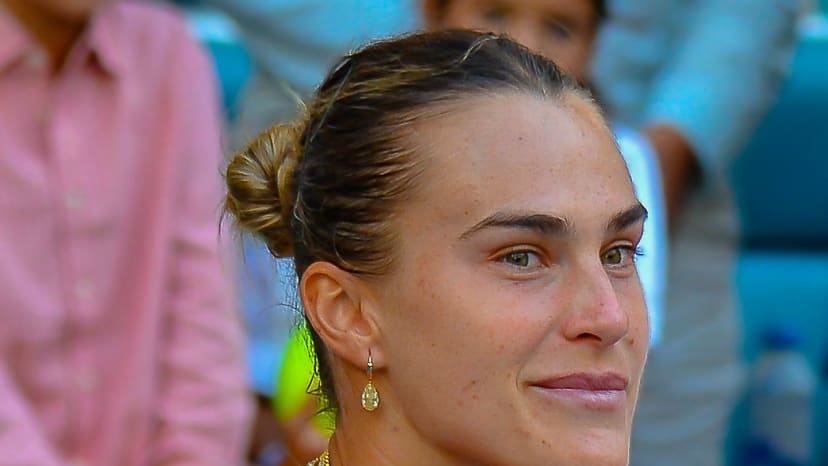
The contemporary conversation, however, is rarely rooted in the nostalgia of the 90s. It is deeply pragmatic. Aryna Sabalenka, a figure whose power-baseline game acts as a lightning rod for this debate, has been vocal about her evolution on the subject. Having previously expressed a reluctance—a self-professed 'not ready' stance—she has shifted, signaling an openness to a change that would redefine the competitive landscape of the WTA rankings and the physical toll on the world's elite.
This openness does not exist in a vacuum. It is being pulled forward by strategic architects like former Australian Open director Craig Tiley, who has posited the implementation of five-set matches starting from the quarterfinal stage. Such a structural adjustment would not just add sets; it would change the entire biomechanical calculus of a tournament run. The question remains whether the sport is prepared to endure the physiological tax, or if the current three-set paradigm is perhaps the perfect, distilled essence of modern intensity.
Observers like Pam Shriver have long understood the technical nuances of such transitions, and the emerging voices of the next generation—players like Elena Rybakina, Iga Swiatek, and the teenage sensation Mirra Andreeva—represent the future recipients of these potential rule shifts. Their game, built on high-RPM topspin and explosive court coverage, would face a brutal, fascinating test should the five-set curtain rise again.
What Aryna Sabalenka Plays With
Wilson Blade 98 v9 (16x19)
Luxilon ALU Power 125
Wilson Pro Overgrip (12-Pack)
Analyze Gabriela Sabatini vs. Aryna Sabalenka
Predict tactical adjustments, momentum swings, and serve strategy options for this match-up using our AI simulator.
The Aces Tactical Panel
This report was curated and edited by Bhaskar Goel. Tactical analysis and technical insights were provided by our specialized panel of expert correspondents.
Julian Price
Senior Tactical Correspondent
Stuffy, pedantic British academic and historian specializing in match momentum and historical context.
Elena Cruz
Director of Analytical Research
Data scientist specializing in court surface physics and movement patterns.
Bhaskar
The Editor & Fan
Passionate tennis player and site editor bringing everyday amateur insights and relatable fan commentary.
Arthur Vance
Senior Existential Analyst
Deep, eccentric, and DFW-inspired. Models court metaphysics, kinetic beauty, and player psychology.
Leo Sterling
High-Performance Consultant
Hard-nosed ex-trainer from Melbourne with a no-nonsense view on tour fitness.