A Departure from the Statistical Norm
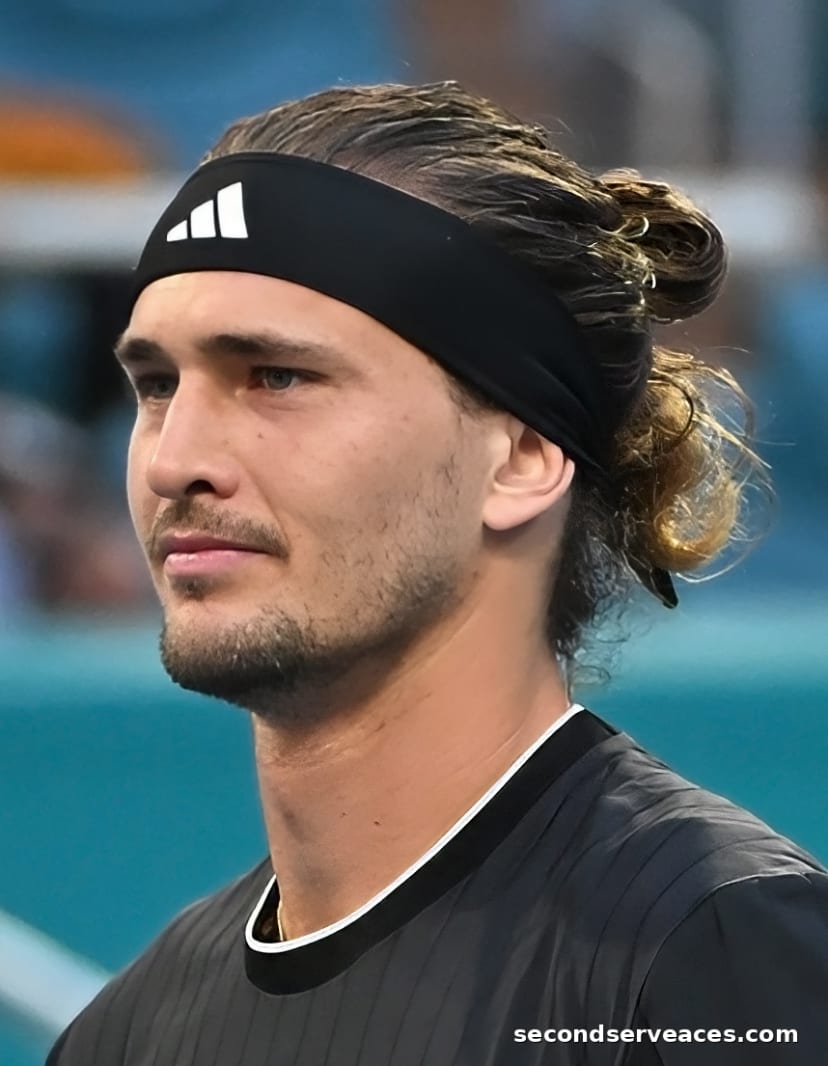
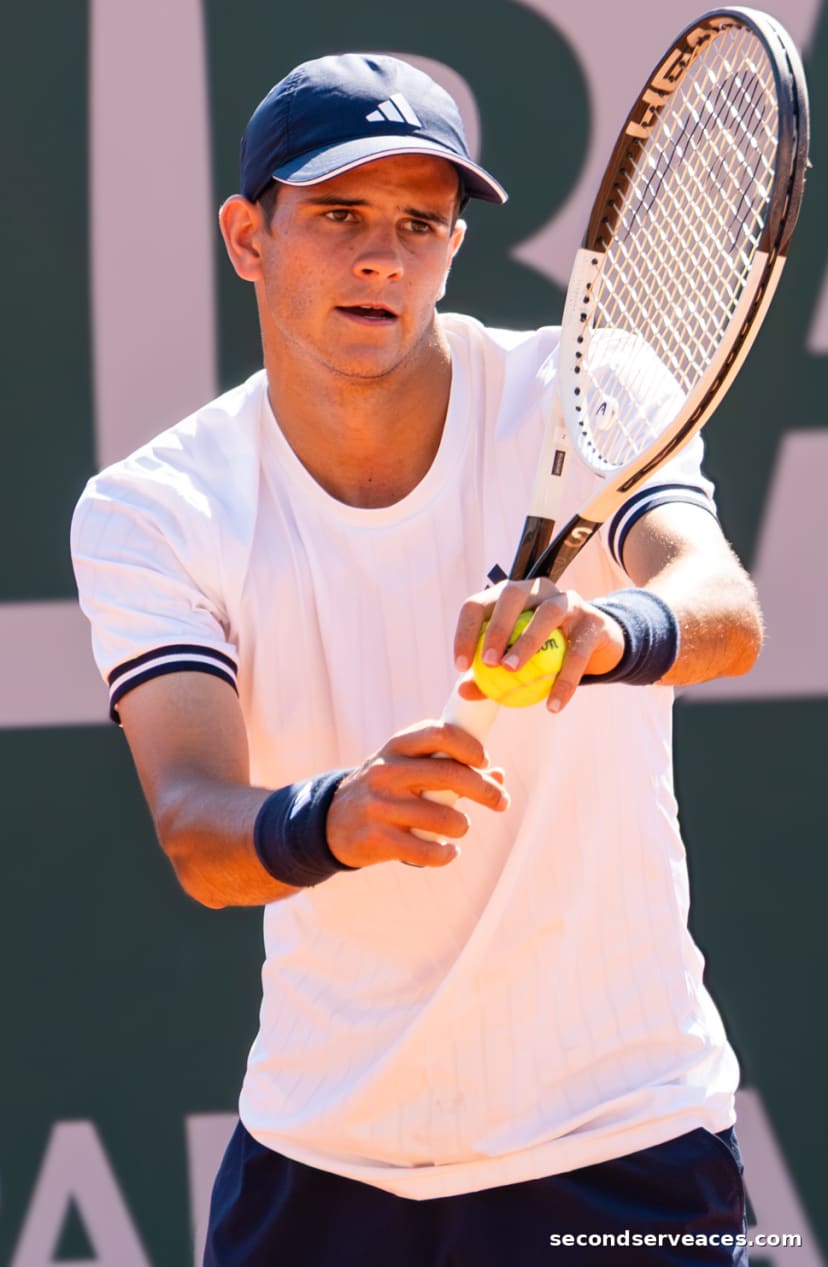
There is a specific, quiet violence in the way a tennis match suddenly, irrevocably shifts. At the Bavarian Open, Flavio Cobolli didn't just play tennis; he orchestrated a systematic dismantling of top-10 architecture. To defeat a player of Alexander Zverev’s stature—a man whose reach and baseline geometry are usually impenetrable—is a rare alchemy. The 6-3, 6-3 scoreline does not merely represent a tally of games; it archives a structural collapse of Zverev’s defensive perimeter.
Listen to the Second Serve Podcast
Get our daily AI-synthesized audio briefings and match reviews on the go.
The most telling metric of this encounter was the disparity in free points. Cobolli recorded seven aces while Zverev managed zero. In the rarified air of high-level clay court tennis, where rallies often become interminable loops of topspin and attrition, the ability to punch through the resistance with an unreturnable serve is a luxury, not a given. Cobolli’s serve functioned not as a tool of raw power, but as a scalpel, finding the corners with enough frequency to disrupt the German’s rhythmic expectations.
Perhaps the most fascinating segment occurred during a sustained run where the young Italian claimed ten consecutive points. It is in these microscopic windows of time that a match is decided. Ten points of total, unwavering focus—a sequence that likely felt to Zverev like an closing of the lungs, a suffocating compression of space where every return landed just a hair too short, and every groundstroke from his opponent found the deepest, most uncomfortable pocket of the court.
The Emotional Geometry of the Court
We often treat the ATP tour as a machine—a cold, calculated engine of rankings and break points. Yet, beneath the surface of this semifinal, there existed a profound, grief-stricken human motivation. Flavio Cobolli did not just step onto the red clay for a ranking jump; he performed the labor in honor of a late friend. This adds a layer of metaphysical weight to the shot-making that the raw data cannot quantify.
When a player operates under the heavy burden of remembrance, the physical game often undergoes a subtle transmogrification. The tension in the shoulder eases, the decision-making under pressure becomes less fearful, and the court begins to shrink. Cobolli navigated the emotional minefield of his first career top-10 win with a clarity that seemed to bypass the usual nerves associated with such a milestone. He played with a singular focus that turned the baseline into a sanctuary rather than a battlefield.
This result signals an arrival. For those watching, the shift in Cobolli’s demeanor between the first serve and the final game was stark. He had entered the arena as a participant, but by the time he shook hands at the net, he had become an agent of change. His ability to sustain that ten-point streak was not merely a mechanical fluke; it was a testament to the internal equilibrium he maintained throughout the afternoon.
The Analytical Void Left by the Favorite
Zverev’s inability to manufacture a single ace on his own service games presents a fascinating tactical void. On the clay, where the ball sits up slightly longer than on faster surfaces, one expects the serve to be a foundation for the +1 forehand. Instead, the German found himself trapped in neutral, unable to dictate the point or force the Italian into the defensive corners he typically favors. It is a rare day when a top-10 player is rendered so singularly passive.
Cobolli’s approach was deceptively simple: he denied Zverev the angles required to change the direction of the ball. By pinning him in the center of the court, he forced a game of attrition that the Italian was better equipped to win. The match momentum never truly swung back to the favorite; once Cobolli breached the defense in that opening set, the outcome seemed written in the way he moved to cover the court.
We see this often in the evolution of young players—a moment of clarity where the 'impossible' opponent becomes a tangible target. By limiting Zverev’s rhythm and leveraging his own serve, Cobolli proved that the gap between the periphery of the top 100 and the elite is often a matter of pure, unadulterated belief. The next challenge, a final against Ben Shelton—who advanced by overcoming Alex Molcan—will be a fascinating test of whether this emotional momentum can be sustained.
Looking Toward the Final Horizon
The upcoming final at the Bavarian Open presents an aesthetic contrast that tennis fans should be salivating over. Shelton’s explosive, vertical game will clash against the grounded, rhythmic resilience that Cobolli displayed in this victory. After the dust settles on this semifinal, the question remains: can Cobolli replicate the emotional intensity that fueled his defeat of Zverev?
Tactically, the transition from the baseline-heavy chess match with Zverev to the high-voltage, chaotic energy of Shelton will be the true crucible. The clay will act as the great equalizer, demanding patience, but both players have shown a proclivity for ending points with authority. It is a narrative of two hungry players, one riding the wave of a maiden top-10 win and the other seeking to assert his own dominance on the surface.
Regardless of the final outcome, this match will be remembered as the moment the seal was broken. Seven aces, ten straight points, and a victory dedicated to a friend—these are the building blocks of a career that has finally found its trajectory. We are witnessing the maturation of a talent that, until now, was merely a collection of potential. The court is ready, and the stakes are officially higher.
What Alexander Zverev Plays With
Head Gravity Pro
Head Hawk Touch 1.25
Analyze Flavio Cobolli vs. Alexander Zverev
Predict tactical adjustments, momentum swings, and serve strategy options for this match-up using our AI simulator.
The Aces Tactical Panel
This report was curated and edited by Bhaskar Goel. Tactical analysis and technical insights were provided by our specialized panel of expert correspondents.
Julian Price
Senior Tactical Correspondent
Stuffy, pedantic British academic and historian specializing in match momentum and historical context.
Elena Cruz
Director of Analytical Research
Data scientist specializing in court surface physics and movement patterns.
Bhaskar
The Editor & Fan
Passionate tennis player and site editor bringing everyday amateur insights and relatable fan commentary.
Arthur Vance
Senior Existential Analyst
Deep, eccentric, and DFW-inspired. Models court metaphysics, kinetic beauty, and player psychology.
Leo Sterling
High-Performance Consultant
Hard-nosed ex-trainer from Melbourne with a no-nonsense view on tour fitness.