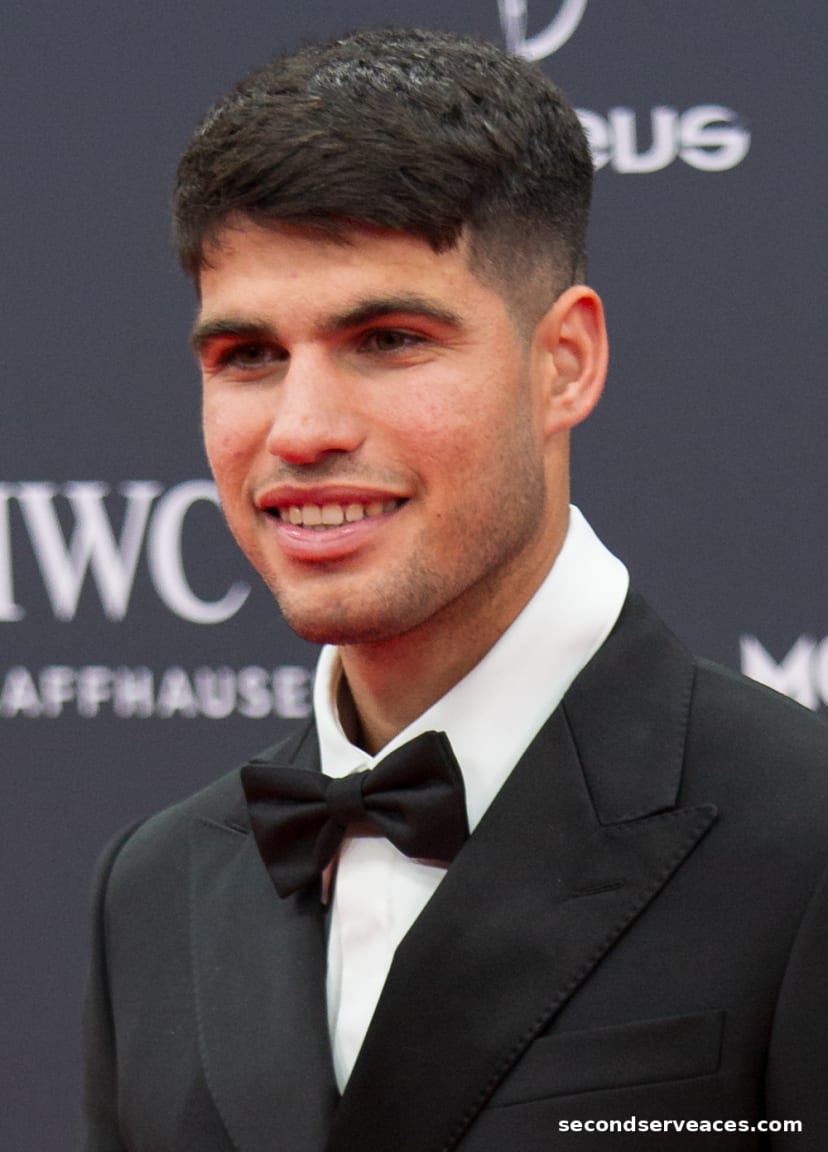
There is a specific, quiet tension that exists when a player occupies the threshold of history. Carlos Alcaraz, having already etched his name into the annals of the sport as the youngest male to complete the Career Grand Slam with his 2026 Australian Open victory, now finds himself in a different sort of arena: the maintenance of the myth.
Listen to the Second Serve Podcast
Get our daily AI-synthesized audio briefings and match reviews on the go.
The Burden of Sustained Excellence
Juan Carlos Ferrero, observing from the sidelines, speaks not of the trophies secured in Melbourne or Qatar, but of the relentless, microscopic discipline required to sustain such a trajectory. Tennis, at this level, is not merely a sequence of kinetic exchanges but a test of cognitive endurance. The brilliance of Alcaraz’s game—the blurring, topspin-heavy forehand and that peculiar, cat-like court coverage—is well-documented. Yet, Ferrero’s focus remains anchored in the necessity of the daily grind, the internal architecture that prevents the inevitable entropy of a young superstar's career.
Tactical Realities and the Clay Transition
The transition to the Monte-Carlo clay serves as an essential inflection point. Recent departures in the Indian Wells and Miami stretch at the hands of Daniil Medvedev and Sebastian Korda offered a necessary, if uncomfortable, reminder: the circuit is a living, breathing organism that demands constant adjustment. The geometry of the court changes when the ball bites into the red dust, slowing the pace and inviting a more patient, strategic manipulation of the baseline.
The Upcoming Test
Alcaraz faces Tomas Martin Etcheverry in the Round of 16 at the Monte-Carlo Masters. History provides a faint but illustrative echo here: the two met previously at a 2020 Challenger event in Trieste. The evolution of both men since that encounter in Italy is substantial, yet the essence remains the same—a battle of wills on the slowest surface the tour has to offer. For Alcaraz, this is not just about advancing to the next round; it is about refining the tactical nuance required to stay at the vanguard of the game, a position that requires as much psychological fortitude as it does raw, physical talent.
What Carlos Alcaraz Plays With
Babolat Pure Aero 98
Babolat RPM Blast 1.30
Nike Vapor Pro 2
Analyze Carlos Alcaraz vs. Jannik Sinner
Predict tactical adjustments, momentum swings, and serve strategy options for this match-up using our AI simulator.
The Aces Tactical Panel
This report was curated and edited by Bhaskar Goel. Tactical analysis and technical insights were provided by our specialized panel of expert correspondents.
Julian Price
Senior Tactical Correspondent
Stuffy, pedantic British academic and historian specializing in match momentum and historical context.
Elena Cruz
Director of Analytical Research
Data scientist specializing in court surface physics and movement patterns.
Bhaskar
The Editor & Fan
Passionate tennis player and site editor bringing everyday amateur insights and relatable fan commentary.
Arthur Vance
Senior Existential Analyst
Deep, eccentric, and DFW-inspired. Models court metaphysics, kinetic beauty, and player psychology.
Leo Sterling
High-Performance Consultant
Hard-nosed ex-trainer from Melbourne with a no-nonsense view on tour fitness.