The Biomechanical Toll of High-Velocity Baseline Tennis
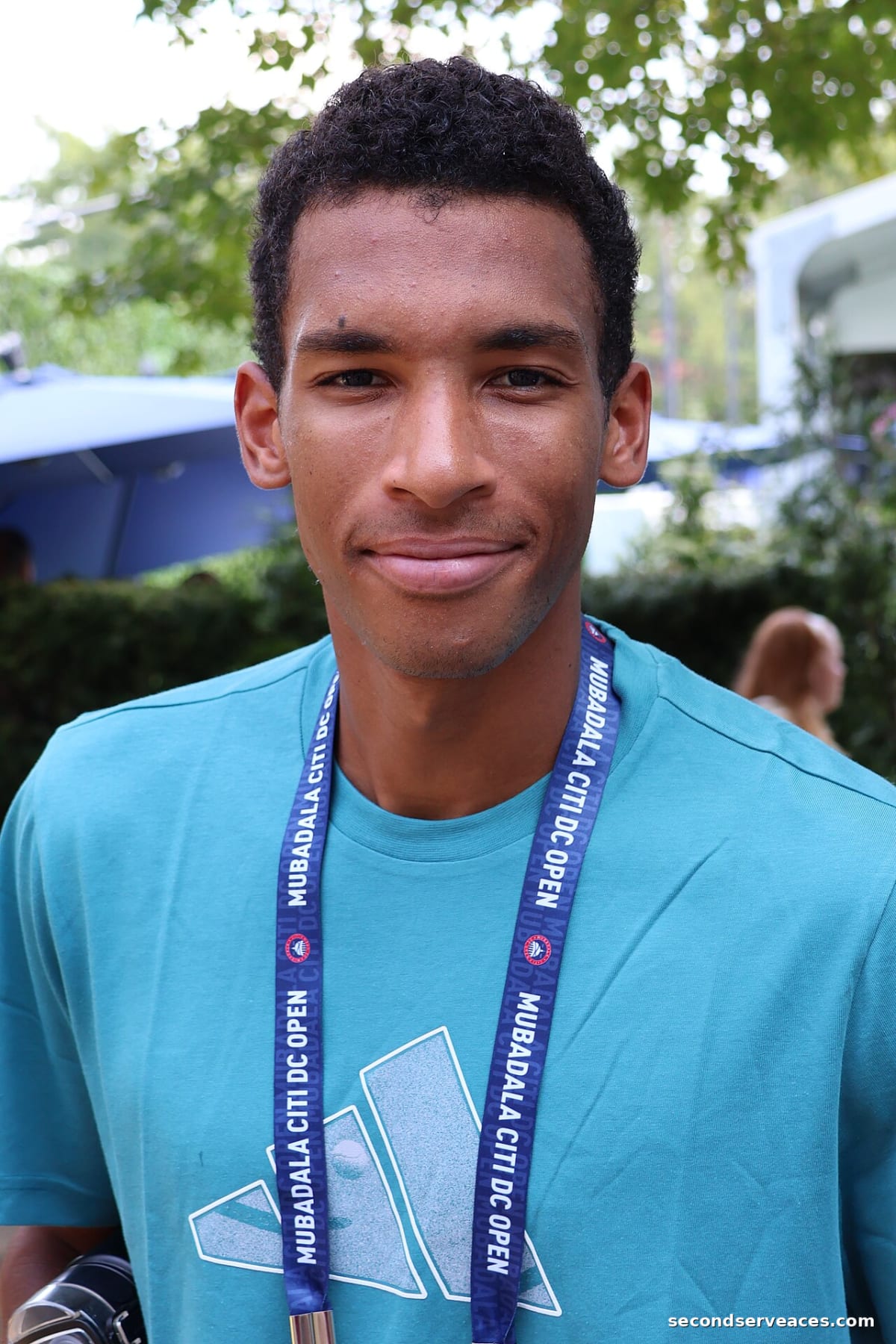
The physical demands of modern hard-court tennis have claimed another high-profile casualty. World No. 4 Felix Auger-Aliassime was forced to pull out of the National Bank Open in Montreal on Monday after experiencing sharp back pain during a high-intensity practice session. For a player whose entire tactical identity is built on explosive rotational force and a high-impact serve, back issues represent a significant threat to long-term structural durability.
Listen to the Second Serve Podcast
Get our daily AI-synthesized audio briefings and match reviews on the go.
At 1.93 meters, the Canadian relies heavily on extreme trunk rotation to generate leverage on his first serve. According to official data from the ATP Tour Home, this kinetic chain requires flawless synchronization between the lumbar spine and the hips. When that synchronization breaks down under the load of repetitive training on unforgiving hard courts, muscular spasms or joint inflammation can instantly compromise a player's lateral movement and loading capabilities.
This sudden physical setback is a massive blow for the home crowd in Montreal, who expected the tournament’s second seed to mount a deep run. Instead, the physical toll of the grueling North American summer swing has forced an early exit, raising serious questions about the durability of Auger-Aliassime's mechanical framework as he prepares for the final Grand Slam of the season.
A Coaching Divorce and the Quest for Technical Stability
The injury comes at a highly volatile juncture in the Canadian's career. Auger-Aliassime recently confirmed his split with longtime coach Frederic Fontang, a partnership that had defined his rise into the elite tier of the ATP rankings. Fontang had been instrumental in refining the aggressive baseliner's technical margins, but the decision to part ways suggests a desire to reconstruct his tactical blueprint.
Without a stable coaching setup, managing the physical and mechanical adjustments required to protect an injured back becomes exponentially more complex. A coaching transition often leads to subtle changes in training volume or mechanical execution, which can inadvertently stress different muscle groups. For a player searching for his optimal "bang for buck" on court, balancing technical rebuilding with physical rehabilitation is a delicate tightrope walk.
Finding a new coach who can optimize Auger-Aliassime's serve mechanics while reducing the cumulative load on his lower back will be critical. The aggressive baseline style that earned him nine career titles requires peak physical conditioning, and any compromise in his movement patterns will be ruthlessly exploited by lower-ranked opponents looking to break into the top tier.
The Montreal Casualty List and Canadian Hard-Court Attrition
Auger-Aliassime’s departure is not an isolated incident but rather the climax of a worrying trend of physical breakdowns for the host nation. The unforgiving hard courts of Montreal have proved highly taxing this week. Fellow Canadians Gabriel Diallo and Denis Shapovalov also suffered injury-related retirements during their respective matches, turning the tournament into a war of attrition for the local contingent.
The high friction and lack of give on modern hard courts amplify the shockwaves traveling through a player's joints during explosive change-of-direction movements. As we noted in our analysis of the grueling conditions during the ATP Montreal Day 1 predictions, the physical premium of this tournament demands exceptional durability. When multiple elite athletes from the same nation break down simultaneously, it highlights the immense physical load of the current tour schedule.
With the Canadian stars sidelined, the local fans must shift their attention to the remaining draw, which has been completely destabilized by these high-profile withdrawals. The loss of the second seed completely alters the projected path to the final, leaving the bottom half of the draw wide open for opportunistic competitors ready to capitalize on the vacuum.
Rivalry Matchup & Player Profiles
The withdrawal of the Canadian No. 1 has paved the way for Portuguese lucky loser Jaime Faria to enter the main draw. Faria will face France's Titouan Droguet, a solid baseliner who was originally scheduled to face a much more daunting opponent. This sudden shift in matchups completely resets the tactical dynamics of this section of the draw, offering both players a rare opportunity to secure valuable ranking points.
| Metric | Felix Auger-Aliassime | Titouan Droguet |
|---|---|---|
| Rank | No. 4 | No. 119 |
| Age | 25 | 25 |
| Country | Canada | France |
| Height | 1.93 m (6 ft 4 in) | 1.91 m (6 ft 3 in) |
| Handedness | Right-handed | Right-handed |
| Play Style | Aggressive baseliner | Solid baseliner / All-court |
| Career Titles | 9 | 0 |
Looking back at the historical data, Auger-Aliassime and Droguet have faced each other once before on the professional tour. According to their head-to-head records, the Canadian leads their matchup 1-0 after securing a victory in the Montpellier semifinals in February 2026. That match, which ended 6-4, 6-7(5), 6-1, showcased the stark contrast between Auger-Aliassime's high-octane offensive game and Droguet's counterpunching resilience.
Droguet, currently ranked No. 119 in the world, possesses a highly disciplined defensive game but lacks the sheer firepower of the top-five elite. With Auger-Aliassime out of the picture, Droguet's path becomes significantly less intimidating, though the addition of the hungry lucky loser Jaime Faria ensures that there will be no easy matches on the fast-playing Montreal courts.
What Novak Djokovic Plays With
Head Speed Pro
Luxilon ALU Power 125
Asics Court FF 3 Novak
Analyze Felix Auger-Aliassime vs. Titouan Drouget
Predict tactical adjustments, momentum swings, and serve strategy options for this match-up using our AI simulator.
The Aces Tactical Panel
This report was curated and edited by Bhaskar Goel. Tactical analysis and technical insights were provided by our specialized panel of expert correspondents.
Julian Price
Senior Tactical Correspondent
Stuffy, pedantic British academic and historian specializing in match momentum and historical context.
Elena Cruz
Director of Analytical Research
Data scientist specializing in court surface physics and movement patterns.
Bhaskar
The Editor & Fan
Passionate tennis player and site editor bringing everyday amateur insights and relatable fan commentary.
Arthur Vance
Senior Existential Analyst
Deep, eccentric, and DFW-inspired. Models court metaphysics, kinetic beauty, and player psychology.
Leo Sterling
High-Performance Consultant
Hard-nosed ex-trainer from Melbourne with a no-nonsense view on tour fitness.
Related Reports
Quick Answers
Why did Felix Auger-Aliassime withdraw from the National Bank Open?+
Felix Auger-Aliassime withdrew from the tournament after experiencing sharp back pain during a practice session on Monday.
Who replaced Felix Auger-Aliassime in the Montreal main draw?+
Lucky loser Jaime Faria of Portugal replaced Auger-Aliassime to play France's Titouan Droguet.
Which other Canadian players suffered physical setbacks at the tournament?+
Canadian players Gabriel Diallo and Denis Shapovalov also suffered injury-related retirements during their respective matches.