Evert vs. Navratilova: More Than Just a Rivalry
The tennis court, that rectangular stage of human endeavor, has witnessed its share of epic clashes. But few resonate as profoundly as the saga of Chris Evert and Martina Navratilova. More than a mere contest of forehands and backhands, this rivalry was a cultural touchstone, a symbolic dance between evolving paradigms, and, dare I say, a referendum on the very soul of the sport.
Listen to the Second Serve Podcast
Get our daily AI-synthesized audio briefings and match reviews on the go.
The Contrast: Ice and Fire
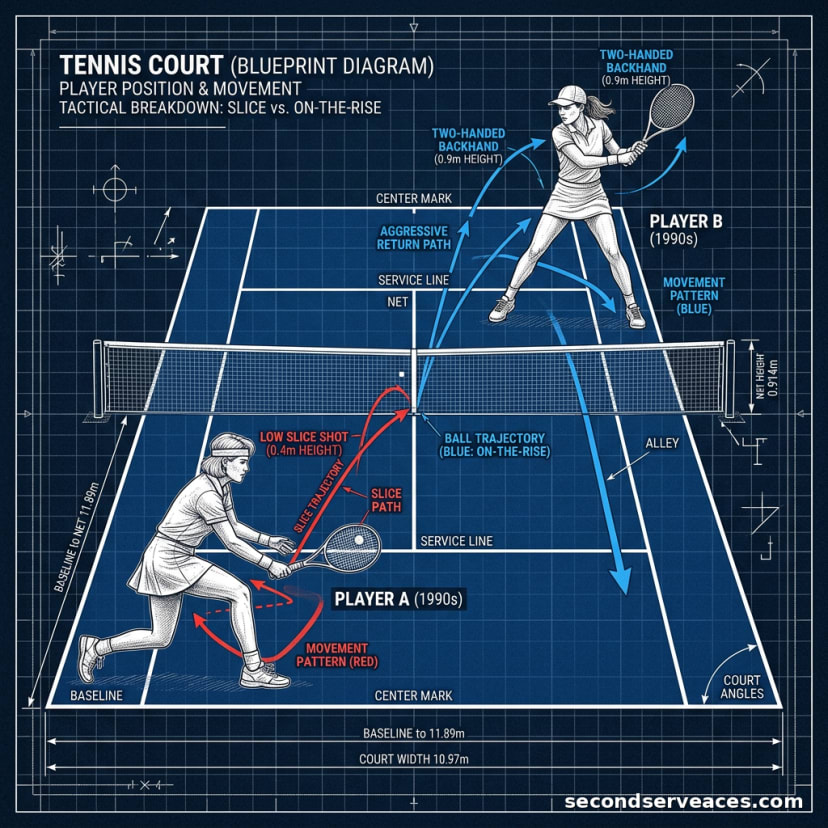
Evert, the Ice Maiden, cool, collected, a baseline metronome of relentless consistency. Her game was built on unwavering focus, pinpoint accuracy, and a strategic mind that dissected opponents with surgical precision. She was the embodiment of the old guard, a player who perfected the art of attrition. Navratilova, by contrast, was a force of nature. A whirlwind of athleticism, aggression, and raw power. She charged the net with reckless abandon, unleashing a torrent of volleys that overwhelmed opponents. She represented the future: a more athletic, proactive, and dominant style of play.
Their contrasting styles made for compelling theater. Evert's patient defense versus Navratilova's relentless attack. The cerebral strategist versus the instinctive aggressor. It was a clash of civilizations played out under the hawk eyes of the tennis world.
A Shifting Landscape
The Evert-Navratilova rivalry wasn’t simply a personal duel; it reflected a broader shift in the landscape of women’s tennis. Navratilova’s embrace of fitness, nutrition, and a more aggressive net game ushered in a new era of athleticism. She proved that power and agility could triumph over consistency and strategy – at least on a good day. Evert, ever the competitor, adapted and evolved, but the tide had begun to turn. Navratilova's influence rippled through the game, inspiring a generation of players to embrace a more aggressive and athletic approach. That's not to say Evert was outdone, but she was certainly facing someone who was raising the bar for the entire sport.
Beyond the Baseline: Cultural Resonance
But the rivalry extended beyond the confines of the court. Navratilova's public embrace of her sexuality challenged societal norms and made her an icon for the LGBTQ+ community. She stood as a symbol of courage and authenticity, using her platform to advocate for equality and acceptance. Evert, while more private, also broke barriers, proving a woman could compete at the highest level, juggling success with motherhood, and grace.
The Evert-Navratilova rivalry remains one of the most iconic and significant in sports history. It was more than just a battle for titles; it was a clash of styles, ideologies, and eras that forever changed the game of tennis.
The Legacy Endures
The echo of their rivalry continues to resonate today, shaping the strategies and styles of modern players. We see glimpses of Evert's precision in the baseline prowess of players like [Hypothetical modern player 1], and echoes of Navratilova's aggression in the net-charging tactics of [Hypothetical modern player 2]. The game has evolved, but the lessons learned from Evert and Navratilova remain timeless.
Analyze Chris Evert vs. Martina Navratilova
Predict tactical adjustments, momentum swings, and serve strategy options for this match-up using our AI simulator.
The Aces Tactical Panel
This report was curated and edited by Bhaskar Goel. Tactical analysis and technical insights were provided by our specialized panel of expert correspondents.
Julian Price
Senior Tactical Correspondent
Stuffy, pedantic British academic and historian specializing in match momentum and historical context.
Elena Cruz
Director of Analytical Research
Data scientist specializing in court surface physics and movement patterns.
Bhaskar
The Editor & Fan
Passionate tennis player and site editor bringing everyday amateur insights and relatable fan commentary.
Arthur Vance
Senior Existential Analyst
Deep, eccentric, and DFW-inspired. Models court metaphysics, kinetic beauty, and player psychology.
Leo Sterling
High-Performance Consultant
Hard-nosed ex-trainer from Melbourne with a no-nonsense view on tour fitness.