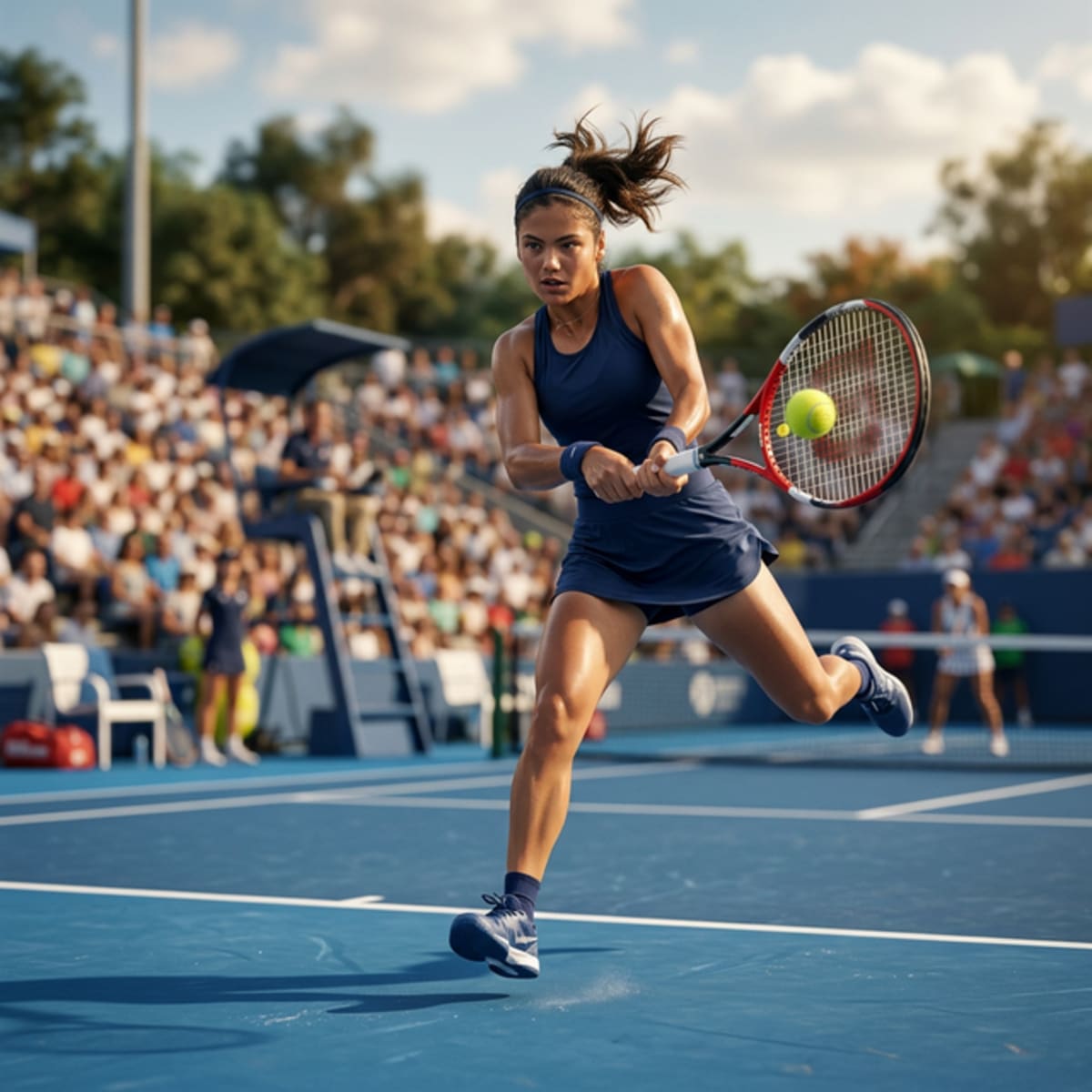
The echo of Emma Raducanu's improbable triumph at the 2021 US Open still reverberates, a sonic boom in the otherwise measured cadence of the WTA tour. A qualifier, no less, ascending to Grand Slam glory without surrendering a single set – a feat so audacious it felt ripped from the pages of a tennis fairytale. But fairytales, as we all know, often end abruptly, leaving us to grapple with the messy reality of what comes next. For Raducanu, "what comes next" has been a circuitous route marked by coaching instability and a struggle to recapture that initial, incandescent spark.
Listen to the Second Serve Podcast
Get our daily AI-synthesized audio briefings and match reviews on the go.
The Coaching Conundrum
The numbers are stark. Raducanu is now entering her tenth coaching arrangement in five years, the latest chapter beginning with Mark Petchey. This isn't mere fine-tuning; it's a wholesale reimagining, a near-constant recalibration of the very foundations of her game. While the pursuit of the perfect mentor is understandable, especially for a player who tasted success so early, the sheer volume of changes raises a rather uncomfortable question: Is this restless search a symptom of a deeper unease, a hesitancy to fully commit to the grueling, often monotonous, process of sustained improvement that elite tennis demands?
- Raducanu won the 2021 US Open as a qualifier without dropping a set.
- Raducanu has not won a title since the 2021 US Open.
- Raducanu is entering her tenth coaching arrangement in five years, this time with Mark Petchey.
- Raducanu's record against Top 10 players since the US Open is 3-17.
- Raducanu lost a WTA 125-level final in Romania last month.
The Tactical Breakdown
Raducanu's game, at its zenith during that remarkable US Open run, was predicated on a blend of aggressive baseline play and opportunistic net rushing. She possesses the raw power to dictate rallies, particularly off the forehand wing, and a willingness to absorb pressure and counterpunch effectively. However, consistency has been the Achilles heel. The ability to maintain a high level of performance across an entire tournament, to weather the inevitable storms of self-doubt and opponent adjustments, has proven elusive. Top 10 players are adept at exploiting such fluctuations. They will target any perceived weakness, methodically chipping away at confidence until the cracks become unbridgeable chasms. Historically, players like Belinda Bencic and Maria Sakkari, known for their tactical acumen, possess the game to exploit inconsistencies. Serve placement patterns become crucial against players who lack consistent court coverage. An aggressive return game, historically, also rattles a player's confidence quickly.
The Numbers Don't Lie
Raducanu's record against Top 10 opponents since her US Open victory – a sobering 3-17 – paints a vivid picture of the challenges she faces. This isn't simply about lacking talent; it's about the brutal efficiency of the elite, their capacity to expose and exploit the slightest vulnerabilities. Every missed first serve, every tentative backhand, every ill-advised net approach becomes magnified, a microcosm of the larger struggles that plague her game. A recent loss in a WTA 125-level final in Romania, further underscores the need for renewed focus and strategic refinement.
The Bigger Picture
The history of tennis is littered with one-slam wonders, players who briefly touched the sun before fading back into obscurity. Amanda Anisimova and Kim Clijsters had coaches that got them to the next level. Andre Agassi and Boris Becker are also two of the most notable cases of players with an excessive amount of coaches during their career. The pressure that Raducanu faces is immense, a weight of expectation that can be both a catalyst and a crushing burden. To truly fulfill her potential, she must find a way to quiet the external noise, to embrace the long, arduous climb toward consistent excellence. Rafael Nadal didn't become Rafael Nadal overnight. Novak Djokovic, likewise, endured his own periods of uncertainty and adjustment. Raducanu must now embark on a similar journey of self-discovery, a process that demands not just talent, but unwavering dedication and a willingness to confront the uncomfortable truths about her game.
The question remains: will Raducanu find the stability and focus required to transform fleeting brilliance into sustained success? Only time, and perhaps a little less coaching turnover, will tell.
What Novak Djokovic Plays With
Head Speed Pro
Luxilon ALU Power 125
Asics Court FF 3 Novak
Analyze Emma Raducanu vs. Belinda Bencic
Predict tactical adjustments, momentum swings, and serve strategy options for this match-up using our AI simulator.
The Aces Tactical Panel
This report was curated and edited by Bhaskar Goel. Tactical analysis and technical insights were provided by our specialized panel of expert correspondents.
Julian Price
Senior Tactical Correspondent
Stuffy, pedantic British academic and historian specializing in match momentum and historical context.
Elena Cruz
Director of Analytical Research
Data scientist specializing in court surface physics and movement patterns.
Bhaskar
The Editor & Fan
Passionate tennis player and site editor bringing everyday amateur insights and relatable fan commentary.
Arthur Vance
Senior Existential Analyst
Deep, eccentric, and DFW-inspired. Models court metaphysics, kinetic beauty, and player psychology.
Leo Sterling
High-Performance Consultant
Hard-nosed ex-trainer from Melbourne with a no-nonsense view on tour fitness.