Managing the Biological Debt of the Tour
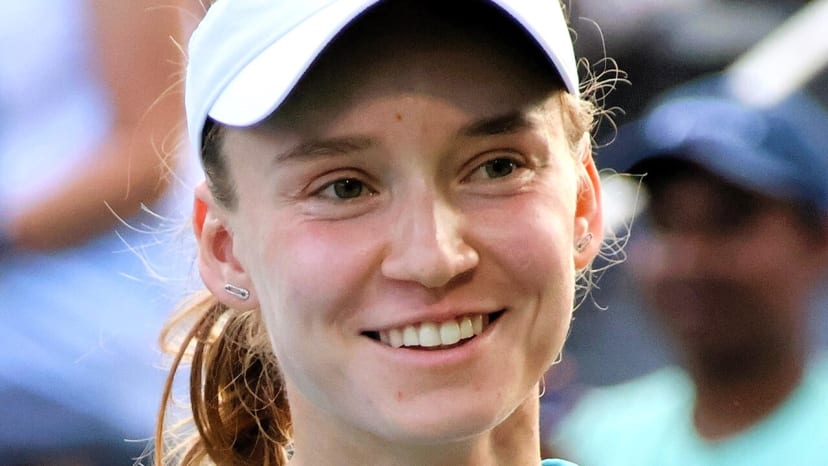
Tennis is a sport that eats its own. You are either hunting points or you are nursing the structural damage left behind by the last swing. For Elena Rybakina, the decision to step away from the recent Billie Jean King Cup tie against Canada wasn’t a vacation; it was a tactical necessity. After a blistering hard-court swing, she recognized that the fuel tank had hit empty. The body doesn't lie, and at this level, pushing through the fatigue is often the quickest path to a season-ending injury.
Listen to the Second Serve Podcast
Get our daily AI-synthesized audio briefings and match reviews on the go.
Kazakhstan navigated the tie in Astana without their anchor, successfully defeating Canada 3-1 to secure a position in the November finals in Seville. It’s a testament to team depth, but for Rybakina, the 20-day break she took post-Miami was the real victory. It allowed for a mental reset and a physical recalibration that is essential for surviving the transition from hard courts to the unforgiving grind of the WTA clay season.
When you look at the cold math of a 22-5 record through six events, you see the output of an elite machine. But machines need maintenance. By choosing to prioritize her recovery over the national team commitment, Rybakina signaled a shift toward long-term sustainability. It is a mature, calculated approach—a recognition that the season is a marathon, not a series of sprints.
The Stuttgart Transition and Returning to Form
The return to competition at the Stuttgart Open was the litmus test for that recovery period. Facing Diana Schnaider in an opening match requires immediate focus; there is no easing into the red clay when the opposition is hungry to take down a pedigree player. The adjustment to the surface—the way the ball grips and kicks off the dirt—is as much about patience as it is about power.
Rybakina navigated the opening round with the poise we’ve come to expect. While the surface demands more leg work and a deeper reliance on the kinetic chain from the ground up, she remained committed to her baseline rhythm. This wasn’t about brute force; it was about protecting the gains she made during her three-week hiatus and ensuring that her movement wasn't compromised by the heavier clay court conditions.
The scoreboard from the opening round is less important than the way the ball came off her strings. The timing looked sharp, and the decision-making under the pressure of a return game was precise. For a player who relies on heavy, flat aggression, the ability to control the tempo on clay is the ultimate mark of an evolving competitor. She isn't just surviving the matches; she is dictating the pace of her own endurance.
The Invisible Grind Behind the Rankings
We often talk about the WTA rankings as if they are static snapshots of greatness. In reality, they are fluid records of who has best managed their attrition. Players like Rybakina, who carry the heavy expectations of a nation and a high seed, live in a permanent state of high-performance management. Every tournament is a negotiation between desire and capacity.
When you hear players discuss the struggle of the calendar, they aren't complaining; they are being honest about the reality of professional tennis. The travel, the time zones, the constant adrenaline spikes—it changes your physiology. A 20-day break is a rare luxury, and those who know how to use that time off-court often find themselves standing tall when the rest of the field begins to fray at the edges in late autumn.
The trajectory for the remainder of the season looks promising, provided the internal load is managed with the same ruthlessness as her serve. She has built a foundation that allows her to play through the pressure, and the choice to skip the BJK Cup qualifier may be the very move that keeps her in contention for the trophies that matter most in the coming months.
Rivalries and the Future of the Field
The field is deep, and the rivalries are becoming increasingly distinct. Whether it is the power game of a Sabalenka or the crafty disruption of someone like Schnaider, Rybakina is constantly adjusting her defensive geometry. The game has moved beyond just hitting winners; it is now about the ability to absorb, pivot, and strike back from uncomfortable positions on the court.
As she settles into the Stuttgart draw, the focus shifts to how these tactical adaptations hold up over consecutive days of play. It is one thing to be fresh for a Tuesday; it is another to be explosive for a Sunday final. The challenge for the rest of the year won't just be about shot-making—it will be about who can keep their body and mind in the arena.
The decision to rest has put Rybakina in a position of strength. While other players may be feeling the cumulative weight of an relentless early-season schedule, she is operating with a renewed sense of purpose. It is a reminder that in this sport, the most important shot isn't the one you hit on match point—it’s the decision you make when you aren't holding a racket at all.
What Aryna Sabalenka Plays With
Wilson Blade 98 v9 (16x19)
Luxilon ALU Power 125
Wilson Pro Overgrip (12-Pack)
Analyze Elena Rybakina vs. Diana Schnaider
Predict tactical adjustments, momentum swings, and serve strategy options for this match-up using our AI simulator.
The Aces Tactical Panel
This report was curated and edited by Bhaskar Goel. Tactical analysis and technical insights were provided by our specialized panel of expert correspondents.
Julian Price
Senior Tactical Correspondent
Stuffy, pedantic British academic and historian specializing in match momentum and historical context.
Elena Cruz
Director of Analytical Research
Data scientist specializing in court surface physics and movement patterns.
Bhaskar
The Editor & Fan
Passionate tennis player and site editor bringing everyday amateur insights and relatable fan commentary.
Arthur Vance
Senior Existential Analyst
Deep, eccentric, and DFW-inspired. Models court metaphysics, kinetic beauty, and player psychology.
Leo Sterling
High-Performance Consultant
Hard-nosed ex-trainer from Melbourne with a no-nonsense view on tour fitness.