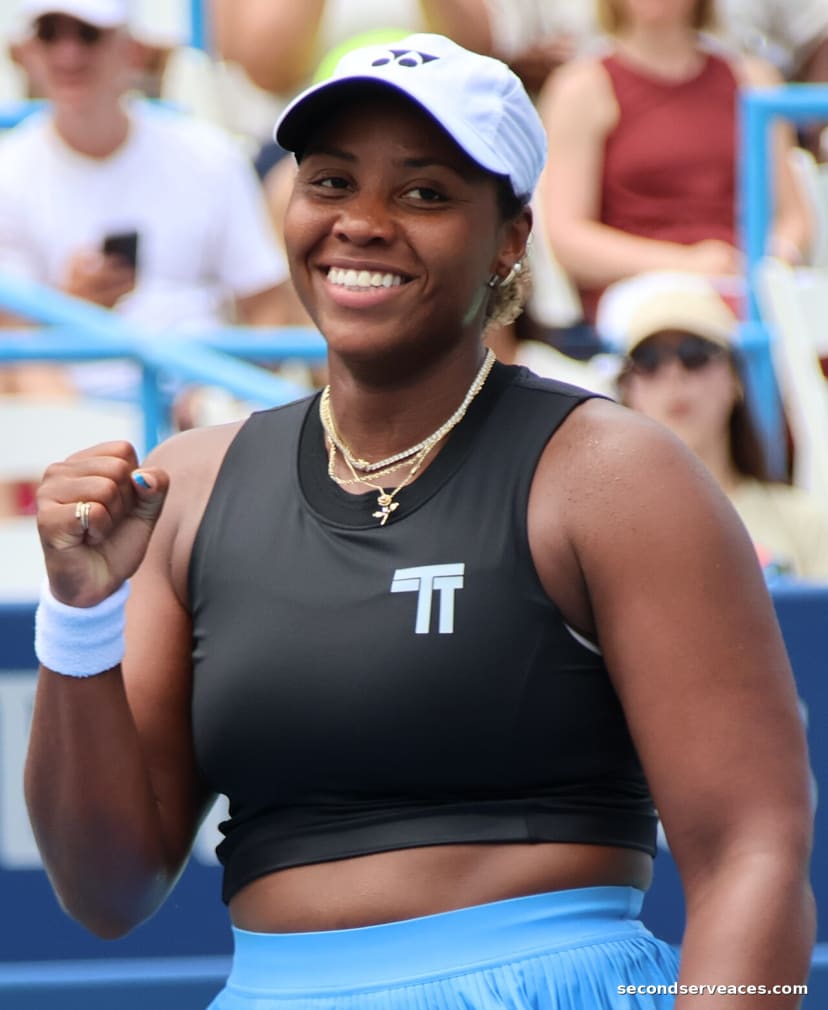
Breaking the Technical Stagnation: A Clinical Eight-Game Surge
There is a specific, jagged geometry to a WTA match when a player finally resolves a technical hitch that has lingered in the periphery of their consciousness. For Coco Gauff, the Madrid Open provided the stage for a necessary correction. In an 82-minute display of tactical recalibration, Gauff dispatched Leolia Jeanjean with a composure that suggested the previous seven months of struggling with erratic service rhythm had been left in the dust of the Spanish capital.
Listen to the Second Serve Podcast
Get our daily AI-synthesized audio briefings and match reviews on the go.
The match was not without its visceral interruption. Leading 4-3 in the opening set, Gauff required a medical timeout to attend to a blister on her thumb—a sensory distraction that would typically destabilize a lesser athlete. Yet, the restart functioned as a hard reset. Upon returning, Gauff dismantled the remaining windows of opportunity, rattling off eight consecutive games with a cold, kinetic efficiency that stripped away any potential for Jeanjean to find a foothold in the rallies.
The Mechanics of Conversion: Seven Break Points and Tactical Assertiveness
Statistical depth reveals the internal physics of this victory. Gauff’s ability to convert seven of her 16 break points underscores a shift toward a more aggressive, high-margin brand of tennis. Rather than waiting for the unforced error, Gauff forced the issue, manipulating the court positioning of her opponent until the court opened up for the kill shot. This is the hallmark of a player moving toward a more mature tactical framework, one where the break point is not a nervous threshold but a mathematical inevitability.
While Gauff’s journey at the 2024 iteration of this tournament eventually halted in the Round of 16 against Madison Keys, the victory over Jeanjean remains a structural pivot point. It serves as a reminder of her career-long trend of growth against varied styles, much like her established 2-0 head-to-head dominance over Sorana Cirstea. For Gauff, the goal remains the refinement of the transition game; as she continues her trajectory on the professional circuit, each match serves as an empirical data set for the battles to come.
What Coco Gauff Plays With
Head Boom MP 2024
Head Lynx Tour 1.25
Analyze Coco Gauff vs. Moyuka Uchijima
Predict tactical adjustments, momentum swings, and serve strategy options for this match-up using our AI simulator.
The Aces Tactical Panel
This report was curated and edited by Bhaskar Goel. Tactical analysis and technical insights were provided by our specialized panel of expert correspondents.
Julian Price
Senior Tactical Correspondent
Stuffy, pedantic British academic and historian specializing in match momentum and historical context.
Elena Cruz
Director of Analytical Research
Data scientist specializing in court surface physics and movement patterns.
Bhaskar
The Editor & Fan
Passionate tennis player and site editor bringing everyday amateur insights and relatable fan commentary.
Arthur Vance
Senior Existential Analyst
Deep, eccentric, and DFW-inspired. Models court metaphysics, kinetic beauty, and player psychology.
Leo Sterling
High-Performance Consultant
Hard-nosed ex-trainer from Melbourne with a no-nonsense view on tour fitness.