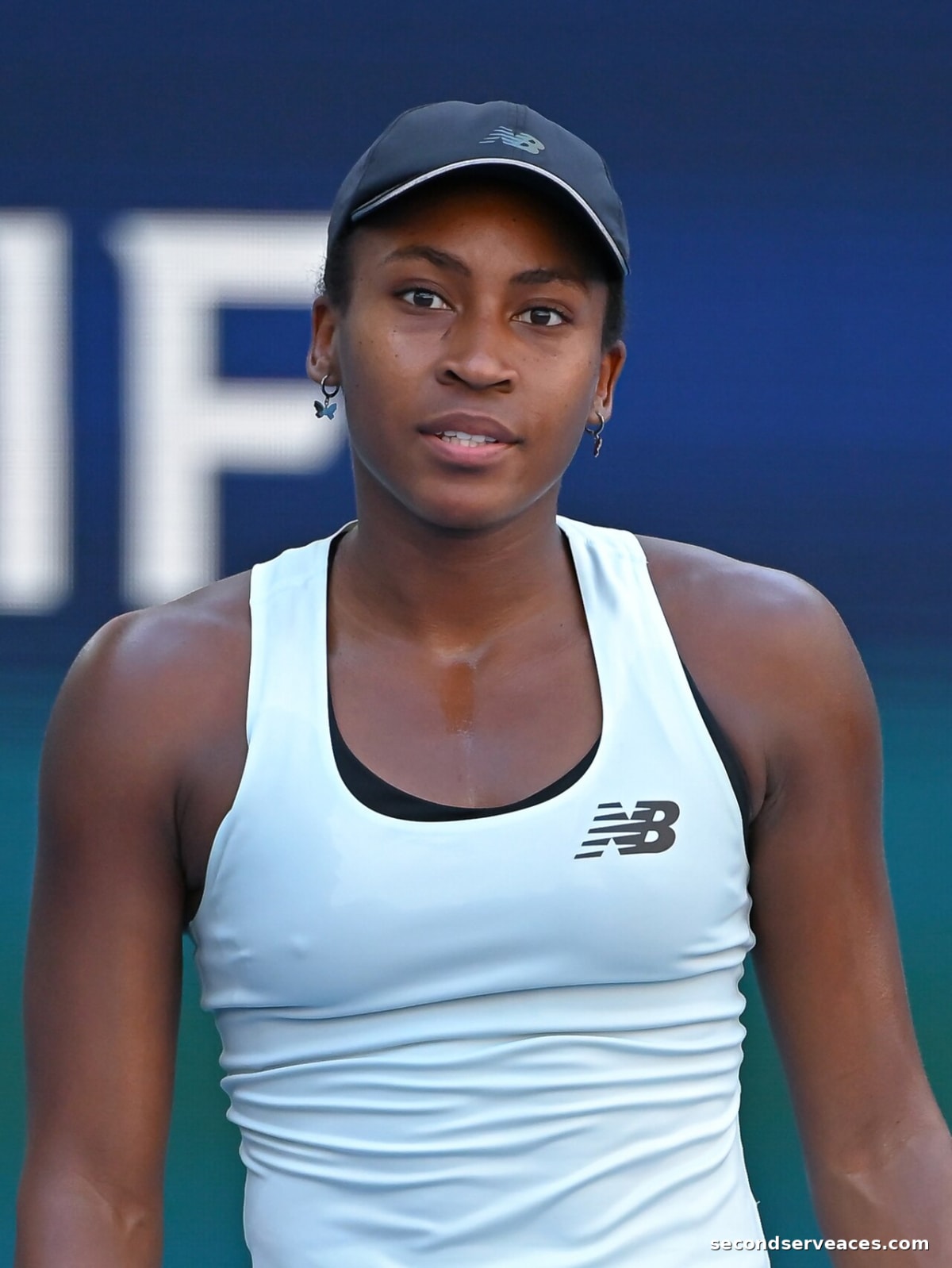
On September 24, the structural landscape of professional tennis experienced a quiet but significant shift. Coco Gauff, the reigning world-class competitor, formally aligned herself with World Team Tennis (WTT) not merely as a marquee athlete but as a co-owner of the Florida Flamingos franchise. This dual-role acquisition is not a mere branding exercise; it represents a fundamental evolution in how elite players command agency over their sporting ecosystems, blending on-court performance with direct equity in the league's competitive machinery.
Listen to the Second Serve Podcast
Get our daily AI-synthesized audio briefings and match reviews on the go.
Gauff’s Evolution from Baseline Prodigy to Florida Flamingos Franchise Owner
At just 22 years of age, Gauff has already established herself as an elite force, collecting 12 singles titles and solidifying her place at No. 4 in the WTA rankings. Her aggressive baseline philosophy, defined by exceptional court coverage and a backhand capable of redirecting heavy pace, has long made her a centerpiece of the traditional tour. However, by taking an ownership stake in the Florida Flamingos, Gauff is attempting to transcend the solitary, often isolating nature of the professional singles circuit.
This transition places her in the company of other top-tier American stars like Tommy Paul or Denis Shapovalov, who have actively sought creative avenues to expand their footprint beyond the conventional tournament calendar. The move toward athlete-ownership reflects a growing realization among the sport's elite that their value extends far beyond the baseline. By securing equity in the Flamingos, Gauff is pioneering a modern blueprint where performance and corporate strategy are inextricably linked.
This structural change mirrors other recent player-driven movements across the sport, such as the evolving player advocacy we saw when Djokovic and Sabalenka joined the new Grand Slam player council. Gauff's investment guarantees that as the sport experiments with new formats, active players will have a direct seat at the decision-making table. Her presence on the roster injects immediate commercial viability into a league that seeks to merge high-intensity competition with high-stakes team sports entertainment.
The Decoupling and Resurgence of World Team Tennis in December 2026
The return of World Team Tennis in December 2026 for its 47th season marks a calculated revival for a league that has been suspended since 2021. Originally conceptualized in the 1970s, WTT has long offered an alternative to the intense individualism of the professional tours. The new ownership group, which announced the league's return in May 2026, has devised a condensed, high-octane competitive calendar staged across six match nights to avoid scheduling conflicts with the main ATP and WTA schedules.
The 2026 season will feature a concentrated roster of three regional clubs: the Florida Flamingos, the New York Empire, and the Toronto North. This streamlined three-club structure is designed to maximize the concentration of elite talent, ensuring that every match night presents a premium competitive product. Alongside Gauff's Flamingos, the league's expansion is set to feature a dense concentration of North American talent, with stars like Taylor Fritz, Jessica Pegula, Frances Tiafoe, and Tommy Paul rumored to be in high demand. Meanwhile, younger prospects like Learner Tien, Brandon Nakashima, and Canadian standout Gabriel Diallo offer glimpses of the next generation ready to challenge established tour veterans.
While traditionalists sometimes look askance at the raucous atmosphere of team tennis, the format has consistently proven to be a valuable laboratory for competitive innovation. As we analyzed when Fernandez won the Singapore Open title in a classic knockout draw, the psychological pressure of individual tournaments can be exhausting. The team environment, by contrast, redistributes that emotional burden, allowing players to rediscover a collective energy that is rarely felt during the lonely weeks on the primary tour.
Deciphering the Fast-Paced Mixed-Gender SuperTiebreaker Format
The tactical parameters of World Team Tennis are engineered to eliminate dead time and punish slow starts. Each team match consists of four fast-paced singles sets, culminating in a mixed-gender SuperTiebreaker that decides the ultimate victor. Every single game won throughout the night contributes to the team's cumulative score, which completely alters how a player approaches a routine return game; there is no room to coast or concede a set when trailing by a double break.
This relentless pressure of no-ad scoring forces players to execute precise, high-margin tennis under immediate duress. In the mixed doubles SuperTiebreaker, the tactical demands shift from baseline attrition to hyper-focused net play and rapid serve-and-volley exchanges. The physical reality of a male serve coming at a female net player, or a female baseline specialist target-testing a male volleyer, creates a unique chess match where court positioning and quick reflexes are paramount.
As traditional singles players adjust to the quick-fire pressure, international competitors like Eva Lys, Camila Osorio, and teenage prodigy Iva Jovic will have to master the distinct pacing of team play, where every game counts toward the cumulative total. The team bench is active, with continuous coaching allowed between points, injecting a kinetic energy into the stadium that stands in stark contrast to the quiet focus of a Grand Slam arena. For Gauff, the Flamingos' success will hinge on how quickly her roster can synthesize these specialized doubles patterns under the pressure of a ticking clock.
Rivalry Matchup & Player Profiles
| Metric | Coco Gauff | Victoria Mboko |
|---|---|---|
| Rank | No. 4 | No. 15 |
| Country | United States | Canada |
| Age | 22 | 20 |
| Handedness | Right-handed | Right-handed |
| Height | 1.75 m (5'9") | 1.80 m (5'11") |
| Play Style | Aggressive baseliner | Aggressive baseliner with powerful serve |
| Career Titles | 12 Singles | 2 Singles |
The head-to-head history between Gauff and Canada's rising star, Victoria Mboko, is currently locked at a 1-1 stalemate. Their contrast in styles provides a fascinating preview of the regional battles expected between the Florida Flamingos and Toronto North. Mboko captured their most recent meeting at the 2025 Montreal Open in straight sets, 6-1, 6-4, relying on her 1.80 m frame and heavy, flat groundstrokes to overpower Gauff on the quick Canadian hard courts. This came after Gauff claimed their initial encounter at the 2025 Italian Open, surviving a physical opening set before adjusting her return depth to run away with a 3-6, 6-2, 6-1 victory on the slow clay of Rome.
Mboko’s raw first-strike capability represents the primary tactical threat to Gauff’s exceptional court coverage. In a standard three-set match, Gauff's superior conditioning and defensive length eventually tend to wear down opponents who rely on high-risk, flat-hitting styles. However, in the single-set format of World Team Tennis, Mboko’s high-velocity serving could allow her to secure quick holds, putting immense scoreboard pressure on the Flamingos' player-owner from the very first point.
Ultimately, the success of this new era of World Team Tennis will be measured by its ability to foster these intense, localized rivalries. For Gauff, managing the operational pressures of co-ownership while executing elite defensive baseline patterns against aggressive opponents like Mboko will be a grueling test of her multitasking capabilities. As the league prepares for its December 2026 launch, the intersection of sport, business, and athletic performance has rarely looked so compelling.
What Coco Gauff Plays With
Head Boom MP 2024
Head Lynx Tour 1.25
Head Prime Tour (12-Pack)
Analyze Coco Gauff vs. Victoria Mboko
Predict tactical adjustments, momentum swings, and serve strategy options for this match-up using our AI simulator.
The Aces Tactical Panel
This report was curated and edited by Bhaskar Goel. Tactical analysis and technical insights were provided by our specialized panel of expert correspondents.
Julian Price
Senior Tactical Correspondent
Stuffy, pedantic British academic and historian specializing in match momentum and historical context.
Elena Cruz
Director of Analytical Research
Data scientist specializing in court surface physics and movement patterns.
Bhaskar
The Editor & Fan
Passionate tennis player and site editor bringing everyday amateur insights and relatable fan commentary.
Arthur Vance
Senior Existential Analyst
Deep, eccentric, and DFW-inspired. Models court metaphysics, kinetic beauty, and player psychology.
Leo Sterling
High-Performance Consultant
Hard-nosed ex-trainer from Melbourne with a no-nonsense view on tour fitness.
Related Reports


Quick Answers
When is World Team Tennis scheduled to return?+
World Team Tennis is scheduled to return in December 2026 for its 47th season, following a suspension that began in 2021.
Which teams will compete in the 2026 World Team Tennis season?+
The 2026 season will feature three clubs: the Florida Flamingos, the New York Empire, and the Toronto North.
What is the format of a World Team Tennis match?+
Each match consists of four singles sets followed by a mixed-gender SuperTiebreaker, played across six match nights under a revised competition format.