Analyzing the Serve-Plus-One Meta in the 2026 Season
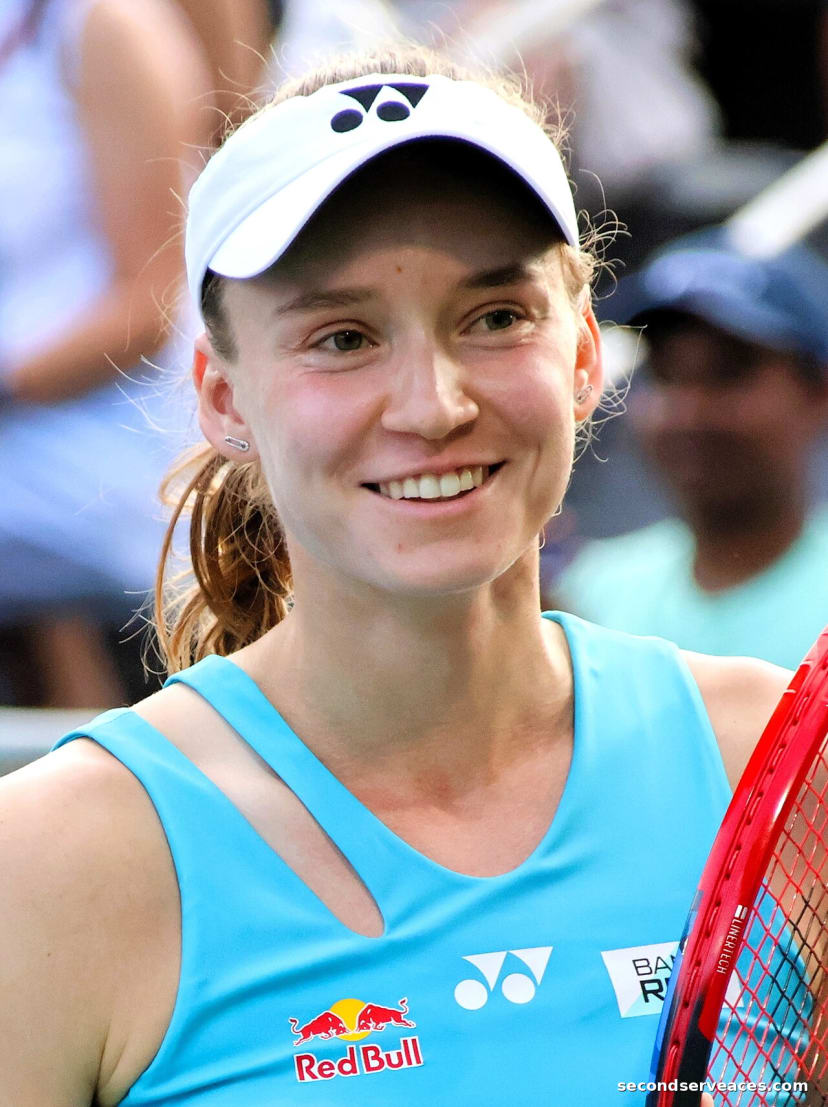
Modern hard-court tennis is decided in the first three shots. The serve-plus-one pattern has become the ultimate weapon on the WTA tour, where players look to dictate play immediately off the return. Elena Rybakina has perfected this, using her flat, piercing groundstrokes to push opponents behind the baseline before they can establish any rhythm. Her ability to locate the corners on her first delivery makes her nearly impossible to break when she is in a groove.
Listen to the Second Serve Podcast
Get our daily AI-synthesized audio briefings and match reviews on the go.
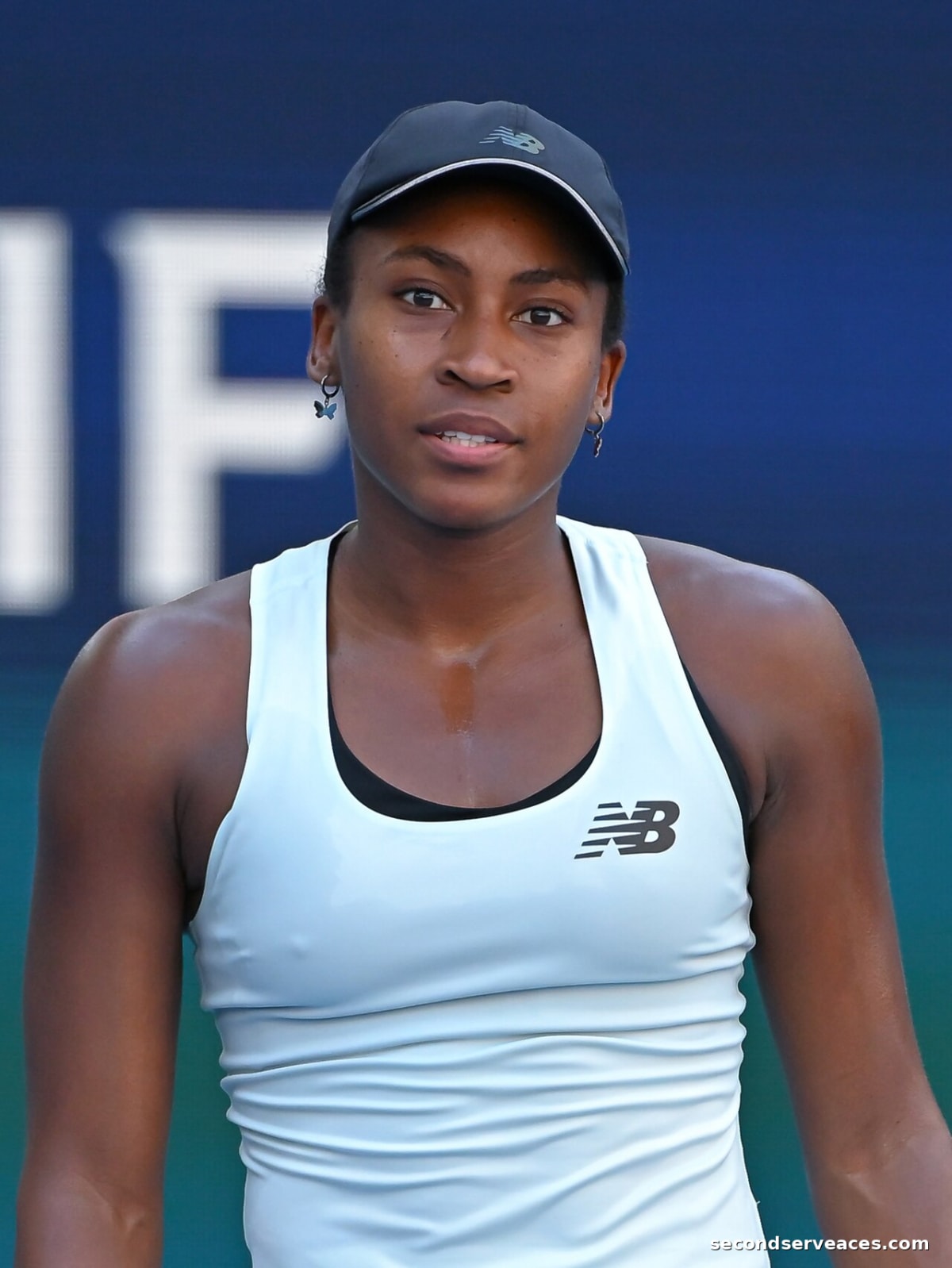
To counter this, defensive specialists must rely on elite athleticism and anticipation. Coco Gauff possesses some of the best lateral movement in the game, but simply retrieving balls is a losing strategy against Rybakina's weight of shot. Gauff must shorten her backswing on the return, blocking the ball back deep to neutralize the initial onslaught. If she leaves the return short, she plays directly into Rybakina's striking zone.
This tactical battle will take center stage at the upcoming tournament in Beijing. The courts at the National Tennis Center offer a medium-fast bounce that rewards clean ball-striking but also allows defenders a fraction of a second to slide and recover. Players who can adjust their positioning on the baseline will find success, while those who hesitate will find themselves constantly on the defensive, as observed across the WTA Tour this year.
The Grand Slam Blueprint of Rybakina's Dominance
Rybakina's ascent this season has been nothing short of spectacular, highlighted by her victories at both the Australian Open and the US Open. Her performance in Melbourne showcased her mental fortitude, while her run in New York proved that her flat, linear strokes can penetrate even the slowest hard courts. She has established herself as the gold standard of aggressive baseline play, forcing the rest of the tour to elevate their tactical execution.
This season has seen a fascinating distribution of major titles across different surfaces. While Rybakina dominated the hard courts, Mirra Andreeva captured her maiden clay-court major at the French Open, and Czech sensation Linda Noskova claimed the grass-court crown at Wimbledon. We previously analyzed Noskova's rapid rise during Czechia's triumph at the Billie Jean King Cup, showing how a new generation of players is challenging the established elite.
What sets Rybakina apart from her peers is her unflappable demeanor on court. She does not rely on emotional bursts; instead, she systematically dismantles opponents with clinical placement and relentless depth. Her serve remains her greatest asset, allowing her to escape trouble on break points and keep her service games brief, conserving energy for deep tournament runs.
Navigating the Early Rounds in Beijing
Gauff enters the China Open as the third seed, while Rybakina takes the top spot in the draw. Both elite competitors have received opening-round byes, giving them crucial days to adapt to the atmospheric conditions and court speed in Beijing. For Gauff, this preparation is vital as she seeks to refine her technical execution after a demanding summer swing.
Gauff's campaign will begin in the second round against either Thailand's Lanlana Tararudee or Colombia's Camila Osorio. Facing either opponent requires distinct tactical adjustments. Tararudee relies on flat, aggressive groundstrokes, whereas Osorio utilizes heavy topspin and variety to disrupt her opponent's rhythm. Gauff must establish her baseline presence early, using her backhand to dictate the tempo of the rallies.
The early rounds of a WTA 1000 event are notoriously tricky, as lower-ranked players have already played through qualifying or opening matches, finding their rhythm on the match courts. Gauff cannot afford a slow start. She must focus on her footwork, ensuring she steps into her shots rather than drifting backward, which would allow her opponents to dictate play.
Revisiting the Tactical Dynamics of the US Open Semifinal
To understand the matchup between Gauff and Rybakina, one must look back at their recent encounter in the semifinals of the US Open. It was a physical battle where Rybakina ultimately prevailed in three sets. Gauff showed immense resilience in taking the opening set, but Rybakina's relentless pressure eventually wore down the American's defenses, forcing errors from the forehand wing.
A key statistical factor in that match was Gauff's second-serve win percentage. Rybakina aggressively stepped inside the baseline to punish second serves, immediately putting Gauff on the defensive. To turn the tide in future meetings, Gauff must increase her first-serve percentage and vary the spin on her second delivery to keep Rybakina guessing.
For Coco Gauff, the path to closing the gap involves technical adjustments under pressure. She must trust her aggressive instincts and look for opportunities to transition to the net, shortening the points and denying Rybakina the comfortable rhythm she enjoys from the back of the court.
Rivalry Matchup & Player Profiles
| Metric | Coco Gauff | Elena Rybakina |
|---|---|---|
| Rank | No. 4 | No. 1 |
| Age | 22 | 27 |
| Country | United States | Kazakhstan |
| Height | 5' 9" (1.75 m) | 6' 0" (1.84 m) |
| Handedness | Right-handed | Right-handed |
| Play Style | Aggressive baseliner with elite athleticism and outstanding defensive coverage | Aggressive baseliner with a dominant serve and powerful groundstrokes |
| Career Titles | 12 Singles Titles | 14 Singles Titles |
The competitive history between these two athletes highlights a compelling contrast in styles. Rybakina leads their career ledger 2-1, having won both of their 2026 meetings in hard-fought three-set matches. Their most recent clash in the US Open semifinals saw Rybakina stage a brilliant comeback, overcoming a one-set deficit to win 3-6, 6-4, 6-4, demonstrating her ability to make tactical adjustments mid-match.
As they prepare for potential clashes at the China Open, the tactical chess match will center on Gauff's defensive versatility against Rybakina's pure power. While Rybakina enters as the top seed and current world No. 1, Gauff's athleticism and tactical flexibility make her a formidable threat on any hard court.
What Coco Gauff Plays With
Head Boom MP 2024
Head Lynx Tour 1.25
Head Prime Tour (12-Pack)
Analyze Coco Gauff vs. Elena Rybakina
Predict tactical adjustments, momentum swings, and serve strategy options for this match-up using our AI simulator.
The Aces Tactical Panel
This report was curated and edited by Bhaskar Goel. Tactical analysis and technical insights were provided by our specialized panel of expert correspondents.
Julian Price
Senior Tactical Correspondent
Stuffy, pedantic British academic and historian specializing in match momentum and historical context.
Elena Cruz
Director of Analytical Research
Data scientist specializing in court surface physics and movement patterns.
Bhaskar
The Editor & Fan
Passionate tennis player and site editor bringing everyday amateur insights and relatable fan commentary.
Arthur Vance
Senior Existential Analyst
Deep, eccentric, and DFW-inspired. Models court metaphysics, kinetic beauty, and player psychology.
Leo Sterling
High-Performance Consultant
Hard-nosed ex-trainer from Melbourne with a no-nonsense view on tour fitness.
Related Reports
Quick Answers
What is the head-to-head record between Coco Gauff and Elena Rybakina?+
Elena Rybakina leads the head-to-head record 2-1, including a three-set victory in the semifinals of the 2026 US Open.
Who will Coco Gauff play in her opening match at the China Open?+
As the third seed, Coco Gauff received a first-round bye and will face either Lanlana Tararudee or Camila Osorio in the second round.
Which Grand Slam titles did Elena Rybakina win this season?+
Elena Rybakina won both the Australian Open and the US Open earlier this season.