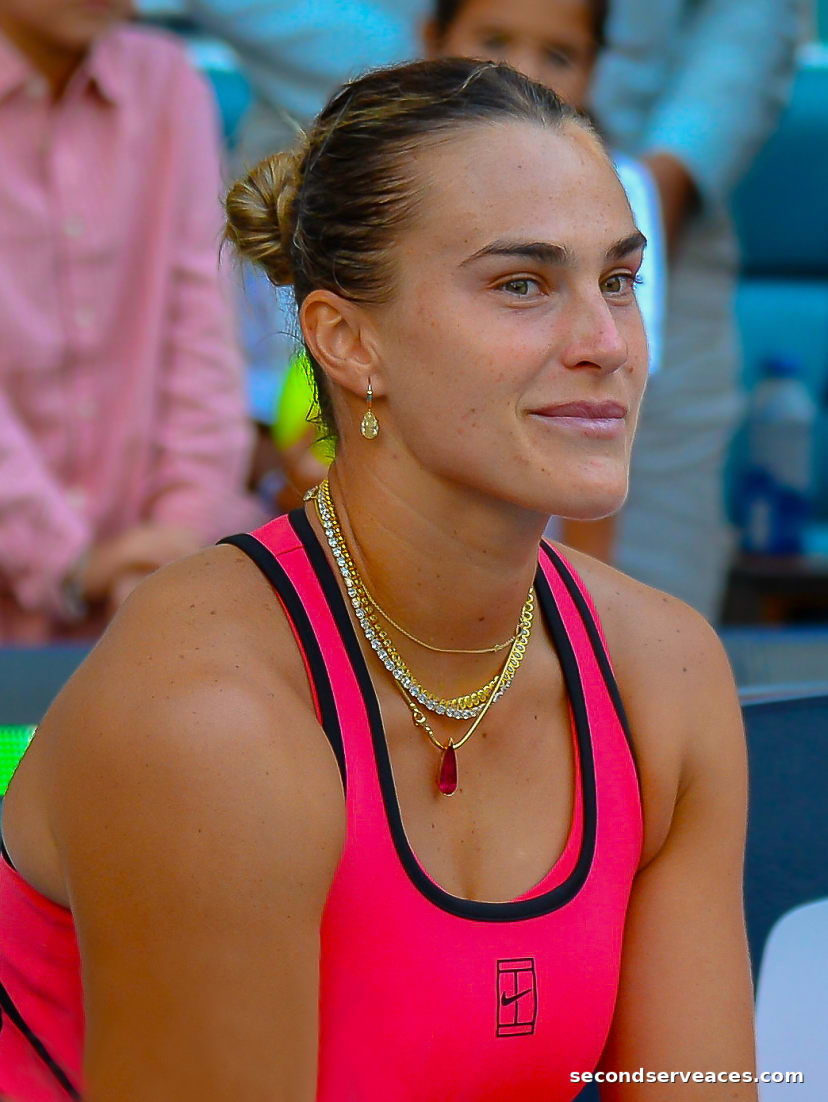
There is nothing worse in professional tennis than the sudden, agonizing betrayal of your own body. We come to the desert for high-octane baseline battles, but the brutal reality of the hard-court grind reared its ugly head today. Coco Gauff was forced into a sudden retirement against Alexandra Eala at Indian Wells, bowing out while trailing 6-2, 2-0. It wasn't just a loss; it was a physical breakdown that raises immediate red flags for the rest of her season.
Listen to the Second Serve Podcast
Get our daily AI-synthesized audio briefings and match reviews on the go.
When you hear a professional athlete describe an injury as feeling like a "firework" going off inside their arm, the alarms should be ringing across their entire coaching box. That isn't a cramp. That isn't a minor tweak. That is the kind of explosive, localized pain that completely shatters a player's ability to swing through the ball. The medical staff was hovering, the crowd was dead silent, and suddenly, the match was over.
Let's cut the fluff—this is a disaster for the American hard-court swing. Former US Open champion Andy Roddick has already sounded the alarm, raising serious, public concerns over the severity of the issue. When a guy who built his entire Hall of Fame career on arm whip and shoulder torque gets worried, we should all be paying attention.
The Tactical Breakdown
The scoreboard tells a stark story: a 6-2, 2-0 deficit before Gauff finally threw in the towel. But what does a failing arm actually look like under the microscope of professional competition?
Let's talk about the mechanics of playing compromised. When a player's dominant arm begins to misfire, the entire kinetic chain collapses. You lose the ability to inject heavy topspin, which is the exact currency needed to control the gritty, slow-bouncing hard courts of Indian Wells. Eala, whether by instinct or sharp tactical awareness, was perfectly positioned to exploit this declining match momentum.
Against a wounded opponent, the tactical blueprint is ruthlessly simple:
- Stretch the Court Geometry: Force the injured player to hit on the dead run, denying them the luxury of a set, stable base. This transfers the burden of power generation entirely to the failing arm.
- Target the High Strike Zone: Pushing heavy balls deep into the corners requires the defender to use extreme forearm torque to bring the ball down inside the lines. If the arm is compromised, those balls sail long or dump into the net.
- Eliminate Free Points: By relentlessly keeping the ball in play, Eala ensured that Gauff couldn't hide behind quick first-strike tennis. A high rally tolerance is the ultimate weapon against a physically deteriorating opponent.
It was clear early in the first set that Gauff was bleeding unforced errors off wings she normally locks down. You simply cannot survive at this elite tier of the WTA when your primary weapons feel like they are detonating upon impact.
The Bigger Picture
Beyond the immediate disappointment of a premature exit in Tennis Paradise, the "firework" sensation Gauff described opens up a terrifying conversation about her immediate schedule. We are currently in the thick of the Sunshine Double. Miami is right around the corner, and the turnaround time is viciously tight.
The Sunshine Double Dilemma
Andy Roddick isn't just flapping his gums when he expresses concern; he understands the grueling demands of transitioning from the dry desert heat to the heavy, humid air of Florida. The balls in Miami fly differently. The conditions demand profound physical resilience. If Gauff is nursing a structural arm issue, rushing back to defend ranking points could jeopardize her entire European clay-court campaign.
This sport doesn't offer a forgiving timeline. Modern tennis demands extreme, whip-like mechanics, particularly on the forehand side. When players try to "play through" arm or wrist pain, they inevitably alter their technique to compensate. That compensation breeds secondary injuries. It's a vicious cycle that has derailed more than a few legendary careers.
Right now, Gauff's team needs to make a harsh, unsentimental medical decision. The Indian Wells campaign is officially over, and Eala advances with a crucial, albeit anticlimactic, victory on her ledger. For Gauff, the fight is no longer against the player across the net—it's against the clock, the MRI machine, and the harsh realities of a ten-month season.
What Coco Gauff Plays With
Head Boom MP 2024
Head Lynx Tour 1.25
Analyze Andy Roddick vs. Coco Gauff
Predict tactical adjustments, momentum swings, and serve strategy options for this match-up using our AI simulator.
The Aces Tactical Panel
This report was curated and edited by Bhaskar Goel. Tactical analysis and technical insights were provided by our specialized panel of expert correspondents.
Julian Price
Senior Tactical Correspondent
Stuffy, pedantic British academic and historian specializing in match momentum and historical context.
Elena Cruz
Director of Analytical Research
Data scientist specializing in court surface physics and movement patterns.
Bhaskar
The Editor & Fan
Passionate tennis player and site editor bringing everyday amateur insights and relatable fan commentary.
Arthur Vance
Senior Existential Analyst
Deep, eccentric, and DFW-inspired. Models court metaphysics, kinetic beauty, and player psychology.
Leo Sterling
High-Performance Consultant
Hard-nosed ex-trainer from Melbourne with a no-nonsense view on tour fitness.