A Desert of Defaults and the Last Man Standing in Beijing
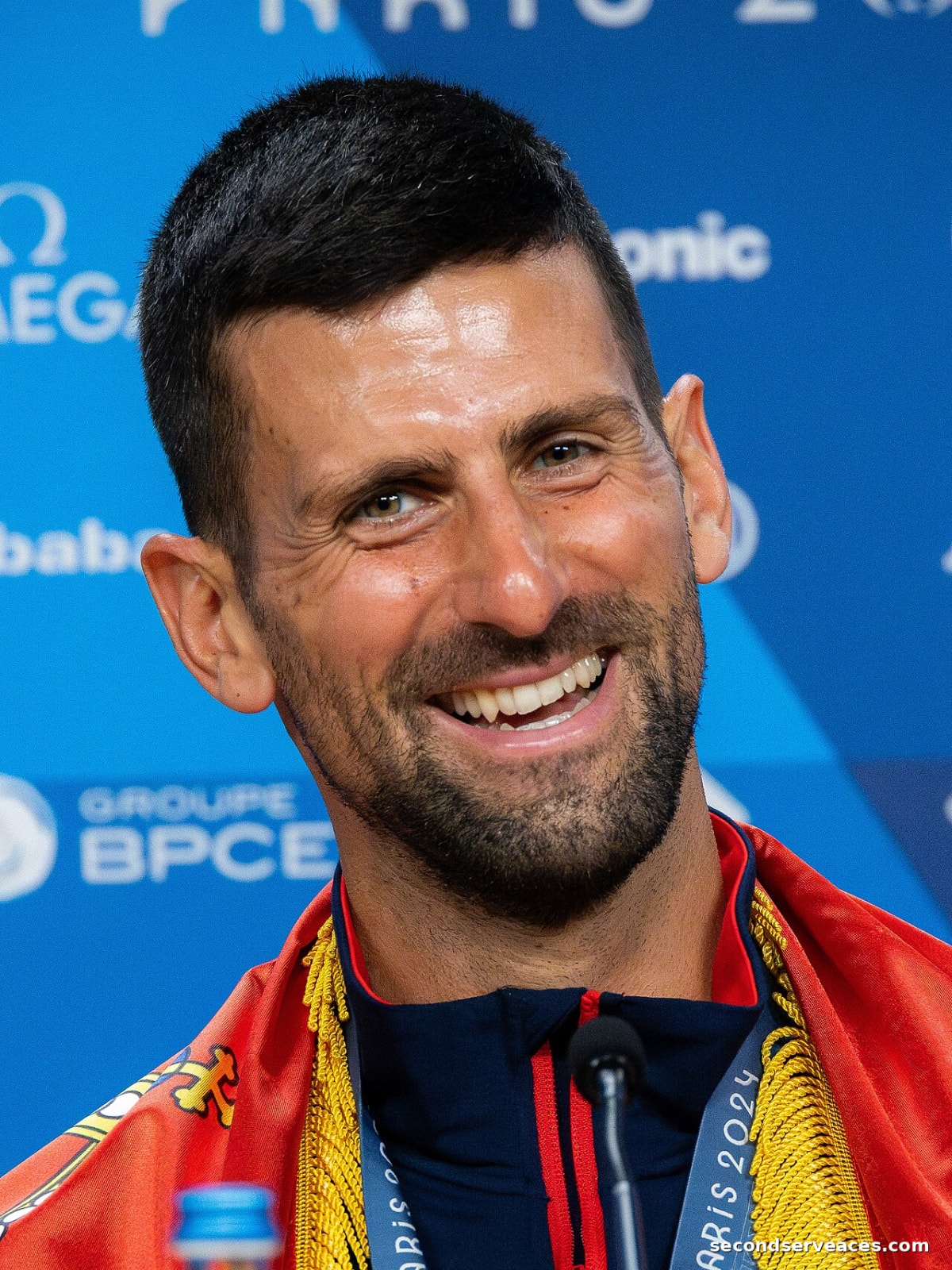
Novak Djokovic stood victorious once more, claiming his seventh crown in the Chinese capital. Yet, the manner of this victory was far from the classical, hard-fought battles of yesteryear. The final three matches of the tournament concluded without a single match point being contested, a bizarre sequence of events that would have flabbergasted the stalwarts of 1970s tennis, who played with wooden rackets and a far greater sense of physical resilience.
Listen to the Second Serve Podcast
Get our daily AI-synthesized audio briefings and match reviews on the go.
In our previous coverage of the Djokovic Beijing Win, we noted how the Belgrade Basilisk—as I occasionally style the great Serbian—navigated a draw that essentially evaporated around him. To win a championship of this stature without having to strike a ball on match point in the final rounds feels more like an administrative coronation than a sporting triumph. One longs for the era of Ken Rosewall and Arthur Ashe, where matches were settled by pure racket work and unyielding stamina rather than medical retirements.
The climax of the tournament saw Australia's Alex de Minaur retire in the final match itself due to a severe groin injury. For De Minaur, a competitor known for his relentless footwork, to bow out in such a fashion was a tragedy for the Beijing spectators who had paid handsomely to witness a proper duel. The crowd was left with a hollow exhibition, a stark reminder of the physical demands of modern hard-court tennis and the fragile state of today's elite players.
The Medvedev Meltdown and the Spectator Incident
The drama, however, had begun much earlier in the week, most notably during a highly controversial semifinal clash. Daniil Medvedev, the unorthodox Russian counterpuncher often referred to as "The Octopus," found himself disqualified late in the second set. According to official reports, Medvedev was defaulted after hitting a spectator with a ball—an egregious breach of classic tennis etiquette that would have seen a player barred from any respectable club in my youth.
This outburst proved costly for the world No. 6, stripping him of both his hard-earned ranking points and his prize money for the week. The incident occurred with Djokovic leading 7-5, 5-3, bringing an abrupt and distasteful end to what had been a fascinating tactical display. As we detailed in our report on the China Open controversy, such displays of petulance highlight a growing lack of court decorum among the modern crop of players.
In the vintage era of the sport, a player's frustration was channeled into exquisite slice backhands or tactical lobs, not directed at the paying public. Medvedev's disqualification not only marred his personal record but also deprived the tournament of a legitimate competitive conclusion. It was a lamentable chapter in the history of the Beijing event, leaving purists to sigh for the gentlemanly conduct of the past.
The Breaking Point of the Modern Tennis Gladiator
Beyond the disciplinary theatrics, the tournament was plagued by a broader physical breakdown among its top competitors. The opposite half of the draw became a veritable field hospital. Both semifinalists, Hubert Hurkacz and Alex de Minaur, were severely compromised by injuries, with Hurkacz forced to retire before the final, leaving De Minaur to hobble into the championship match only to succumb to his groin injury.
This rash of physical failures is not an isolated incident but rather a symptom of a grueling, twelve-month calendar. The relentless pounding on unforgiving hard courts has reduced some of the world's finest athletes to walking wounded. The modern game, with its extreme western grips and slide-and-glide movement on abrasive concrete, demands a physical toll that the human frame was simply not designed to endure over such extended periods.
One cannot help but analyze the geometry of the modern swing, which puts immense strain on the joints compared to the fluid, classic strokes of the 1970s. When players are forced to compete nearly every week to maintain their standing in the ATP rankings, something must eventually give. In Beijing, the breaking point was reached with alarming visibility, raising serious questions about the sustainability of the current tour schedule.
The Long Road Back for the Tour's Walking Wounded
The casualty list from this season extends far beyond the borders of China. Jannik Sinner, the reigning Wimbledon champion, made the difficult decision to end his season prematurely. The young Italian has been sidelined since his triumph in southwest London in early July, choosing to undergo extensive treatment on a persistent knee injury rather than risk long-term damage to his promising career.
Similarly, Carlos Alcaraz has only recently returned to competitive action after a grueling five-month layoff caused by a debilitating wrist injury. The Spaniard's explosive style of play, while breathtaking to behold, clearly places immense stress on his tendons. To see such youthful prodigies spending months in rehabilitation clinics rather than on the court is a damning indictment of the sport's current trajectory.
The governing bodies of tennis must address this systemic issue before the spectacle is permanently diminished. If the sport's marquee names are constantly confined to the sidelines, the prestige of these great tournaments will inevitably decline. For now, the tour marches on, but the warning signs flashing from the courts of Beijing cannot be ignored by those who care for the future of the game.
Rivalry Matchup & Player Profiles
| Metric | Novak Djokovic | Daniil Medvedev |
|---|---|---|
| Rank | No. 8 | No. 6 |
| Age | 39 | 30 |
| Country | Serbia | Russia |
| Height | 1.88 m (6 ft 2 in) | 1.98 m (6 ft 6 in) |
| Handedness | Right-handed | Right-handed |
| Play Style | Aggressive baseliner | Unorthodox counterpuncher |
| Career Titles | 102 | 24 |
Novak Djokovic continues to dominate his head-to-head rivalry against Daniil Medvedev, leading their historic matchup with an 11-5 record. Their encounters have always featured a fascinating contrast of styles, pitting Djokovic's immaculate baseline precision against Medvedev's flat, deep, and highly unorthodox counterpunching. However, their most recent meeting in the 2026 Beijing semifinals will be remembered for all the wrong reasons, ending in a set score of 1-0 to Djokovic after Medvedev was disqualified late in the second set at 7-5, 5-3.
While Medvedev's unique defensive skills have occasionally troubled the Serbian maestro in past Grand Slam finals, Djokovic's superior tactical adaptability and mental fortitude have consistently given him the upper hand. At 39 years of age, Djokovic's ability to maintain his position elite status while younger rivals falter physically remains one of the wonders of the modern sporting era.
What Novak Djokovic Plays With
Head Speed Pro
Luxilon ALU Power 125
Head Prime Tour (12-Pack)
Asics Court FF 3 Novak
Analyze Novak Djokovic vs. Daniil Medvedev
Predict tactical adjustments, momentum swings, and serve strategy options for this match-up using our AI simulator.
The Aces Tactical Panel
This report was curated and edited by Bhaskar Goel. Tactical analysis and technical insights were provided by our specialized panel of expert correspondents.
Julian Price
Senior Tactical Correspondent
Stuffy, pedantic British academic and historian specializing in match momentum and historical context.
Elena Cruz
Director of Analytical Research
Data scientist specializing in court surface physics and movement patterns.
Bhaskar
The Editor & Fan
Passionate tennis player and site editor bringing everyday amateur insights and relatable fan commentary.
Arthur Vance
Senior Existential Analyst
Deep, eccentric, and DFW-inspired. Models court metaphysics, kinetic beauty, and player psychology.
Leo Sterling
High-Performance Consultant
Hard-nosed ex-trainer from Melbourne with a no-nonsense view on tour fitness.
Related Reports
Quick Answers
Why was Daniil Medvedev disqualified from the China Open?+
Daniil Medvedev was defaulted during his semifinal match against Novak Djokovic for hitting a spectator with a ball, resulting in the loss of his ATP points and prize money.
How did Novak Djokovic win the China Open title without playing a full final?+
Djokovic won the title after his opponent, Alex de Minaur, was forced to retire during the final match due to a groin injury, following a series of retirements in the preceding rounds.
Which other top players missed or withdrew from the China Open due to injury?+
Hubert Hurkacz retired during the tournament, Jannik Sinner ended his season early to treat a knee injury, and Carlos Alcaraz only recently returned from a five-month wrist injury layoff.