The Anatomy of a Mechanical Setback
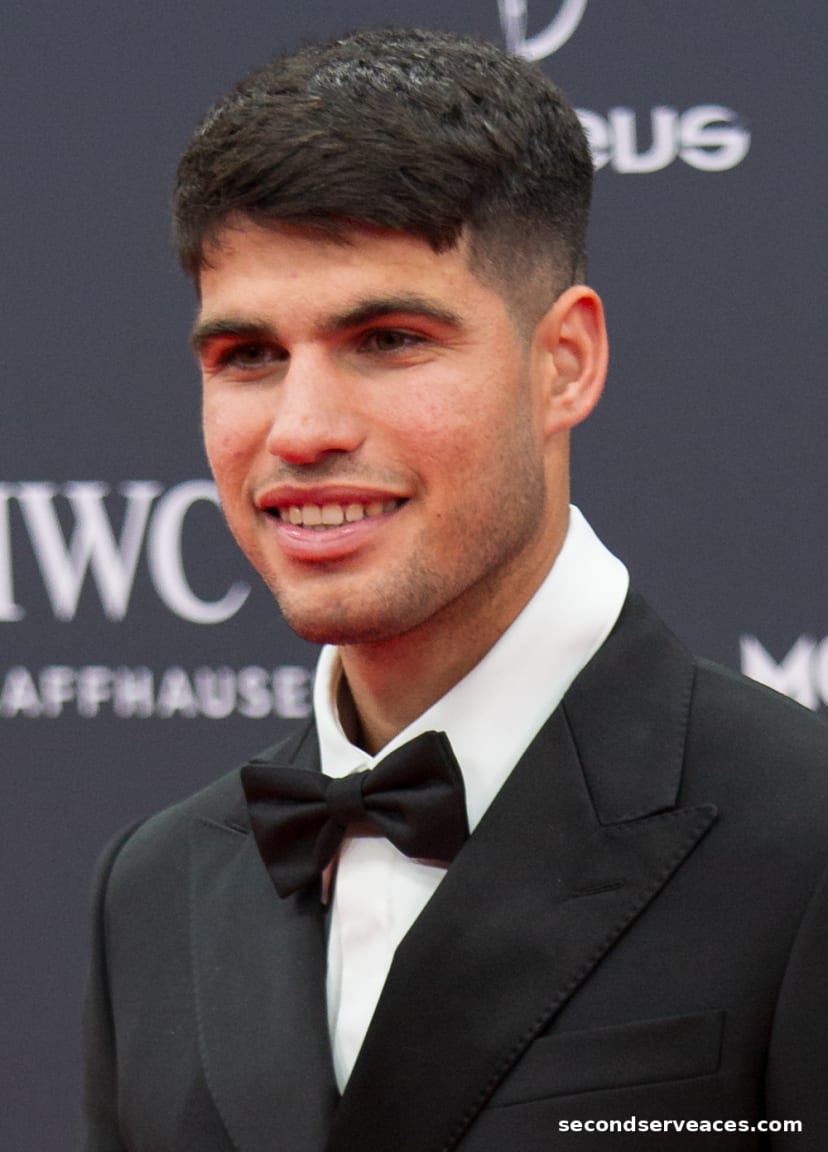
Tennis, at its most elite level, is essentially an exercise in the management of kinetic chains. When Carlos Alcaraz strikes a forehand, he is not merely hitting a ball; he is accelerating a mass through a whip-like rotation of the torso, shoulders, and, crucially, the wrist. The news that the reigning French Open champion has been forced to withdraw from the Madrid Open due to a right wrist injury suggests a systemic friction in that chain.
Listen to the Second Serve Podcast
Get our daily AI-synthesized audio briefings and match reviews on the go.
The visual evidence is as sobering as the clinical report. Observers have noted the presence of a protective brace on the Spaniard’s right hand, a stark visual indicator that his primary tool of trade is currently compromised. The wrist, a complex confluence of ligaments and small bones, is the final relay point for the power generated by his explosive frame. When this link enters a state of inflammation or structural fatigue, the entire architecture of his high-topspin game begins to tremor.
This is not merely about missing a tournament; it is about the preservation of a career defined by high-intensity, high-torque ball striking. While ATP Tour competitors operate with a familiar sense of mortality, watching a player of Alcaraz’s velocity operate under the shadow of a chronic ailment highlights the fragile nature of professional peak performance.
Shadows Over the Bois de Boulogne
The 2026 French Open, slated for May 18 to June 7, looms as a massive, red-clay reality check. The surface, which demands an absurd level of wrist stability to generate the heavy, dipping topspin required for success, may be the most punishing possible environment for an injured right hand. The uncertainty surrounding his status remains tethered to medical test results yet to be processed, leaving the tour in a state of speculative limbo.
It is worth noting the current state of the field. Novak Djokovic, the standard-bearer for longevity, has also navigated significant absences this season, having bypassed events in Miami and Monte Carlo in addition to his current withdrawal from Madrid. We are seeing a shift, a thinning of the ranks where even the most disciplined regimens are succumbing to the sheer physical toll of the modern game’s pace.
For Alcaraz, the trajectory has been one of immense momentum, punctuated by his recent first-round win in Barcelona. That victory now feels like a distant data point, a testament to what he can do when the mechanics are aligned. Now, he faces a period of forced stillness, a test of patience that is perhaps more difficult for a competitor than the most grueling five-set match point.
The Geometry of Recovery
The technical reality is that the wrist doesn't heal in a vacuum. It requires an absence of the repetitive, violent deceleration that defines the modern forehand. The ATP rankings and point totals are abstract numbers; the reality is found in the physical capacity of the tendons to withstand the impact of a pressurized felt sphere traveling at near-sonic speeds.
Every match played with a sub-optimal wrist is a gamble against chronic instability. If Alcaraz returns before the articulation of the joint is fully sound, he risks a compensatory shift in his stroke mechanics. This is how injuries metastasize; the elbow or shoulder begins to overcompensate for the lack of flick in the wrist, leading to a breakdown in the kinetic efficiency that allows him to dictate match momentum.
The anticipation for Roland Garros is dampened by this lingering uncertainty. A major tournament without its defending champion is a different landscape entirely, lacking that specific, kinetic spark. Whether Alcaraz can recover his form in time is a question that will be answered not by desire, but by the stubborn, linear progression of biological healing.
Strategic Implications for the Tour
The absence of both Alcaraz and Djokovic from a key swing in the season redistributes the gravity of the tour. The draw at any given event is a zero-sum game of talent distribution, and when the top-tier architects of point construction are absent, the tactical landscape shifts toward those who can best manage the vacuum of power. It creates an opening for the field to assert dominance, but it also strips the sport of the narrative arcs that define historic rivalries.
We are left waiting for the next communique from his camp. Tennis, in its essence, is a sport of waiting—waiting for the ball to descend, waiting for the opponent to blink, and, in this instance, waiting for the body to permit the mind to play. The upcoming tests will define not just the next few weeks of his season, but perhaps the long-term feasibility of his current, high-octane playing style.
The sport remains a game of inches and, more importantly, a game of milliseconds where the margin for error is razor-thin. For Alcaraz, the hope is that this is merely a minor mechanical adjustment period, a brief pause before the next iteration of his game. If not, we are forced to reckon with the reality that the physical limits of the human frame may eventually catch up even to the most transcendent talents.
What Carlos Alcaraz Plays With
Babolat Pure Aero 98
Babolat RPM Blast 1.30
Nike Vapor Pro 2
Analyze Carlos Alcaraz vs. Novak Djokovic
Predict tactical adjustments, momentum swings, and serve strategy options for this match-up using our AI simulator.
The Aces Tactical Panel
This report was curated and edited by Bhaskar Goel. Tactical analysis and technical insights were provided by our specialized panel of expert correspondents.
Julian Price
Senior Tactical Correspondent
Stuffy, pedantic British academic and historian specializing in match momentum and historical context.
Elena Cruz
Director of Analytical Research
Data scientist specializing in court surface physics and movement patterns.
Bhaskar
The Editor & Fan
Passionate tennis player and site editor bringing everyday amateur insights and relatable fan commentary.
Arthur Vance
Senior Existential Analyst
Deep, eccentric, and DFW-inspired. Models court metaphysics, kinetic beauty, and player psychology.
Leo Sterling
High-Performance Consultant
Hard-nosed ex-trainer from Melbourne with a no-nonsense view on tour fitness.