The Physical Toll of the Red Dirt
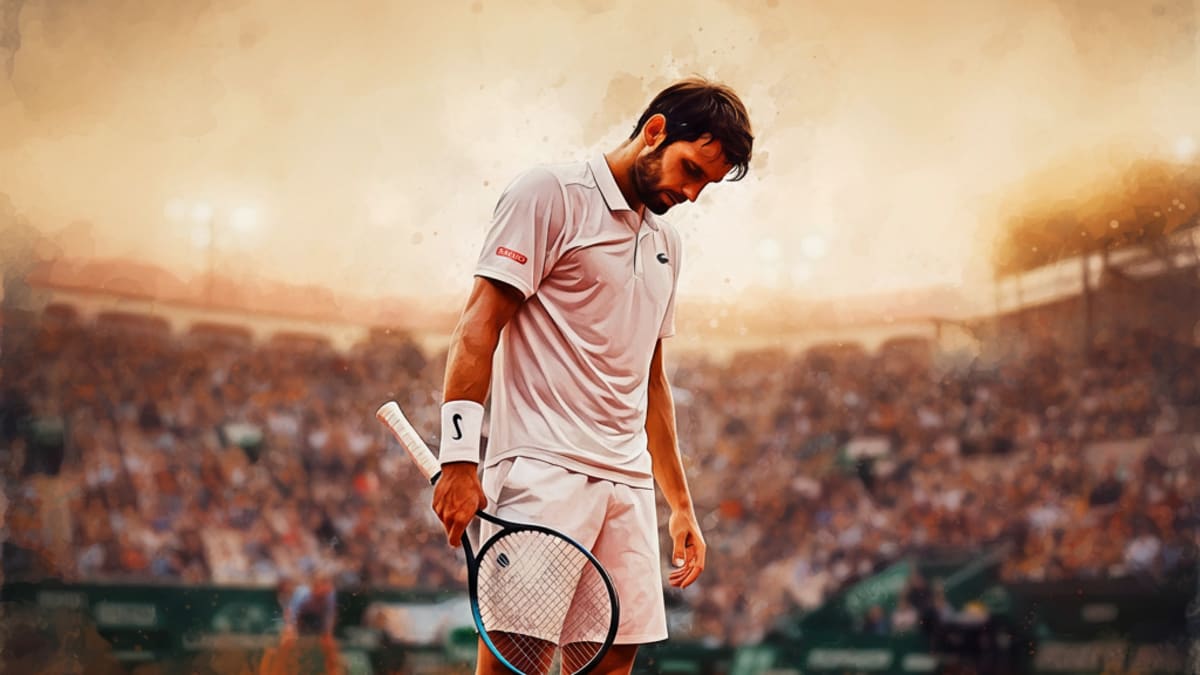
Tennis is a game of violent, repetitive torque, a sequence of kinetic energy that begins in the ankles and terminates in the delicate, complex ligaments of the wrist. For Carlos Alcaraz, the Barcelona Open was intended to be a routine fortification of his clay-court credentials. However, an injury sustained during his victory against Otto Virtanen has unspooled those plans entirely.
Listen to the Second Serve Podcast
Get our daily AI-synthesized audio briefings and match reviews on the go.
The decision to withdraw before a scheduled clash with Tomas Machac was not merely a tactical pivot; it was a necessary admission of physical frailty. The wrist, an anatomical bottleneck for a player whose game relies on heavy topspin and whip-like acceleration, is now the focal point of a concerning absence from the Madrid Open.
This development serves as a stark reminder of the tenuous nature of high-performance athleticism. When the wrist—a hinge point for the most aggressive forehands in the sport— falters, the entire scaffolding of a player’s rhythm, confidence, and competitive output begins to sag under the weight of anticipation.
The Shifting Geometry of the ATP Rankings
While Alcaraz recuperates, the mathematical reality of the tour continues to evolve. Jannik Sinner, whose own trajectory has been defined by a relentless, metronomic efficiency, currently maintains a 390-point lead in the ATP rankings. This gap, while bridgeable in a vacuum, gains significance as the European clay swing progresses toward its zenith.
The vacuum created by a sidelined superstar changes the gravitational pull of the entire draw. Every tournament Alcaraz misses is a point-accrual opportunity for his rivals, potentially complicating his seedings and path to future trophies. The sport is unforgiving in its arithmetic; absence is effectively a zero-sum game.
We are watching a shift in the hierarchy that is dictated as much by medical reports as by match results. For a player who thrives on the kinetic engagement of the game, sitting stationary while the points tick away is a burden far heavier than any tie-break.
The Looming Specter of Roland Garros
The calendar, with its relentless, cyclical pressure, offers little room for lingering recovery. Feliciano Lopez has already signaled that an appearance at the Italian Open in Rome is unlikely, further narrowing the window for Alcaraz to find his clay-court legs before the Grand Slam season reaches its second act.
As the defending champion at Roland Garros, the pressure on Alcaraz to return in peak physical condition is immense. A wrist injury is not something one simply plays through; it requires a structural integrity that, if compromised, threatens to diminish the explosive topspin that is his primary weapon.
The uncertainty regarding his participation in Paris transforms the upcoming weeks into an exercise in rehabilitation monitoring. We are no longer discussing tactical matchups or break-point percentages, but rather the internal, physiological repair of the very mechanism that makes his game a marvel of modern physics.
The Professionalism of Pacing and Preservation
Retiring from a tournament before facing an opponent like Tomas Machac is a difficult, mature decision for a young star. It represents a transition from the invincibility of youth to the measured, career-long strategy required to remain at the apex of the sport for a decade or more.
In the high-stakes environment of professional tennis, the ability to recognize when the body has reached its limit is perhaps the most underrated skill a player can possess. It is the difference between a minor setback and a career-altering complication.
Ultimately, the health of the game depends on the health of its protagonists. Whether or not Alcaraz can bridge the ranking gap with Sinner, his primary task now is the silent, painstaking work of restoring the connection between his intent and his anatomy.
What Carlos Alcaraz Plays With
Babolat Pure Aero 98
Babolat RPM Blast 1.30
Babolat VS Original (12-Pack)
Nike Vapor Pro 2
Analyze Carlos Alcaraz vs. Otto Virtanen
Predict tactical adjustments, momentum swings, and serve strategy options for this match-up using our AI simulator.
The Aces Tactical Panel
This report was curated and edited by Bhaskar Goel. Tactical analysis and technical insights were provided by our specialized panel of expert correspondents.
Julian Price
Senior Tactical Correspondent
Stuffy, pedantic British academic and historian specializing in match momentum and historical context.
Elena Cruz
Director of Analytical Research
Data scientist specializing in court surface physics and movement patterns.
Bhaskar
The Editor & Fan
Passionate tennis player and site editor bringing everyday amateur insights and relatable fan commentary.
Arthur Vance
Senior Existential Analyst
Deep, eccentric, and DFW-inspired. Models court metaphysics, kinetic beauty, and player psychology.
Leo Sterling
High-Performance Consultant
Hard-nosed ex-trainer from Melbourne with a no-nonsense view on tour fitness.