A Familiar Silence at the Caja Mágica
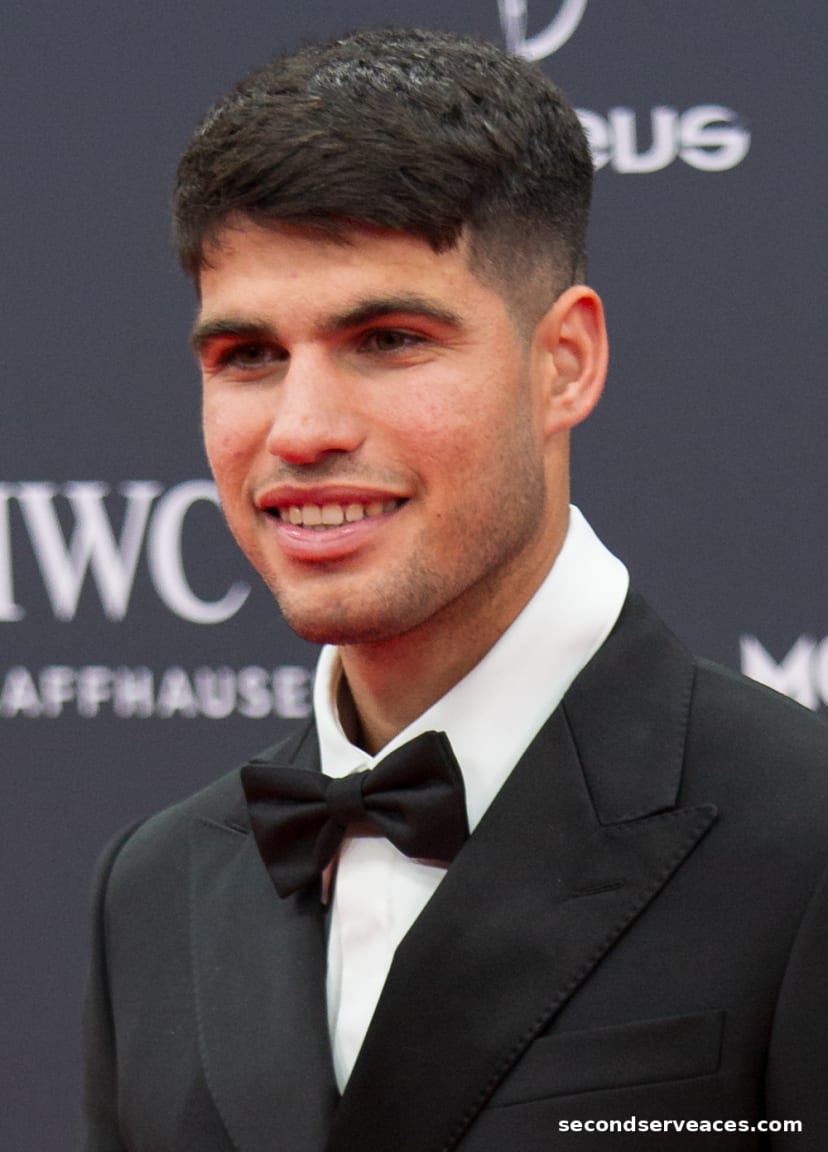
There is a specific kind of quiet that falls over a locker room when a marquee name doesn't show. For the second consecutive year, the Madrid Open will proceed without its most celebrated local talent. Carlos Alcaraz has officially withdrawn, citing a persistent wrist injury that first flared up during the Monte-Carlo tournament.
Listen to the Second Serve Podcast
Get our daily AI-synthesized audio briefings and match reviews on the go.
It is the kind of news that hits a player’s rhythm harder than any opponent’s serve. Having previously missed this event due to an adductor injury, the 22-year-old finds himself wrestling not with a tactical breakdown, but with the fragile mechanics of his own body. In this game, your tools are your identity, and when the wrist—the conduit for all that devastating topspin—fails, the entire architecture of a season begins to shift.
The timing is ruthless. With Novak Djokovic also confirming his withdrawal due to physical issues, the draw in Madrid is suddenly a landscape of uncertainty. For Alcaraz, the absence isn't just about missing a home crowd; it’s about the brutal arithmetic of professional tennis, where every missed week is a compounding interest of lost opportunities.
The Arithmetic of Defending Dominance
The stakes here extend far beyond the clay of Madrid. When you operate at the top of the ATP rankings, you are constantly feeding a beast that never sleeps: the point-defense cycle. Alcaraz is currently tasked with protecting a staggering 3,000 points across the upcoming swing in Rome and Roland Garros.
Every point is a brick in the wall of a season. When those points are left on the table because a wrist won't cooperate, the pressure for the remainder of the spring becomes suffocating. You are no longer playing to win; you are playing to stay afloat. It changes the mental state of the athlete—moving from the hunter to the person constantly looking over their shoulder at the draw sheets.
The reality is that injuries are the only true equalizer in tennis. It doesn't matter if you are Carlos Alcaraz, Jannik Sinner, or Novak Djokovic; if the kinetic chain is broken, the match momentum is lost before you even step onto the court. The recovery process is the most grueling match any of these players will ever play.
The Mentality of the Mandatory Pause
Watching a young, ascending talent like Alcaraz forced to the sidelines is a harsh reminder of the physical cost of modern tennis. The grind required to compete at this level is relentless, and when a player of his caliber is forced to step back, it forces us to look at the longevity of his career. It isn't just about today; it's about the decades-long trajectory that legends like Boris Becker always warned were the true measure of success.
He is young, but the wrist doesn't care about age or potential. It only cares about load management and recovery. His disappointment is palpable, and that frustration is perhaps the most dangerous hurdle he faces. Learning to manage the mental toll of an injury is as vital as the forehand technique itself; you have to train your patience with the same intensity you train your backhand.
The tour moves on, but the questions remain. Can he manage the intensity of the clay court transition without further aggravating the injury? For now, the focus is entirely on the recovery table, away from the stadium lights and the roar of the fans. It is the darkest part of the job, and it’s where the real grit is defined.
The Ripple Effect Through the Draw
With both Alcaraz and Djokovic sidelined, the hierarchy of the Madrid draw is in flux. Players like Holger Rune and others have a sudden opening, but the void left by the two primary stars changes the intensity of the entire event. The absence of the biggest names creates a vacuum where the pressure shifts to the challengers to fill the void left by the titans.
This is the business of the game—the vacuum is always filled by the next man up. However, the absence of high-level competition at a marquee event like Madrid diminishes the theater of the match. Fans crave the clash of the titans, and when the titans are healing, the game loses a significant piece of its narrative pulse.
We are watching a shifting of the guard, not just in talent, but in the physical reality of the tour. The durability of the top seeds is under fire. As we wait for updates on his return, the rest of the tour must step into the light, even as the shadow of his absence looms over the tournament.
What Carlos Alcaraz Plays With
Babolat Pure Aero 98
Babolat RPM Blast 1.30
Nike Vapor Pro 2
Analyze Carlos Alcaraz vs. Jannik Sinner
Predict tactical adjustments, momentum swings, and serve strategy options for this match-up using our AI simulator.
The Aces Tactical Panel
This report was curated and edited by Bhaskar Goel. Tactical analysis and technical insights were provided by our specialized panel of expert correspondents.
Julian Price
Senior Tactical Correspondent
Stuffy, pedantic British academic and historian specializing in match momentum and historical context.
Elena Cruz
Director of Analytical Research
Data scientist specializing in court surface physics and movement patterns.
Bhaskar
The Editor & Fan
Passionate tennis player and site editor bringing everyday amateur insights and relatable fan commentary.
Arthur Vance
Senior Existential Analyst
Deep, eccentric, and DFW-inspired. Models court metaphysics, kinetic beauty, and player psychology.
Leo Sterling
High-Performance Consultant
Hard-nosed ex-trainer from Melbourne with a no-nonsense view on tour fitness.