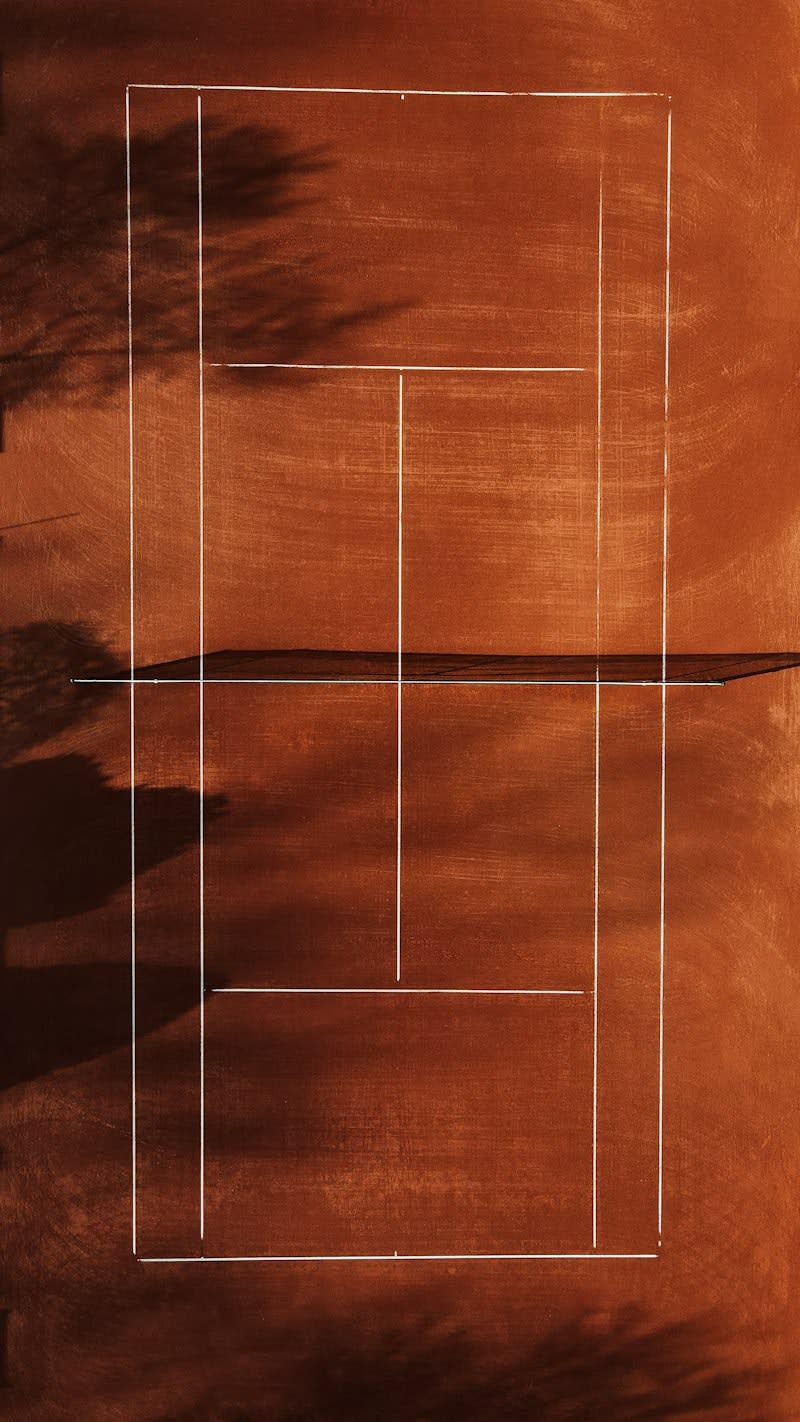
The Physical Ceiling of Modern Baseline Dominance
The human body is not a machine, despite what the metrics of modern professional tennis might suggest. With the announcement that Carlos Alcaraz will withdraw from Roland Garros 2026, we are forced to reconcile with the harsh, unspoken physics of the ATP circuit. The injury, which is expected to sideline the Spaniard until the Queen's Club Championships, is less a singular misfortune and more the final receipt for a season built on relentless acceleration.
Listen to the Second Serve Podcast
Get our daily AI-synthesized audio briefings and match reviews on the go.
Alcaraz’s game relies on an explosive kinetic chain; his forehand is a masterpiece of rotational force, requiring a stable core and flawless biomechanical health. When that engine is subjected to the repetitive, high-friction demands of clay-court tennis, the micro-traumas in the musculature—often invisible to the spectators—eventually demand a full system reset. The torque required to generate his signature topspin is immense, and when the body refuses to cooperate, the geometry of his game collapses.
This reality brings into question the sustainability of the current scheduling protocols. We see a player whose entire identity is forged in intensity, yet the current ATP Tour structure seems to incentivize a pace that exceeds the biological recovery limits of even the most elite athletes.
The Scheduling Crucible and the Voice of Experience
Industry veterans Alex Corretja and Andrea Panatta have been vocal in their diagnosis of this phenomenon. They argue, quite convincingly, that the industry is cannibalizing its stars through sheer volume. The decision to cram high-stakes tournament slots back-to-back—notably the brutal turnaround between the Monte Carlo and Barcelona events—has created a tactical void that now defines the path to the trophy in Paris.
When the schedule leaves no room for the necessary inflammatory recovery cycles required by elite-level athletes, the injury rate inevitably shifts from an anomaly to a statistical certainty. Corretja’s critique hits on a fundamental truth: by tightening the calendar to maximize engagement, the tour risks thinning the field of the very individuals who draw the eyes to the sport.
For Alcaraz, this is a forced intermission. The recovery process is not merely about rest; it is about calibrating the tension in those explosive muscle fibers so that he might return to a game where he can once again dictate pace without the looming fear of a structural failure at the point of contact.
A Landscape Reconfigured by Absence
The draw at Roland Garros now undergoes a tectonic shift. With Alcaraz removed from the mix, the tactical architecture changes for everyone else. Players like Sinner, who would have been preparing for a specific, high-torque matchup against the Spaniard, must now recalibrate their entire preparation toward different stylistic puzzles. The vacuum left in the draw isn't just about rankings; it’s about the erasure of a specific set of tactical problems that defined the "Alcaraz Experience."
The tactical void left behind is one that invites speculation on who stands to gain the most from this realignment. Dark-horse candidates—players who thrive in the relative stability of a draw without the Spaniard's hyper-aggressive court coverage—are now effectively staring at a path with significantly fewer obstacles. The parity of the current tour, a subject of much debate alongside the names of Karolina Pliskova, Iga Swiatek, and rising talents like Rafael Jodar, is suddenly more fluid.
It creates a psychological ripple effect. The other contenders are now playing for a prize that has suddenly become more attainable, a realization that can lead to either an elevation in performance or the pressure-induced tightening of the strings. The French Open will proceed, but the texture of the event will be fundamentally different in the absence of the player who has defined the modern standard of athleticism on the dirt.
The Legacy of Endurance in the Post-Nadal Era
We are watching the end of an era where durability was synonymous with greatness. The comparisons to Rafael Nadal are inevitable, though the contexts differ vastly. While Nadal mastered the art of managing the clay court’s demands over two decades, the modern player is being asked to perform at 100% intensity for 11 months a year, with equipment and court speeds that only heighten the physical toll.
This hiatus for Alcaraz should be viewed as a mandatory lesson in the business of athlete longevity. If the tour does not respect the biomechanical reality of its stars, it will eventually lose them to the very court surfaces they are meant to dominate. We are currently witnessing a turning point in professional tennis, where the best minds in sports medicine and scheduling will have to negotiate a compromise between spectacle and structural integrity.
The beauty of the game has always been in the struggle, but there is a profound difference between the struggle of a five-set match and the struggle against one's own limitations. The return to the Queen’s Club will be the first metric of his recovery, and for the fans, it represents the hope that the most exciting engine in tennis will find its rhythm once more.
What Carlos Alcaraz Plays With
Babolat Pure Aero 98
Babolat RPM Blast 1.30
Babolat VS Original (12-Pack)
Nike Vapor Pro 2
Analyze Carlos Alcaraz vs. Alex Corretja
Predict tactical adjustments, momentum swings, and serve strategy options for this match-up using our AI simulator.
The Aces Tactical Panel
This report was curated and edited by Bhaskar Goel. Tactical analysis and technical insights were provided by our specialized panel of expert correspondents.
Julian Price
Senior Tactical Correspondent
Stuffy, pedantic British academic and historian specializing in match momentum and historical context.
Elena Cruz
Director of Analytical Research
Data scientist specializing in court surface physics and movement patterns.
Bhaskar
The Editor & Fan
Passionate tennis player and site editor bringing everyday amateur insights and relatable fan commentary.
Arthur Vance
Senior Existential Analyst
Deep, eccentric, and DFW-inspired. Models court metaphysics, kinetic beauty, and player psychology.
Leo Sterling
High-Performance Consultant
Hard-nosed ex-trainer from Melbourne with a no-nonsense view on tour fitness.


