The Physicality of Absence in the Spanish Spring
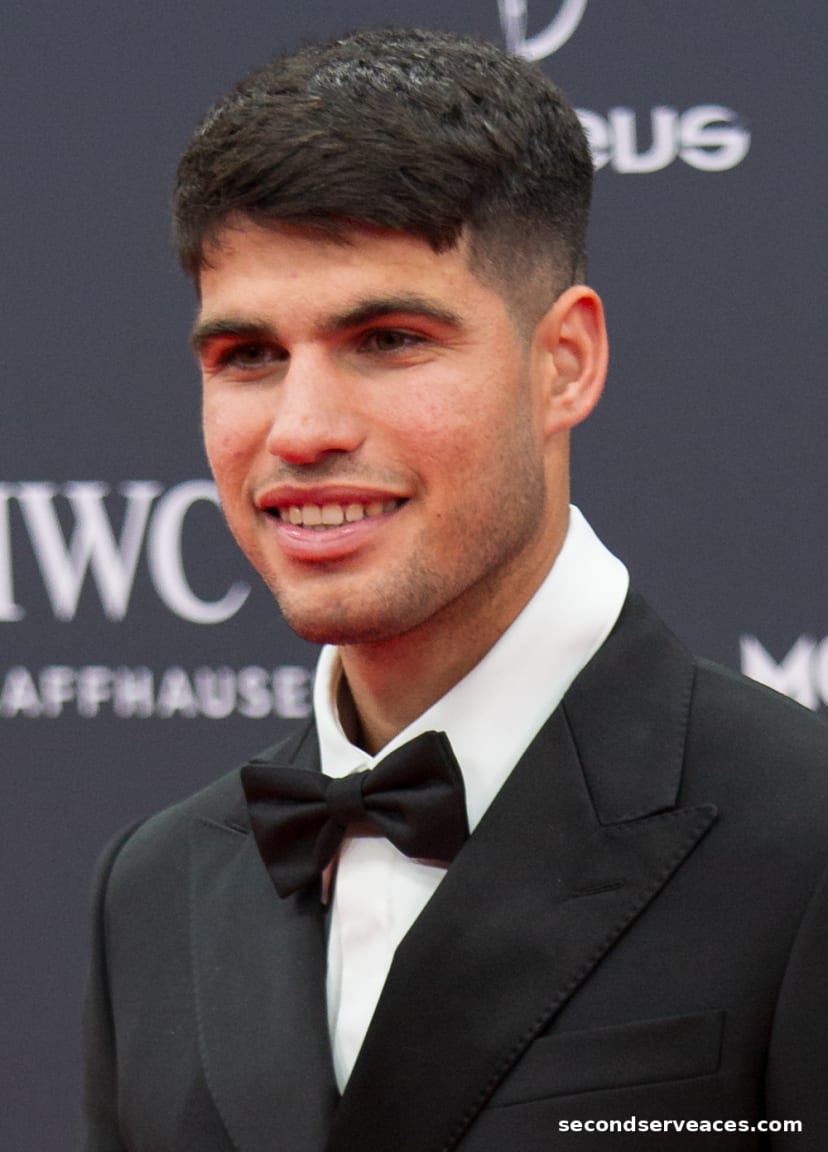
Tennis, at its most elevated level, is a dialogue between human kinetic energy and the unforgiving resistance of the ground beneath us. For Carlos Alcaraz, that dialogue has been abruptly silenced. The recent observation of the young phenom in a cast confirms what the whispers surrounding the circuit had feared: his immediate departure from the remainder of the clay court season, most notably the upcoming French Open.
Listen to the Second Serve Podcast
Get our daily AI-synthesized audio briefings and match reviews on the go.
There is a specific, melancholy physics to an injury of this magnitude. It isn't just the loss of a player; it is the evacuation of a specific brand of velocity. Alcaraz occupies space on a court with a distinct, aggressive geometry that requires perfect biomechanical synchronicity. When that rhythm is interrupted by the clinical reality of a medical cast, the entire ecosystem of the tour feels the tremors of his departure.
This development is not merely a medical note—it is a categorical shift in the expectations for the Parisian swing. The absence of the tour’s most explosive mover leaves a gravitational hole that the rest of the field, from ATP Tour veterans to the insurgent youth, must now grapple with as they prepare for the rigors of seven-match formats on the dirt.
The Rising Entropy of the European Clay Swing
While the headlines naturally gravitate toward the loss, the periphery of the ATP landscape is currently defined by a fascinating, bubbling instability. We have recently witnessed the ascendance of players like Ben Shelton and Arthur Fils, who claimed titles in Munich and Barcelona. These performances are not just snapshots of good form; they represent a tactical hardening, a necessary maturation required to survive the abrasive conditions of European clay.
Consider the performance of 19-year-old Rafael Jodar, whose victory over Alex de Minaur in Madrid serves as a microcosm of the current volatility. It reminds us that tennis at this level is rarely a linear progression of established hierarchies. The defeat of a top-tier defender like de Minaur by a relative newcomer demonstrates that the field is experiencing a profound, decentralized shift in power dynamics.
This volatility is the central theme of the season. Without the stabilizing presence of an Alcaraz to enforce order, the upcoming weeks will likely devolve into a pure test of endurance and adaptation. Every draw, every opening round, and every changeover now carries a heightened sense of consequence for those looking to seize the vacant momentum of the spring.
Recalibrating the Narrative for Roland-Garros
With the primary protagonist sidelined, the conversation turns toward the architects of the vacuum: Jannik Sinner, Alexander Zverev, and the perennial, haunting presence of Novak Djokovic. Each of these figures approaches the clay with a different set of computational variables. Sinner possesses the technical precision to dissect baseline exchanges, while Zverev remains one of the most effective practitioners of high-margin, heavy-spin geometry when his confidence is at its peak.
Then, of course, there is the lingering phantom of Rafael Nadal—the man whose history with the tournament is synonymous with the very surface itself. In the absence of a clear favorite, the tournament moves from being a contest of dominance to a contest of nerves. The question for Sinner and the rest of the pack is not just whether they can strike the ball with sufficient violence, but whether they can handle the psychological weight of playing a Roland-Garros where the outcome is not pre-ordained by Spanish excellence.
This is the essence of professional tennis: the game moves forward with or without its brightest stars. The vacuum left by an injury is not an end; it is a catalyst for new rivalries, unexpected breakthroughs, and the cold, hard realization that every player’s tenure at the top is subject to the limitations of their own physical apparatus.
The Statistical Reality of the Post-Alcaraz Era
As we analyze the fallout, we must rely on the data provided by the ATP rankings and recent tournament outcomes. The metrics are shifting; the serve-plus-one patterns that dominated the hard-court season are currently being tested against the slower, high-bounce surface of the European red clay. When a player of Alcaraz’s caliber is removed from this equation, the margins for victory for the remaining top ten narrow significantly.
We are watching the dissolution of a predictable narrative. The emergence of players like Fils and the resilience of veterans who understand the nuances of the slide and the spin mean that the second half of the spring will be defined by tactical flexibility. It is an invitation for the field to reinvent its approach to point construction.
Ultimately, the game remains a beautiful, brutal exercise in problem-solving. Whether it is an unexpected win in a Masters event or a heartbreaking withdrawal before a Grand Slam, the physics of the court remain unchanged. The ball still spins, the surface still grinds, and the players must still find a way to navigate the chaos of the draw, one point at a time.
What Carlos Alcaraz Plays With
Babolat Pure Aero 98
Babolat RPM Blast 1.30
Nike Vapor Pro 2
Analyze Carlos Alcaraz vs. Rafael Nadal
Predict tactical adjustments, momentum swings, and serve strategy options for this match-up using our AI simulator.
The Aces Tactical Panel
This report was curated and edited by Bhaskar Goel. Tactical analysis and technical insights were provided by our specialized panel of expert correspondents.
Julian Price
Senior Tactical Correspondent
Stuffy, pedantic British academic and historian specializing in match momentum and historical context.
Elena Cruz
Director of Analytical Research
Data scientist specializing in court surface physics and movement patterns.
Bhaskar
The Editor & Fan
Passionate tennis player and site editor bringing everyday amateur insights and relatable fan commentary.
Arthur Vance
Senior Existential Analyst
Deep, eccentric, and DFW-inspired. Models court metaphysics, kinetic beauty, and player psychology.
Leo Sterling
High-Performance Consultant
Hard-nosed ex-trainer from Melbourne with a no-nonsense view on tour fitness.