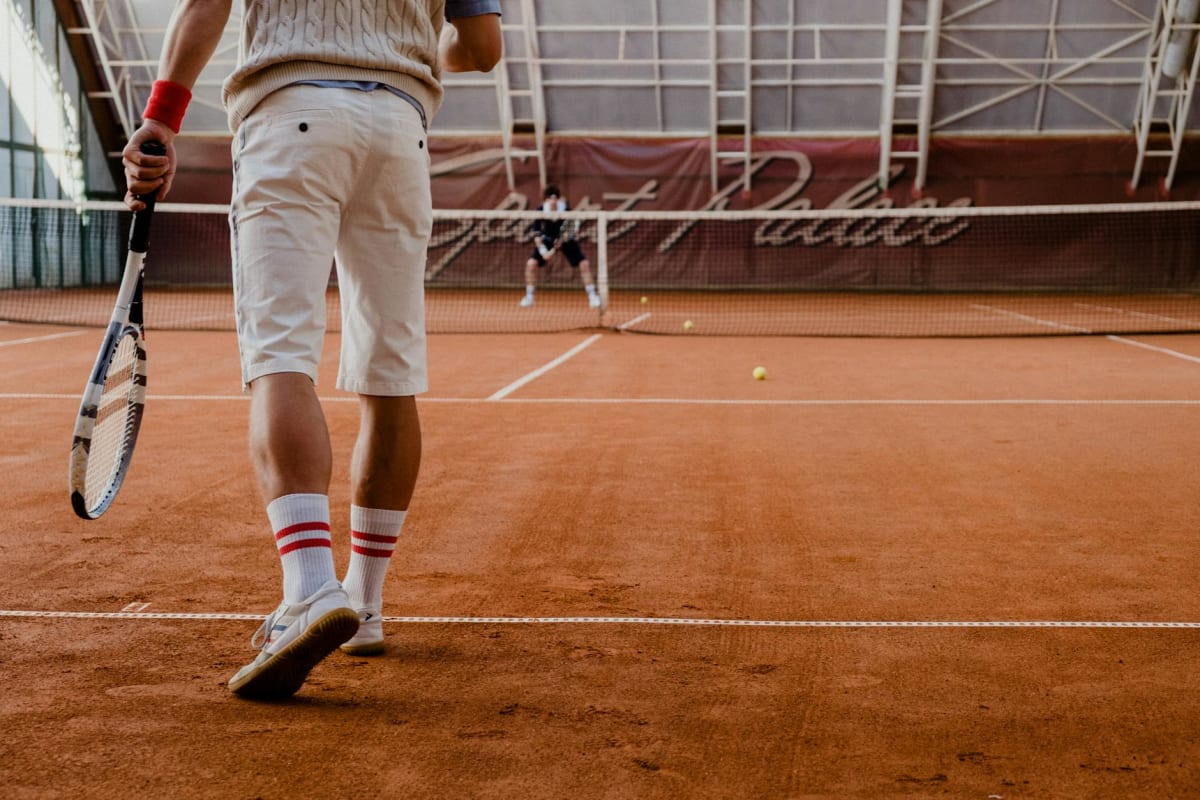
The red dust of Paris will wait, but the heart of the sport skips a beat today. Carlos Alcaraz, the vibrant, irrepressible force of nature who captured our imaginations, has officially withdrawn from the 2026 French Open. The lingering shadows of a wrist injury, an ailment that first surfaced during a truncated run at the Barcelona Open earlier this spring, have proven too formidable to ignore.
Listen to the Second Serve Podcast
Get our daily AI-synthesized audio briefings and match reviews on the go.
The Barcelona Premonition and the Path Forward
It was in the Catalan capital where the trouble began. A quick exit after an opening match in Barcelona sent a tremor through the tour, a whisper that perhaps the young Spaniard’s physicality was being pushed to the brink. For a player whose game is predicated on the explosive velocity of his forehand, a wrist complication is not merely a setback; it is an existential threat to his rhythm.
We have seen the likes of Roger Federer and others navigate the delicate balance between pushing through pain and preserving longevity. By choosing to step away before the first ball is struck in Paris on May 18, 2026, Alcaraz is attempting to secure his future at the expense of his immediate defense. It is a sobering reality for fans who hoped to see him paint the court with his trademark drop shots and blistering topspin.
A Fractured Draw and the Open Field
With the defending champion sidelined, the ATP hierarchy faces a seismic shift. The absence of the young titan creates a vacuum at the top of the draw, handing players like Daniil Medvedev a rare opportunity to secure a top-four seeding—a luxury that was once out of reach on the dirt.
History tells us that Medvedev has had a fraught relationship with the Parisian clay, having reached the quarterfinals only once in his career. Memories are still fresh of his early exit last year at the hands of Cameron Norrie. This year, the terrain is unpredictable. As the world descends upon the Bois de Boulogne, the usual certainties are replaced by a wide-open scramble among the tour's elite.
The New Reality for the Challengers
Who stands to benefit from this sudden opening? The list is long and hungry. From the baseline precision of Jannik Sinner to the fiery temperament of Alexander Zverev, the vacuum left by Alcaraz invites every contender to dream of the Coupe des Mousquetaires. The tactical landscape is now a game of high-stakes chess.
Even the rising stars like Dino Prizmic and Joao Fonseca, who have been shadows in the distance, may find the atmosphere in Paris altered. Without the standard-bearer for the current generation, the pressure shifts to the veterans like Novak Djokovic and the charging Americans like Ben Shelton to claim what is now a vacant throne.
What Carlos Alcaraz Plays With
Babolat Pure Aero 98
Babolat RPM Blast 1.30
Babolat VS Original (12-Pack)
Nike Vapor Pro 2
Analyze Carlos Alcaraz vs. Daniil Medvedev
Predict tactical adjustments, momentum swings, and serve strategy options for this match-up using our AI simulator.
The Aces Tactical Panel
This report was curated and edited by Bhaskar Goel. Tactical analysis and technical insights were provided by our specialized panel of expert correspondents.
Julian Price
Senior Tactical Correspondent
Stuffy, pedantic British academic and historian specializing in match momentum and historical context.
Elena Cruz
Director of Analytical Research
Data scientist specializing in court surface physics and movement patterns.
Bhaskar
The Editor & Fan
Passionate tennis player and site editor bringing everyday amateur insights and relatable fan commentary.
Arthur Vance
Senior Existential Analyst
Deep, eccentric, and DFW-inspired. Models court metaphysics, kinetic beauty, and player psychology.
Leo Sterling
High-Performance Consultant
Hard-nosed ex-trainer from Melbourne with a no-nonsense view on tour fitness.


