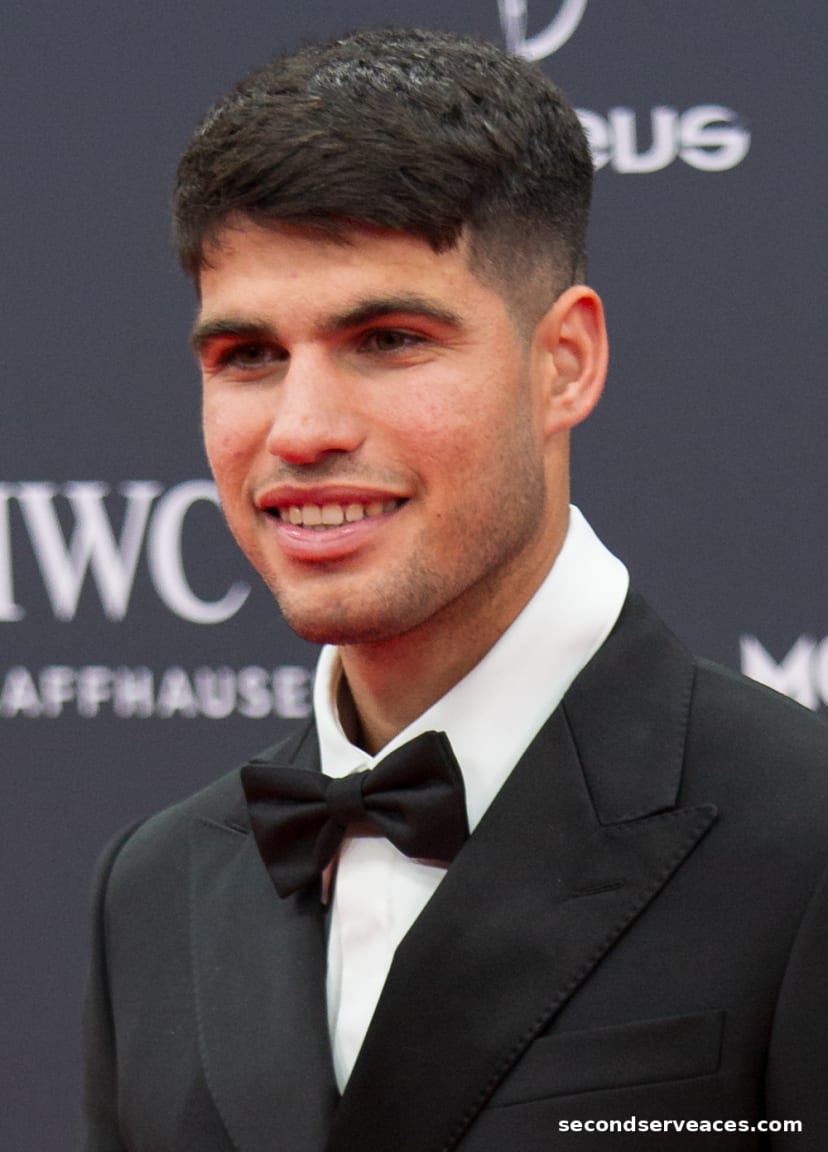
In this game, the body is a vault. You spend your life trying to secure the combination, working every sinew until you’re bulletproof, but sometimes the lock just gives way. Carlos Alcaraz, the young man who captured the Australian Open earlier this year to cement his status as the youngest to complete the career Grand Slam, has been forced to shut it down. A wrist injury has necessitated his withdrawal from both the upcoming Madrid Open and the impending defense of his crown at Roland-Garros.
Listen to the Second Serve Podcast
Get our daily AI-synthesized audio briefings and match reviews on the go.
The Laureus High Followed by a Physical Wall
It feels like only yesterday we were watching him accept the Laureus Sportsman of the Year award, draped in the mantle of a global icon. That kind of external pressure—the galas, the expectations, the constant travel—it takes a toll that doesn't show up on a scoreboard. You play at that intensity, you’re constantly putting that trailing wrist under the kind of stress that eventually demands a tax.
When you reach the summit as quickly as Carlos Alcaraz has, the game stops being about your next opponent and starts being about your own durability. He’s lived in the red zone for eighteen months. The wrist isn't just an injury; it’s a symptom of a calendar that doesn't forgive, even for the best.
For Alcaraz, this isn't just missed time—it's a fundamental shift in his competitive rhythm. He’s been operating at a cadence that no human is built to sustain indefinitely. Now, the quiet of the training room replaces the roar of the stadium, and for a competitor like him, that silence is the hardest match to win.
A Rivalry Paused at the Monte-Carlo Threshold
We were all bracing for the inevitable collision between the Spaniard and Jannik Sinner. Their rivalry has been the lifeblood of the tour, a masterclass in contrasting power. We saw it at the Monte-Carlo Masters just weeks ago, where Sinner methodically picked his way through the rallies to reclaim the No. 1 spot in the ATP rankings.
That Monte-Carlo loss was more than just a ranking switch; it was a tactical signal. Sinner has been hunting Alcaraz down with a surgical, cold-blooded efficiency. Without Alcaraz in the clay-court mix this spring, Sinner has a wide-open runway to consolidate his position at the top.
The mental grind of being chased is something I know all too well. When you’re at the top, you don’t just watch the balls; you watch the guy breathing down your neck. With Alcaraz out, the narrative of the 2026 season pivots from a two-man arms race to a question of whether anyone else can step up to bridge the gap left by the Spaniard’s absence.
The Tactical Void on Red Dirt
Roland-Garros on clay demands a specific, punishing brand of physicality. You need to slide, you need to extend, and you need to load that wrist on heavy, high-kicking topspin. It is the most unforgiving surface for a wrist issue, and the decision to withdraw is the only move for a player with his entire career in front of him.
We’ve become accustomed to the Alcaraz highlight reel: the impossible flick of the wrist, the defensive lobs that turn into winners, the sheer violence he inflicts on the ball. If that wrist isn't at 100 percent, he isn't playing tennis; he's just delaying the inevitable collapse.
The tour will move on—it always does—but the clay season loses its primary antagonist. Fans want to see the best versions of these players colliding in the final rounds. Now, the bracket at Roland-Garros looks like a map with a gaping hole in the center, leaving everyone to wonder what the next chapter of this rivalry looks like once the recovery is complete.
Beyond the Rankings: The Preservation of Greatness
There is a nobility in knowing when to walk away from a tournament to protect the long-term project. It’s not a retreat; it’s a strategic reset. Carlos Alcaraz has already achieved more by age 23 than most of the tour will manage in a lifetime, but he’s playing for historical longevity, not just the next trophy.
He enters a period of rehabilitation that will be as grueling as any five-set match he’s ever played. The mental discipline to stay out of the gym, to let the inflammation subside, to trust the process—that’s the real test. Most players lose their way here, letting the hunger turn into anxiety.
If he manages this right, he returns to the tour with a renewed hunger and a physical base that can handle the rigors of the hard-court season. But for now, we wait. The game is less electric without him, but greatness demands these pauses. It’s part of the price of admission.
What Carlos Alcaraz Plays With
Babolat Pure Aero 98
Babolat RPM Blast 1.30
Nike Vapor Pro 2
Analyze Carlos Alcaraz vs. Jannik Sinner
Predict tactical adjustments, momentum swings, and serve strategy options for this match-up using our AI simulator.
The Aces Tactical Panel
This report was curated and edited by Bhaskar Goel. Tactical analysis and technical insights were provided by our specialized panel of expert correspondents.
Julian Price
Senior Tactical Correspondent
Stuffy, pedantic British academic and historian specializing in match momentum and historical context.
Elena Cruz
Director of Analytical Research
Data scientist specializing in court surface physics and movement patterns.
Bhaskar
The Editor & Fan
Passionate tennis player and site editor bringing everyday amateur insights and relatable fan commentary.
Arthur Vance
Senior Existential Analyst
Deep, eccentric, and DFW-inspired. Models court metaphysics, kinetic beauty, and player psychology.
Leo Sterling
High-Performance Consultant
Hard-nosed ex-trainer from Melbourne with a no-nonsense view on tour fitness.