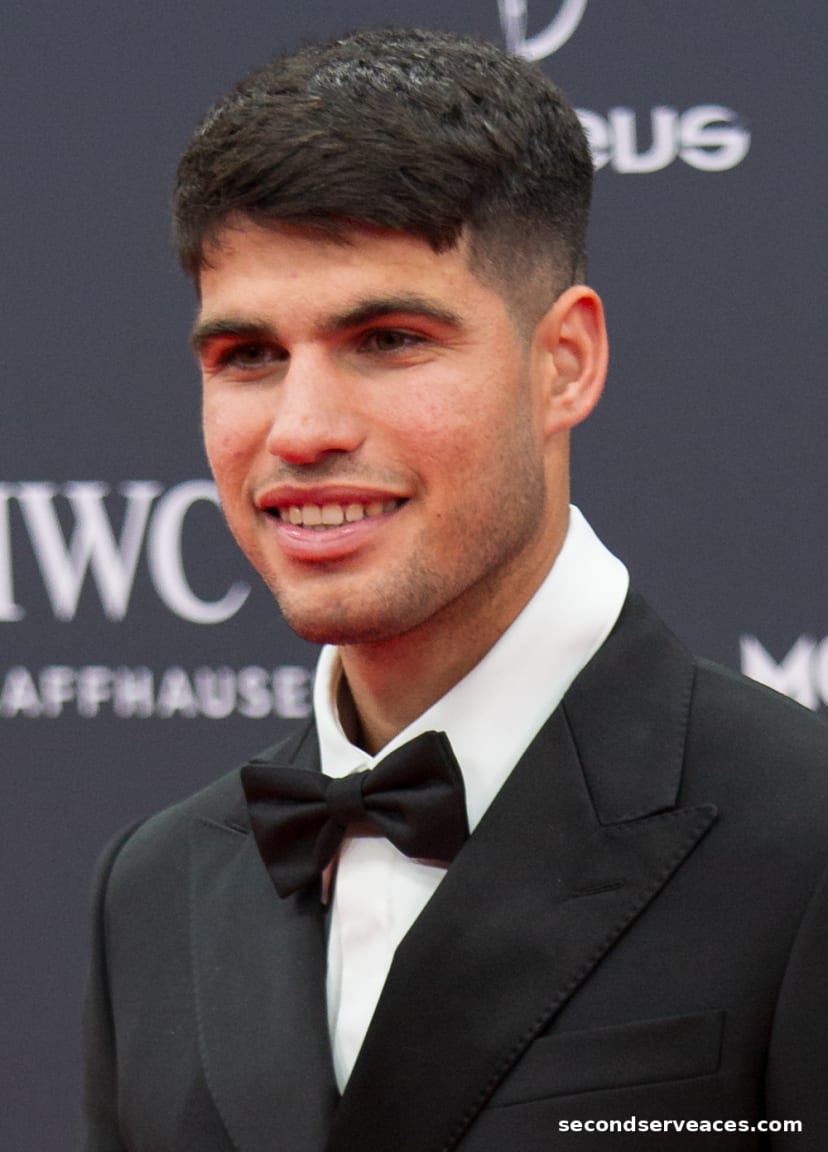
In the high-stakes, hyper-kinetic geometry of professional tennis, the body is both the primary instrument and the ultimate limiting factor. The announcement that Carlos Alcaraz will not appear at the Madrid Open—marking the second consecutive year of his absence from the Spanish capital—is a sobering reminder of the structural fragility beneath the velocity. Alcaraz, whose game relies on an explosive, almost violent kinetic chain, has cited a persistent right wrist issue, an injury that follows his withdrawal from the Barcelona Open earlier this week.
Listen to the Second Serve Podcast
Get our daily AI-synthesized audio briefings and match reviews on the go.
This is not merely a scheduling hiccup; it is a manifestation of the relentless toll exacted by the modern baseline game. When we watch a player like Alcaraz, we are witnessing the physical limit of torque and acceleration. His recent loss to Jannik Sinner in the Monte Carlo Masters final provided a diagnostic preview of a player pushing against his own biomechanical boundaries, a reality now confirmed by his forced exit from the upcoming clay-court slate.
Alongside the young Spaniard, the withdrawal of Novak Djokovic further hollows out the draw. Following his exit at the Indian Wells tournament, Djokovic has elected to prioritize continued recovery over the demands of the Madrid clay. As the ATP Tour pivots to this critical European stretch, the absence of its two most prominent figures forces a fundamental shift in the tournament's narrative.
The Kinetic Reality of the Wrist
The wrist is a complex, delicate architecture of ligaments and tendons, susceptible to the immense G-forces generated by professional topspin. For Alcaraz, whose forehand whip is arguably the most recognizable engine in the sport, any compromise in the wrist radius is a terminal flaw in his tactical output. We are seeing, in real time, the high cost of a game built on maximum output per stroke.
To lose a player of his caliber twice in two years at Madrid is a loss for the sport's tactical evolution. The Madrid surface, known for its altitude-induced speed, usually requires the precise, clean contact that an injury-prone wrist simply cannot facilitate. Without that confidence in the point of contact, the entire geometry of his defensive baseline game collapses.
The Long Game for the Veteran
For Djokovic, the decision to withdraw is an exercise in strategic preservation. His career has become a masterclass in longevity, not because he avoids the physical toll, but because he calculates the precise moment when the body demands a cessation of hostilities. At his stage of competition, the priority is no longer the accumulation of weekly points, but the optimization of the peak for the major tournaments that define his legacy.
His withdrawal from Madrid is a calculated silence in a sport that usually demands constant volume. It is a tacit acknowledgment that the modern tour is a war of attrition, and that the greatest victories are often won by the player who knows when to step away to ensure they can compete another day. The list of active participants, including players like Jannik Sinner and Jack Draper, must now navigate a draw devoid of the usual heavyweights.
What Carlos Alcaraz Plays With
Babolat Pure Aero 98
Babolat RPM Blast 1.30
Nike Vapor Pro 2
Analyze Carlos Alcaraz vs. Jannik Sinner
Predict tactical adjustments, momentum swings, and serve strategy options for this match-up using our AI simulator.
The Aces Tactical Panel
This report was curated and edited by Bhaskar Goel. Tactical analysis and technical insights were provided by our specialized panel of expert correspondents.
Julian Price
Senior Tactical Correspondent
Stuffy, pedantic British academic and historian specializing in match momentum and historical context.
Elena Cruz
Director of Analytical Research
Data scientist specializing in court surface physics and movement patterns.
Bhaskar
The Editor & Fan
Passionate tennis player and site editor bringing everyday amateur insights and relatable fan commentary.
Arthur Vance
Senior Existential Analyst
Deep, eccentric, and DFW-inspired. Models court metaphysics, kinetic beauty, and player psychology.
Leo Sterling
High-Performance Consultant
Hard-nosed ex-trainer from Melbourne with a no-nonsense view on tour fitness.