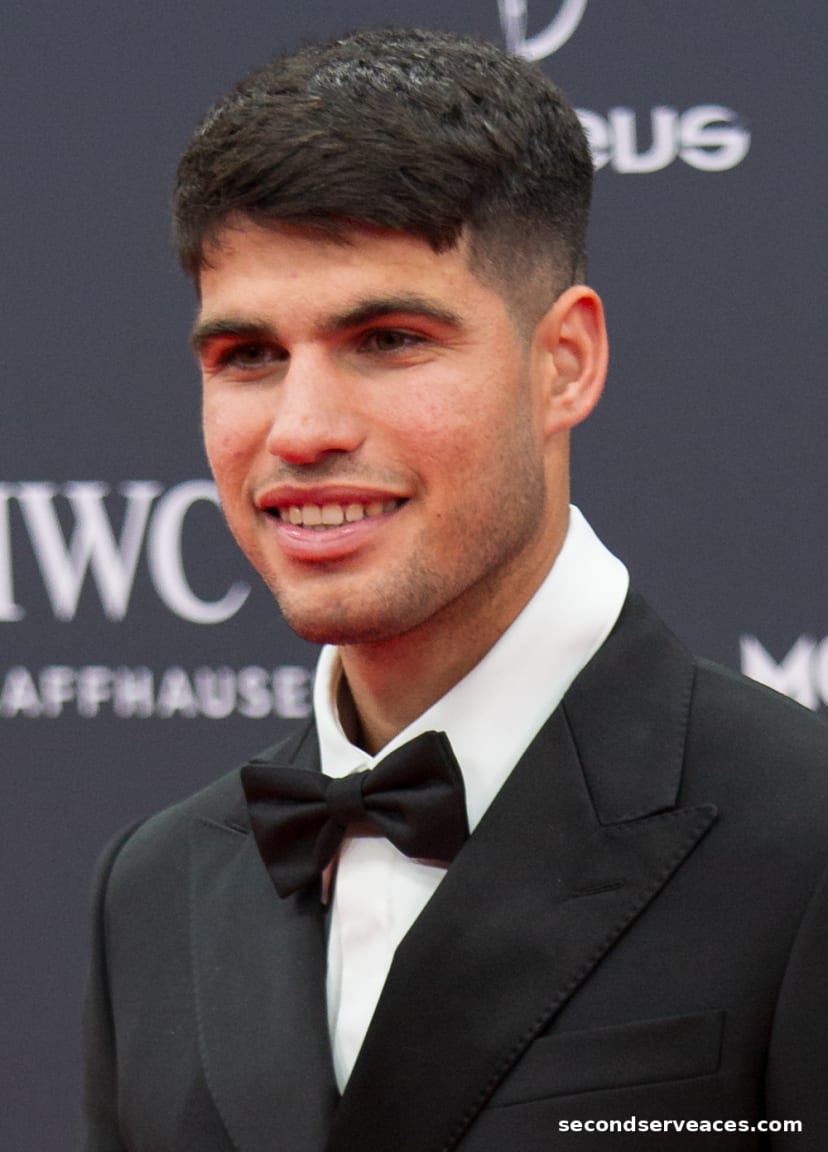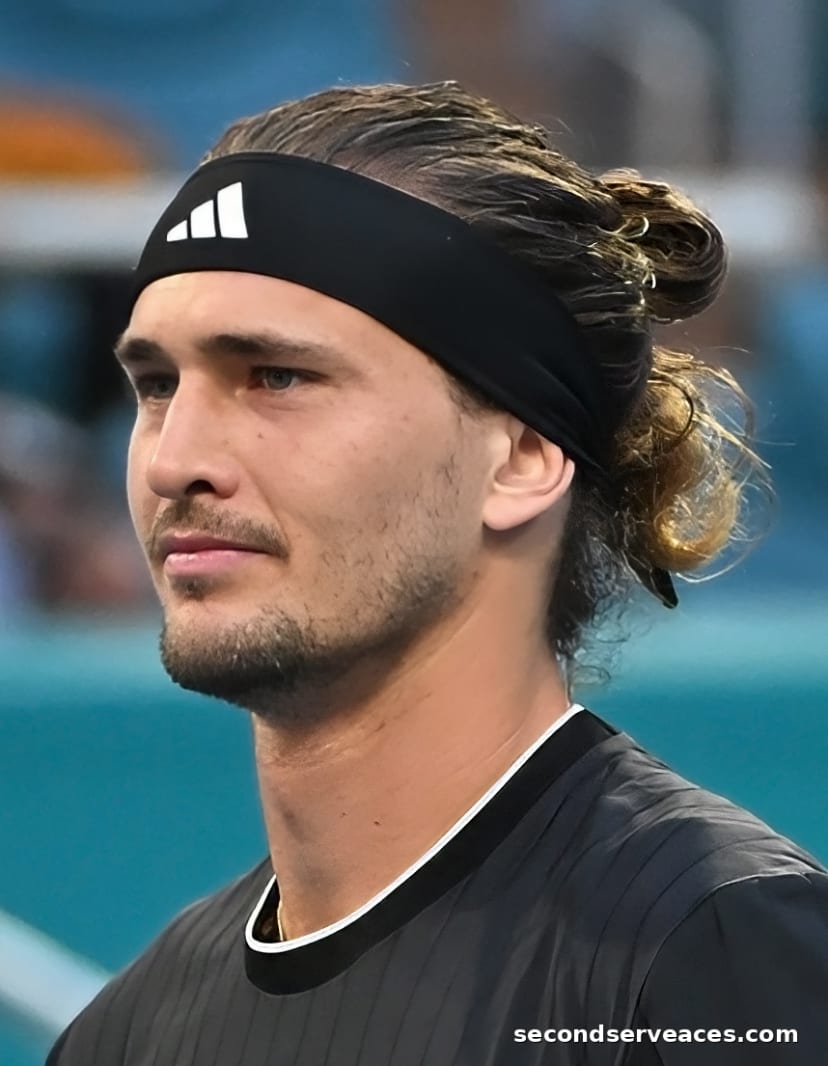
In the humid, heavy environment of South Florida, kinetic momentum is often derailed not by overpowering force, but by precise geometric disruption. This was the thermodynamic reality Carlos Alcaraz confronted during the third round of the Miami Open. The 22-year-old World No. 1, operating as an irresistible athletic force for the entirety of the early season, met a resolute wall on the blue hard courts. Striking with a quiet, devastating linearity, 36th-ranked Sebastian Korda dispatched the Spaniard in a grinding three-set encounter.
Listen to the Second Serve Podcast
Get our daily AI-synthesized audio briefings and match reviews on the go.
Until this sudden halt, the 2026 ATP season had functioned essentially as a coronation tour for the young phenom. Alcaraz tore through the calendar’s opening chapters with a staggering 16-0 run. That early-season streak featured a historic crescendo in Melbourne, where he captured the Australian Open crown to become the youngest man in history to complete a career Grand Slam. His pre-Miami itinerary further reflected this unyielding form, encompassing a title triumph in Doha before a semifinal stumble at Indian Wells.
The Tactical Breakdown
To understand how Korda dismantled a seemingly invincible opponent requires looking past the sheer velocity of the strokes and into the spatial architecture of the court. Korda’s inherent playstyle—characterized by remarkably clean, early ball-striking—fundamentally shrinks the baseline interval.
- Time Deprivation: By consistently taking the ball on the rise, Korda effectively reduced the fractional seconds Alcaraz usually employs to set his feet and generate his immense, looping topspin.
- Vector Control: The American’s flat groundstrokes cut through Miami's dense coastal air with a low, penetrating trajectory, purposefully keeping the ball out of the optimal strike zone for Alcaraz's hyper-aggressive forehand.
- Rally Tolerance: Unlike competitors who attempt to match Alcaraz’s explosive lateral movement, Korda remained vertically anchored to the baseline, absorbing the incoming pace and redirecting the ball's kinetic energy into sharp, acute angles.
These mechanical adjustments forced Alcaraz to manufacture his own pace from defensive, stretched postures—a structurally taxing endeavor that disrupts the natural rhythm of even the sport's premier athlete.
The Bigger Picture
As the hard-court swing prepares to dissolve into the European clay season, this match offers a fascinating statistical anomaly. Interestingly, the Miami Open has proven to be an idiosyncratic hurdle for the reigning World No. 1. Korda now holds the distinct honor of being the lowest-ranked player to defeat Alcaraz since the 55th-ranked David Goffin ousted him on these exact same courts the previous year.
This localized vulnerability does little to obscure the sheer magnitude of Alcaraz's 2026 campaign thus far. Instead, it highlights the grueling, attritional nature of the ATP tour's early-season schedule. The transition from the arid desert air of Indian Wells to the heavy humidity of Miami demands a physiological recalibration that occasionally traps elite competitors. Now, the 22-year-old pivots his attention toward the crushed red brick of the European circuit. The hard-court arithmetic is settled for the spring; the physics of the clay court await.
What Carlos Alcaraz Plays With
Babolat Pure Aero 98
Babolat RPM Blast 1.30
Nike Vapor Pro 2
Analyze Carlos Alcaraz vs. Sebastian Korda
Predict tactical adjustments, momentum swings, and serve strategy options for this match-up using our AI simulator.
The Aces Tactical Panel
This report was curated and edited by Bhaskar Goel. Tactical analysis and technical insights were provided by our specialized panel of expert correspondents.
Julian Price
Senior Tactical Correspondent
Stuffy, pedantic British academic and historian specializing in match momentum and historical context.
Elena Cruz
Director of Analytical Research
Data scientist specializing in court surface physics and movement patterns.
Bhaskar
The Editor & Fan
Passionate tennis player and site editor bringing everyday amateur insights and relatable fan commentary.
Arthur Vance
Senior Existential Analyst
Deep, eccentric, and DFW-inspired. Models court metaphysics, kinetic beauty, and player psychology.
Leo Sterling
High-Performance Consultant
Hard-nosed ex-trainer from Melbourne with a no-nonsense view on tour fitness.