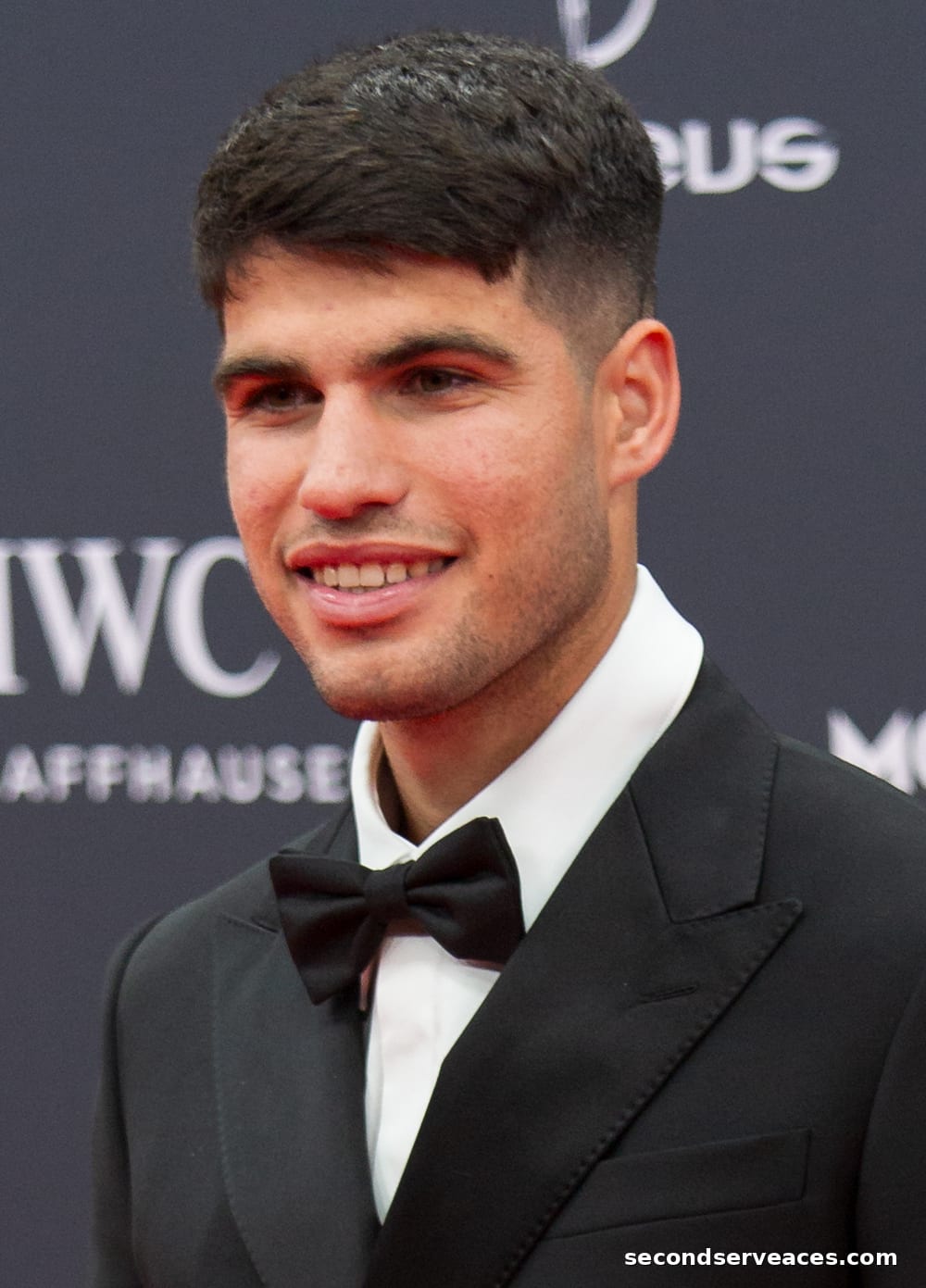
Carlos Alcaraz is learning the hard way that you cannot have it both ways in elite tennis. The young Spaniard has found himself at the center of a raging locker-room debate, facing intense scrutiny for vocalizing his frustrations with the congested ATP calendar while simultaneously filling his calendar with highly lucrative, non-mandatory exhibition events. It is a high-stakes game of physical chicken, and the tennis world is watching closely to see who blinks first.
Listen to the Second Serve Podcast
Get our daily AI-synthesized audio briefings and match reviews on the go.
The Five-Month Wrist Injury Sabbatical
Let us look at the cold, hard facts before we start pointing fingers. Carlos Alcaraz spent nearly five months of the season sidelined due to a severe wrist injury, a brutal wake-up call for a player whose explosive, physical style of play demands absolute perfection from his joints. When you play with that level of violence and torque, the human body is going to protest, and his wrist was the first major casualty of his young career.
This forced hiatus was not just a physical setback; it completely disrupted his competitive momentum on the tour. As the modern game gets faster and the balls get heavier, recovering from a joint injury while trying to maintain a top-three ranking is an agonizing task. His camp has had to completely re-evaluate how much stress they can put on his body during training blocks.
For any athlete, missing nearly half a year is a mental grind that tests their resolve. It raises serious questions about long-term durability on the grueling tour. If a player is already breaking down at age 23, every single scheduling decision becomes a matter of career survival rather than just chasing ranking points.
The US Open Ultimatum and Scheduling Outcry
The frustration finally boiled over during a tense press conference at the US Open, where Alcaraz did not hold back. The Spaniard boldly declared that the current calendar is unsustainable and stated his intention to start taking mandatory breaks of one to two months to preserve his health. It was a direct shot across the bow of the tournament organizers and tour executives.
To their credit, the governing bodies have made minor concessions, with the ATP Tour reducing the number of countable ranking events from 19 to 18 for the season. But let us be completely honest—shaving off a single mandatory event is a drop in the ocean. It does absolutely nothing to alleviate the physical toll of transition days, mandatory Masters 1000 expansions, and cross-continental travel.
From my perspective, this is where the system is failing the athletes, but it also highlights a massive disconnect. If the tour's brightest young star is threatening to sit out for months at a time, the calendar needs a radical overhaul. However, those complaints lose their bite when the player's actions do not align with their public grievances.
The Laver Cup and Exhibition Cash Grab Paradox
Here is where the narrative gets incredibly messy. Shortly after expressing his deep exhaustion in New York, Alcaraz packed his bags and flew to London to participate in the optional Laver Cup. You simply cannot scream about burnout on a Sunday and then willingly sign up for a high-intensity, non-mandatory exhibition on Wednesday without raising some serious eyebrows in the locker room.
Yes, the team format is spectacular, and playing in front of sold-out crowds is an incredible experience. But an exhibition still requires physical output, travel, and emotional energy. It sends a highly confusing message to the fans and to the tour officials who are actively trying to negotiate schedule reforms on behalf of the players.
If we look at his long-term physical management, as we noted in our previous tactical breakdown of his hard-court campaign, energy conservation must be the priority. You cannot expect to arrive at the Grand Slams in peak physical condition if you are actively spending your designated rest weeks playing high-profile exhibition matches for corporate sponsors.
The Six Kings Slam and Financial Allure
Let us address the multi-million dollar elephant in the room: the upcoming 2025 Six Kings Slam. Participants at this optional event are guaranteed a reported $1.5 million just for taking part. That is a staggering sum of money that would tempt any athlete, but it completely undermines the argument that the official calendar is leaving players too exhausted to function.
This financial reality creates a stark divide in elite tennis. While the rank-and-file players are grinding through grueling qualifying draws to secure basic funding, the sport's elite can command massive appearance fees at exhibitions. It makes the complaints about scheduling look like a luxury problem rather than a systemic crisis.
Ultimately, Carlos Alcaraz must decide what he wants his legacy to be. If the schedule is truly a threat to his physical longevity, then lucrative exhibitions must be the first things to go. Until then, the tennis world will continue to view his scheduling complaints with a heavy dose of skepticism.
Rivalry Matchup & Player Profiles
| Metric | Carlos Alcaraz | Rafael Nadal |
|---|---|---|
| Rank | No. 3 | Retired |
| Age | 23 | 40 |
| Country | Spain | Spain |
| Height | 6'0" (1.83 m) | 6'1" (1.85 m) |
| Handedness | Right-handed | Left-handed |
| Play Style | Aggressive all-court player | Aggressive baseliner |
| Career Titles | 26 | 92 |
The generational Spanish rivalry between Carlos Alcaraz and Rafael Nadal remains one of the most fascinating studies in physical tennis. Nadal currently leads their head-to-head record 2-1, utilizing his legendary heavy topspin and unmatched baseline intensity to stifle his younger compatriot in their early meetings.
However, Alcaraz proved he could solve the puzzle in their last official meeting on the ATP circuit, securing a thrilling 6-2, 1-6, 6-3 victory in the quarterfinals of the 2022 Madrid Open. As Alcaraz navigates the physical demands of the tour, he would do well to study how Nadal managed his own chronic injuries throughout a historic career that yielded 92 singles titles.
What Carlos Alcaraz Plays With
Babolat Pure Aero 98
Babolat RPM Blast 1.30
Babolat VS Original (12-Pack)
Nike Vapor Pro 2
Analyze Carlos Alcaraz vs. Rafael Nadal
Predict tactical adjustments, momentum swings, and serve strategy options for this match-up using our AI simulator.
The Aces Tactical Panel
This report was curated and edited by Bhaskar Goel. Tactical analysis and technical insights were provided by our specialized panel of expert correspondents.
Julian Price
Senior Tactical Correspondent
Stuffy, pedantic British academic and historian specializing in match momentum and historical context.
Elena Cruz
Director of Analytical Research
Data scientist specializing in court surface physics and movement patterns.
Bhaskar
The Editor & Fan
Passionate tennis player and site editor bringing everyday amateur insights and relatable fan commentary.
Arthur Vance
Senior Existential Analyst
Deep, eccentric, and DFW-inspired. Models court metaphysics, kinetic beauty, and player psychology.
Leo Sterling
High-Performance Consultant
Hard-nosed ex-trainer from Melbourne with a no-nonsense view on tour fitness.
Related Reports
Quick Answers
Why is Carlos Alcaraz facing criticism regarding the ATP schedule?+
He has publicly complained about the exhausting ATP calendar while simultaneously choosing to play in lucrative, optional exhibition events like the Laver Cup and Six Kings Slam.
How did the ATP adjust the tournament schedule to address player complaints?+
The ATP reduced the number of countable ranking events for the season from 19 to 18 in an effort to ease the physical burden on players.
What was the score of the last official match between Carlos Alcaraz and Rafael Nadal?+
Carlos Alcaraz defeated Rafael Nadal 6-2, 1-6, 6-3 in the quarterfinals of the 2022 Madrid Open.