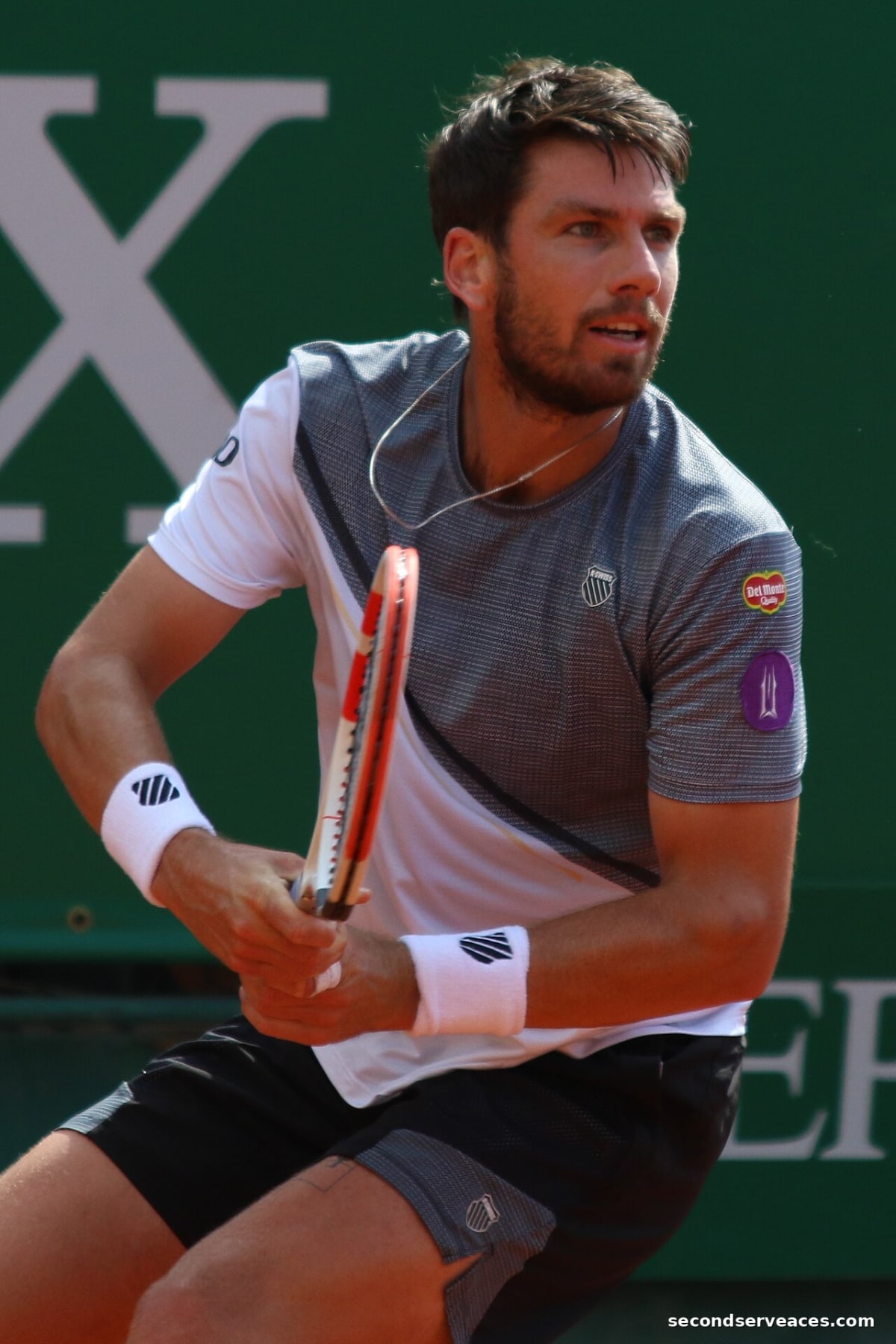
The grass-court season demands immediate physical calibration, leaving zero margin for players returning from injury. This reality caught up with British left-hander Cameron Norrie, whose return to singles action ended in a 7-6 (8-6), 6-2 defeat against Alejandro Davidovich Fokina at the Queen's Club Championships. Playing his first singles match since sustaining a rib injury in May, Norrie struggled to establish his typical baseline suffocations, finding himself consistently pushed out of his preferred hitting zones on the slick London turf.
Listen to the Second Serve Podcast
Get our daily AI-synthesized audio briefings and match reviews on the go.
The Rib Injury and the Clay-Court Interruption
Norrie's mid-season campaign was abruptly halted by a rib injury that sidelined him during a critical phase of the clay-court swing. For a player who relies heavily on physical attrition, high-volume running, and heavy topspin from the ad-court, missing weeks of competitive match play severely compromised his physical baseline. Transitioning directly onto grass without prior competitive matches is a tactical gamble under the best circumstances, but doing so while recovering from a core-adjacent injury proved to be an uphill battle.
On grass, the ball stays incredibly low, forcing players to constantly bend from the waist and engage their core to generate upward lift. Norrie's trademark flat backhand, which usually skids deep into the opponent's court, lacked its usual penetration because he could not fully rotate through his hips. This lack of torque prevented him from keeping Davidovich Fokina pinned behind the baseline, allowing the aggressive Spaniard to dictate play from the center of the court.
While some elite competitors opt for alternative build-ups, as seen in our analysis of the Sinner and Djokovic grass-court preparation, Norrie chose to test his body in both singles and doubles. Unfortunately, the lack of match fitness was doubly exposed. Partnering with Alex de Minaur in the men's doubles draw, Norrie suffered another early exit, falling 6-4, 7-5 to the specialized tandem of Yuki Bhambri and Michael Venus.
The Lateral Movement Deficit on the London Grass
The defining technical narrative of this match was Norrie's lateral recovery. On grass, the first step is everything; players must slide into their shots with controlled deceleration. Throughout the opening set, Norrie's footwork looked hesitant, particularly when forced to defend his forehand wing. Davidovich Fokina quickly recognized this deficit, using sharp-angled crosscourt forehands to pull Norrie wide before exposing the open court.
When Norrie did reach the ball, his defensive slice lacked the bite required to neutralize the point. Instead of keeping the ball low and forcing Davidovich Fokina to hit up, Norrie's defensive replies floated into the mid-court, presenting easy mid-court sitters for the Spaniard. This structural breakdown in defensive transition prevented Norrie from establishing any consistent match momentum.
While other players find immediate grass-court success through explosive movement, such as the tactical adjustments we highlighted in the Stuttgart final, Norrie's movement remained half a step slow. His inability to quickly transition from defense to offense meant he was constantly reacting to Davidovich Fokina's pace rather than dictating the terms of the rallies.
The Forehand Breakdown in the First-Set Tiebreak
Despite his physical limitations, Norrie's competitive grit allowed him to push the opening set to a tiebreak. In these high-pressure moments, tactical discipline is paramount. However, Norrie's lack of match play showed at 6-6 in the tiebreak, where a crucial unforced error off his forehand wing handed Davidovich Fokina a set point. The Spaniard seized the opportunity, closing out the tiebreak 8-6 to take a commanding lead.
Losing a tight first set after a grueling physical effort is mentally draining, but on grass, it is often terminal. In the second set, Norrie's first-serve percentage dipped significantly, leaving his second serve vulnerable to Davidovich Fokina's aggressive return positioning. The Spaniard stood well inside the baseline, taking the ball on the rise and breaking Norrie twice to run away with the second set 6-2.
Analyzing the serve metrics reveals the core of the issue: Norrie was unable to find the slide serve to the deuce court that usually wins him free points. Without that weapon, he was forced into extended rallies where his recovering rib cage and compromised movement were continually tested and exposed by Davidovich Fokina's depth.
The Broader Grass-Court Field and Halle Implications
While Norrie searches for answers, other British hopes showed positive signs on the grass. Arthur Fery put on a clinical performance, defeating Toby Samuel 6-0, 6-2. Both players received wildcards into the Wimbledon main draw earlier in the week, and Fery's sharp net play and low-skidding slices demonstrated the exact tactical blueprint required to succeed on this surface.
Meanwhile, across the English Channel at the Halle Open, top-tier competitors are also finding their footing. French Open finalist Alexander Zverev had to battle through a physical three-set test, eventually defeating Czech challenger Vit Kopriva 6-3, 4-6, 6-2. Zverev's ability to adjust his court positioning after dropping the second set highlighted the tactical flexibility required during the quick surface transition.
The volatility of the grass swing was further illustrated in Halle, where defending champion Alexander Bublik was knocked out in the first round. Italy's Mattia Bellucci secured a 7-6 (8-6), 6-1 victory over the unpredictable Kazakh. As the tour moves closer to SW19, players must quickly adapt to these rapid court speeds, a challenge that Norrie must master according to the official ATP Tour schedule if he hopes to make a deep run on home soil.
What Alexander Zverev Plays With
Head Gravity Pro
Head Hawk Touch 1.25
Analyze Cameron Norrie vs. Alejandro Davidovich Fokina
Predict tactical adjustments, momentum swings, and serve strategy options for this match-up using our AI simulator.
The Aces Tactical Panel
This report was curated and edited by Bhaskar Goel. Tactical analysis and technical insights were provided by our specialized panel of expert correspondents.
Julian Price
Senior Tactical Correspondent
Stuffy, pedantic British academic and historian specializing in match momentum and historical context.
Elena Cruz
Director of Analytical Research
Data scientist specializing in court surface physics and movement patterns.
Bhaskar
The Editor & Fan
Passionate tennis player and site editor bringing everyday amateur insights and relatable fan commentary.
Arthur Vance
Senior Existential Analyst
Deep, eccentric, and DFW-inspired. Models court metaphysics, kinetic beauty, and player psychology.
Leo Sterling
High-Performance Consultant
Hard-nosed ex-trainer from Melbourne with a no-nonsense view on tour fitness.
Related Reports

Quick Answers
What was the score of Cameron Norrie's match against Alejandro Davidovich Fokina?+
Alejandro Davidovich Fokina defeated Cameron Norrie 7-6 (8-6), 6-2 in the first round of the Queen's Club Championships.
How did Cameron Norrie perform in the doubles tournament at Queen's?+
Norrie and his partner Alex de Minaur lost their doubles match 6-4, 7-5 to Yuki Bhambri and Michael Venus.
Who defeated the defending champion Alexander Bublik at the Halle Open?+
Defending champion Alexander Bublik was defeated 7-6 (8-6), 6-1 by Italy's Mattia Bellucci in the first round at Halle.