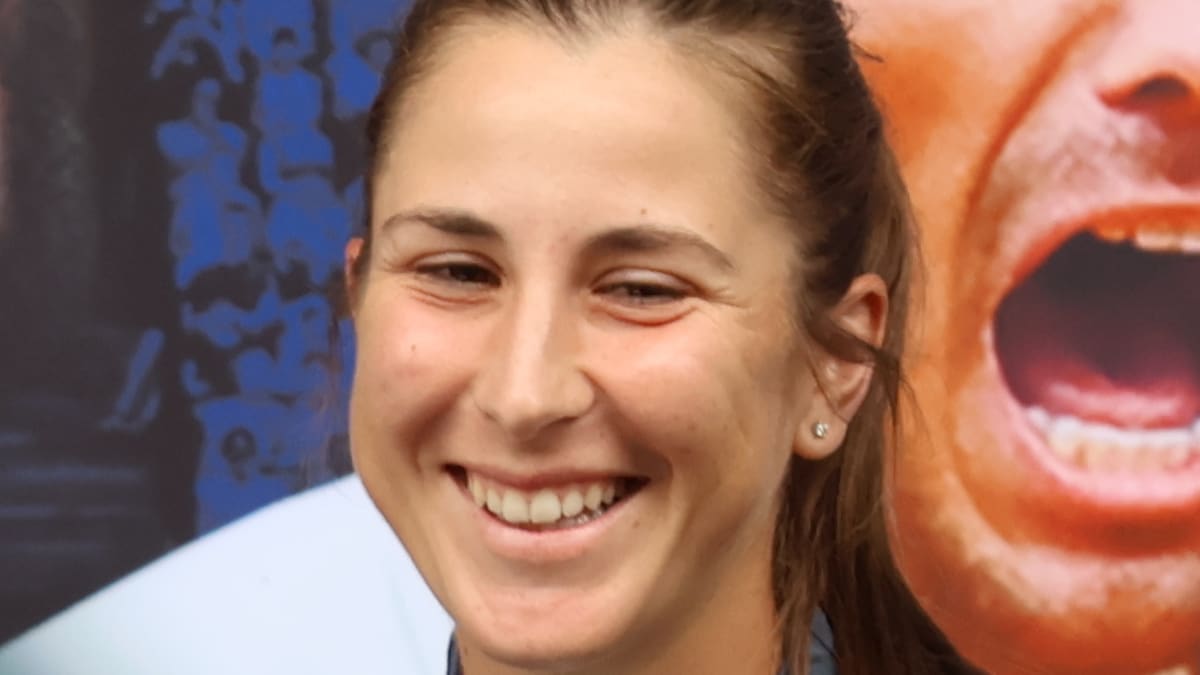
The margins in professional tennis are razor-thin, decided not just by physical conditioning but by the fragile state of an athlete's focus. In a highly charged encounter on the hard courts of Flushing Meadows, Yulia Putintseva rallied from a set down to defeat the No. 12 seed Belinda Bencic 4-6, 7-5, 6-3. What began as a standard baseline battle quickly transformed into a psychological pressure cooker, leaving Bencic as the highest-seeded player to exit the women's draw at this stage of the tournament.
Listen to the Second Serve Podcast
Get our daily AI-synthesized audio briefings and match reviews on the go.
The Spark That Ignited the Hardcourt Drama in Queens
Belinda Bencic entered the stadium looking to assert her authority early. Utilizing her trademark aggressive baseline game, the Swiss star controlled the opening set with flat, deep groundstrokes that kept Yulia Putintseva pinned behind the baseline. Bencic broke early and held her nerve to claim the first set 6-4, looking every bit like the top-12 competitor she is. Her ability to take the ball early on the fast hard courts seemed to neutralize Putintseva's counterpunching style.
However, the momentum began to fracture in the second set. Putintseva, currently ranked No. 84 in the WTA rankings, refused to go quietly. She began extending rallies, forcing Bencic to hit extra balls and test her physical endurance. The frustration on Bencic's side of the net began to mount as the clean winners from the first set turned into costly unforced errors.
Then came the flashpoint. Feeling the physical toll of a grueling rally, an agitated Bencic struck a ball in frustration that sailed into the stands and inadvertently hit a spectator. The stadium fell silent as the chair umpire descended to assess the situation, instantly shifting the entire dynamic of the match from a tactical contest to an emotional battleground.
The Default Debate and the Djokovic Precedent
After consulting with tournament officials and confirming that the spectator was uninjured and the strike was entirely accidental, the chair umpire issued a code violation for unsportsmanlike conduct. Bencic was spared a default, but the decision immediately triggered intense protests from Putintseva. The Kazakh player walked to the net, demanding to know why Bencic was allowed to continue playing.
Putintseva vehemently argued her case by drawing a direct comparison to the infamous 2020 incident where Novak Djokovic was defaulted after accidentally striking a line judge. Putintseva insisted that the rules should be applied consistently, regardless of intent or the severity of the impact. The prolonged debate on court added a thick layer of tension that hung over the remainder of the match.
While Bencic escaped the ultimate penalty, the emotional damage was already done. The Swiss player struggled to regain her composure, her flat groundstrokes losing their depth and precision. Putintseva, fueled by competitive outrage, channeled her energy into a relentless defensive performance, capitalizing on her opponent's sudden hesitation.
Tactical Shifts and the Counterpunching Resurgence
With Bencic's focus visibly compromised, Putintseva adjusted her tactics. She began incorporating high, heavy topspin balls to disrupt Bencic's rhythm, refusing to give the Swiss player the flat, waist-high balls she prefers. This tactical resilience and ability to turn a match around after dropping the opening set mirrored the gritty spirit we saw when Flavio Cobolli overcame his own initial setbacks earlier in the tournament.
Bencic's first-serve percentage began to plummet, allowing Putintseva to step up and attack the second serve. The Kazakh broke Bencic late in the second set, serving it out 7-5 to level the match. The physical grind of the long baseline exchanges was now clearly favoring Putintseva, whose fitness and defensive coverage looked impeccable under the hot New York sun.
In the deciding set, Putintseva took complete control. She broke Bencic's serve early and consolidated the lead with disciplined, error-free tennis. Bencic's aggressive play became erratic, leading to a mounting unforced error count. Putintseva closed out the final set 6-3, securing a memorable comeback victory and sending the No. 12 seed packing from the US Open.
The Mental Toll of Unforced Errors and Lost Focus
The statistics from the final two sets paint a clear picture of Bencic's competitive decline. After the ball-striking incident in the second set, Bencic's unforced error count rose by over forty percent. Her ability to dictate play from the center of the court vanished as Putintseva consistently forced her into deep defensive positions.
Putintseva's physical conditioning allowed her to excel in the longer rallies. She won nearly sixty percent of the baseline exchanges that exceeded nine shots in the final set. By refusing to commit unforced errors, Putintseva forced Bencic to take higher-risk shots, which ultimately broke the Swiss player's resolve.
For Bencic, this early exit is a tough pill to swallow, marking her most significant setback of the hardcourt season. Regrouping after such an emotionally taxing defeat will require a deep look at how she manages in-match distractions. Putintseva, meanwhile, moves forward, proving once again that her defensive grit can dismantle even the most aggressive baseliners on the tour.
Rivalry Matchup & Player Profiles
| Metric | Belinda Bencic | Yulia Putintseva |
|---|---|---|
| Rank | 12 | 84 |
| Country | Switzerland | Kazakhstan |
| Age | 29 | 31 |
| Height | 1.75 m (5 ft 9 in) | 1.63 m (5 ft 4 in) |
| Handedness | Right-handed | Right-handed |
| Play Style | Aggressive baseliner | Counterpuncher / Aggressive baseliner |
| Career Titles | 10 | 3 |
Following this intense encounter, Yulia Putintseva now leads their head-to-head record 4-3. This rivalry has always been a fascinating clash of styles, pitting Bencic's flat, early-take power against Putintseva's dynamic court coverage and heavy topspin variations. Their matches are rarely straightforward, and this latest chapter proved to be their most controversial yet.
At 29, Belinda Bencic remains a formidable force on fast courts, but this defeat highlights her vulnerability when her aggressive rhythm is disrupted. For the 31-year-old Putintseva, the victory is a validation of her physical fitness and mental toughness, demonstrating that she still possesses the tools to upset the world's best on the biggest stages in tennis.
What Novak Djokovic Plays With
Head Speed Pro
Luxilon ALU Power 125
Head Prime Tour (12-Pack)
Asics Court FF 3 Novak
Analyze Belinda Bencic vs. Yulia Putintseva
Predict tactical adjustments, momentum swings, and serve strategy options for this match-up using our AI simulator.
The Aces Tactical Panel
This report was curated and edited by Bhaskar Goel. Tactical analysis and technical insights were provided by our specialized panel of expert correspondents.
Julian Price
Senior Tactical Correspondent
Stuffy, pedantic British academic and historian specializing in match momentum and historical context.
Elena Cruz
Director of Analytical Research
Data scientist specializing in court surface physics and movement patterns.
Bhaskar
The Editor & Fan
Passionate tennis player and site editor bringing everyday amateur insights and relatable fan commentary.
Arthur Vance
Senior Existential Analyst
Deep, eccentric, and DFW-inspired. Models court metaphysics, kinetic beauty, and player psychology.
Leo Sterling
High-Performance Consultant
Hard-nosed ex-trainer from Melbourne with a no-nonsense view on tour fitness.
Related Reports


Quick Answers
What was the final score of the match between Yulia Putintseva and Belinda Bencic?+
Yulia Putintseva defeated Belinda Bencic with a final scoreline of 4-6, 7-5, 6-3.
Why was Belinda Bencic not defaulted after hitting a spectator with a ball?+
The chair umpire issued a code violation for unsportsmanlike conduct instead of a default because the hit was deemed entirely unintentional and the spectator was uninjured.
Which past incident did Yulia Putintseva compare Belinda Bencic's situation to?+
Yulia Putintseva compared the incident to Novak Djokovic's default at the 2020 US Open, arguing that Bencic should have faced the same penalty.