By Elena Cruz, Second Serve Aces
Listen to the Second Serve Podcast
Get our daily AI-synthesized audio briefings and match reviews on the go.
Welcome to the sharp end of the 2026 ATP Indian Wells Masters. If you were looking for a predictable, by-the-numbers march to the finish line in the California desert, you’ve come to the wrong tournament. The gritty, high-bouncing hard courts of Tennis Paradise have thoroughly shredded the script this year, leaving us with an intensely fascinating quarterfinal lineup.
With only three of the top eight seeds advancing to the quarterfinals, the draw is effectively blown wide open. The conditions here—heavy air, abrasive surface, and glaring sun—demand exceptional rally tolerance and meticulous point construction. Today, we are focusing on two marquee matchups that perfectly illustrate the contrast in modern tennis playstyles: a surging Jack Draper taking on an impenetrable Daniil Medvedev, and an undefeated Carlos Alcaraz squaring off against Cameron Norrie.
The Tactical Breakdown
At this level, matches aren't just won by hitting the ball harder; they are won by exploiting court geometry and managing match momentum under immense pressure. Let's look at the technical mechanics that will decide these two crucial quarterfinals.
Jack Draper vs. Daniil Medvedev: The Battle of Court Position
Jack Draper arrives in the quarterfinals carrying the kind of match momentum that can alter the trajectory of a career. The Brit just ousted Novak Djokovic in a grueling third-set tiebreaker. To beat the greatest tiebreaker player in history in a deciding breaker requires a spectacular serving display and nerves of absolute steel. But his reward? A date with Daniil Medvedev, a man who has not dropped a single set so far in this tournament.
- The Lefty Serve vs. The Deep Return: Medvedev's return positioning is infamous. The Russian stands so far back he practically has to dodge the line judges, buying himself time to take full cuts at the hardest of first serves. To counter this, Draper must rely heavily on his lefty slider out wide on the Ad-court.
- Exploiting the Geometry: By slicing the ball sharply away from Medvedev, Draper can force the Russian into the doubles alley. The goal isn't necessarily an ace; the goal is to drag Medvedev out of position and immediately take the net, executing a crisp first volley into the open court before Medvedev can recover his center of gravity.
- Net Approach Frequency: You do not beat Medvedev by engaging in 25-shot baseline rallies on a slow hard court. Draper must aggressively close the net. If he hesitates or hits his approach shots without sufficient depth, Medvedev’s flat, penetrating passing shots will tear him apart.
Carlos Alcaraz vs. Cameron Norrie: Spin vs. Flat Absorption
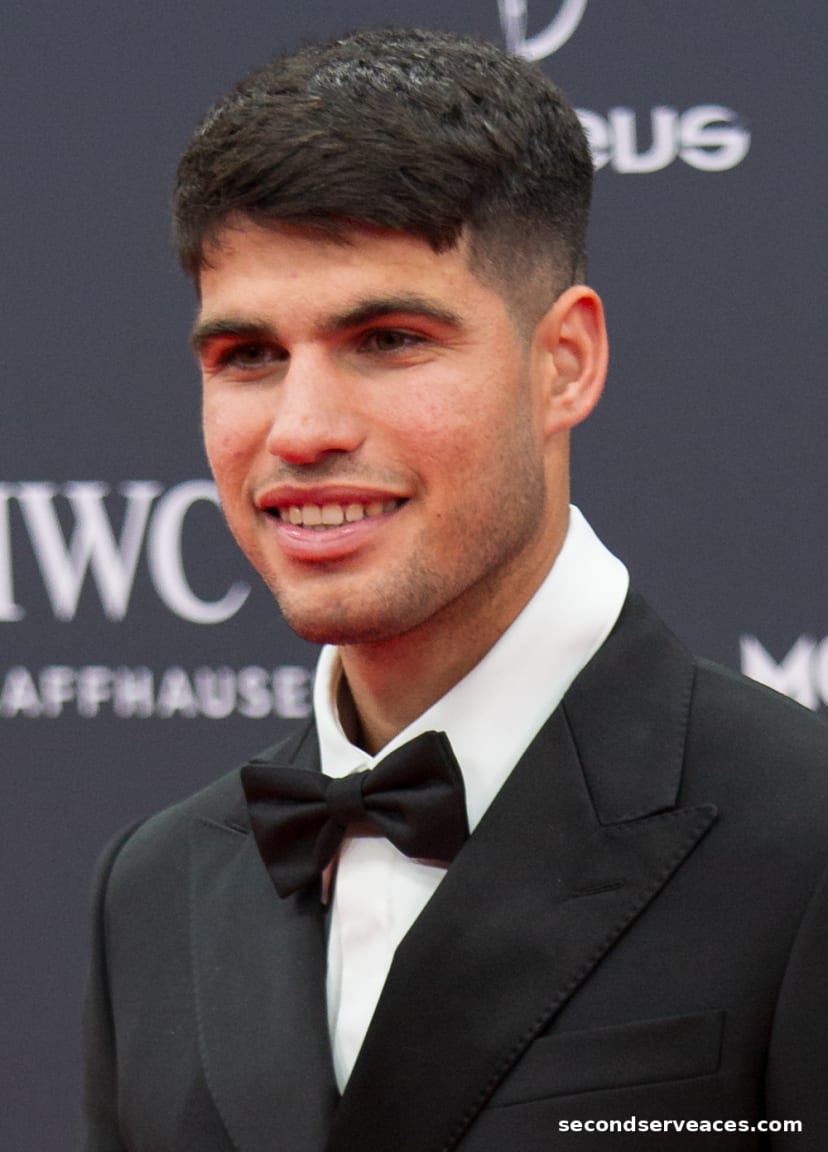
Carlos Alcaraz remains completely unbeaten in the 2026 season. Let that sink in. The Spaniard is playing with an aura of invincibility, bringing explosive movement and suffocating topspin to every match. However, Cameron Norrie is a familiar foe. Alcaraz leads their head-to-head matchup 5-3, a record that indicates Norrie knows exactly how to make the Spaniard uncomfortable.
- The Forehand Topspin vs. The Two-Handed Backhand: This match will be decided in the cross-court exchanges between Alcaraz's forehand and Norrie's backhand. Norrie hits a remarkably flat, abbreviated two-hander. On a fast grass or indoor court, this skids low and rushes the opponent. But here in Indian Wells, the gritty surface makes the ball sit up.
- The High Bounce Advantage: Alcaraz generates vicious RPMs on his forehand. Look for him to hit heavy, looping shots deep into Norrie's backhand corner, forcing the Brit to make contact above his shoulders—the absolute worst strike zone for a flat hitter.
- The Drop Shot Dynamic: Because Norrie will try to stand his ground on the baseline to take the ball early, he leaves himself vulnerable to Alcaraz's disguised drop shots. If Alcaraz can push Norrie back just half a step with depth, the front of the court will open up beautifully.
The Bigger Picture
The landscape of this year’s Indian Wells is telling a fascinating story about the current era of men's tennis. Only three of the top eight seeds surviving to the final eight is a stark reminder of the depth and volatility on the ATP Tour today. There are no easy early rounds anymore, and the physical toll of these slow hard courts acts as an ultimate equalizer.
For Jack Draper, defeating Novak Djokovic in a third-set tiebreaker is a watershed moment. It proves that his baseline game and physical conditioning have caught up to his undeniable raw talent. Facing Medvedev immediately after is the ultimate litmus test for his recovery and tactical adaptability. Medvedev, meanwhile, continues to prove that despite his historical grumblings about the "slow" Indian Wells surface, his defensive problem-solving is second to none.
As for Carlos Alcaraz, maintaining an unbeaten streak deep into the hard-court swing of 2026 is an incredible feat of endurance. He isn't just winning matches; he is asserting a dominant, physical presence on the tour. Norrie is a gritty, tactical veteran who won't hand over a single break point without a fight, making this the exact kind of high-friction matchup Alcaraz needs to keep his competitive edge razor-sharp as he pushes toward another Masters 1000 title.
These quarterfinals aren't just stepping stones to the weekend; they are masterclasses in tactical execution. Get your popcorn ready.
What Carlos Alcaraz Plays With
Babolat Pure Aero 98
Babolat RPM Blast 1.30
Nike Vapor Pro 2
Analyze Carlos Alcaraz vs. Cameron Norrie
Predict tactical adjustments, momentum swings, and serve strategy options for this match-up using our AI simulator.
The Aces Tactical Panel
This report was curated and edited by Bhaskar Goel. Tactical analysis and technical insights were provided by our specialized panel of expert correspondents.
Julian Price
Senior Tactical Correspondent
Stuffy, pedantic British academic and historian specializing in match momentum and historical context.
Elena Cruz
Director of Analytical Research
Data scientist specializing in court surface physics and movement patterns.
Bhaskar
The Editor & Fan
Passionate tennis player and site editor bringing everyday amateur insights and relatable fan commentary.
Arthur Vance
Senior Existential Analyst
Deep, eccentric, and DFW-inspired. Models court metaphysics, kinetic beauty, and player psychology.
Leo Sterling
High-Performance Consultant
Hard-nosed ex-trainer from Melbourne with a no-nonsense view on tour fitness.