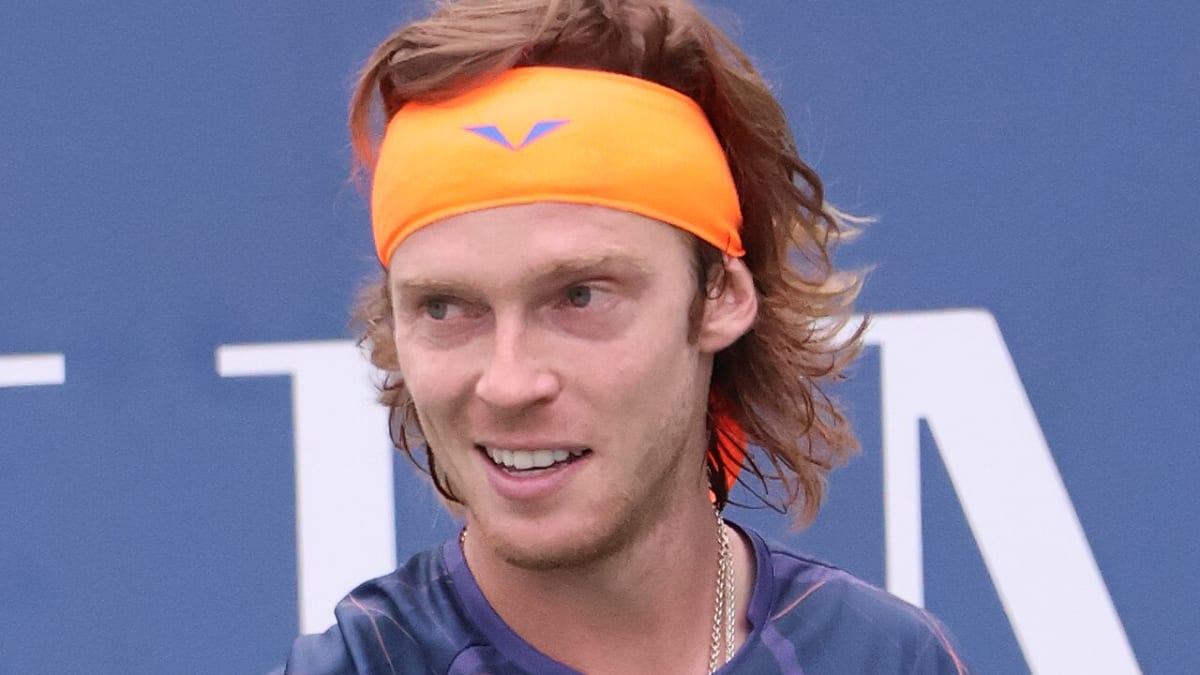
The red clay of Estoril has a way of stripping tennis down to its absolute, unvarnished essentials. It is a surface that demands more than just athletic excellence; it requires a willingness to engage in physical and mental chess where every slide, every heavy topspin forehand, and every tactical shift can alter the entire complexion of a match. As we enter Day 4 of the tournament, the storylines are already rich with drama, featuring local breakthroughs, miraculous comebacks, and a highly anticipated Round of 16 clash between the top seed and a resilient lucky loser.
Listen to the Second Serve Podcast
Get our daily AI-synthesized audio briefings and match reviews on the go.
The Red Clay Resurgence and Faria's Breakthrough Moment
There is something deeply poetic about a player securing their maiden tour-level victory on home soil. Jaime Faria did just that, delivering a performance of remarkable poise to defeat Botic van de Zandschulp 6-3, 6-4. The Portuguese wild card did not merely survive; he took the game to his more experienced opponent, using the heavy clay conditions to neutralize the Dutchman's flat, penetrating groundstrokes. Faria's ability to maintain his depth and dictate play from the baseline sent the local crowd into raptures.
Tactically, Faria's success was rooted in his court positioning. Rather than being pushed back by Van de Zandschulp's heavy hitting, Faria stood his ground, taking the ball early and redirecting pace with astonishing maturity. His forehand, loaded with heavy topspin, repeatedly found the corners, forcing his opponent into defensive positions from which he could not recover. It was a tactical masterclass that showcased the young Portuguese player's immense potential on this surface.
This milestone victory is a testament to the depth of talent emerging on the European clay circuit. As fans tracking the latest movements on the ATP Tour Home know, these early-round victories often serve as the launching pad for breakout seasons. Faria has now proved to himself, and the tennis world, that he can compete—and win—at this level, injecting a fresh wave of excitement into the Estoril draw.
Gonzalo Bueno's Miraculous Escape Against Tiago Pereira
If tennis is a psychological test disguised as a physical contest, Gonzalo Bueno provided the ultimate thesis on mental resilience. Facing Tiago Pereira, Bueno found himself staring down a seemingly insurmountable 1-5 deficit in the third and final set. The match appeared all but over, with the crowd already anticipating Pereira's progression. Yet, in a sport where momentum can shift on a single point, Bueno refused to capitulate.
The comeback was a masterclass in tactical adjustment and sheer competitive grit. Bueno stopped trying to paint the lines and instead focused on absolute depth, looping his balls high to Pereira's backhand and forcing the Portuguese player to generate all of his own pace. Point by point, the deficit began to shrink. The kinetic energy of the match shifted entirely as Pereira's nerves frayed under the relentless pressure of Bueno's consistency, culminating in a stunning turnaround that secured Bueno's first-ever ATP Tour main draw victory.
This sort of gritty escape is what makes clay-court tennis so uniquely grueling and beautiful. In our previous coverage of post-Wimbledon clay titles, we analyzed how physical endurance and mental fortitude dictate success on this surface. Bueno's survival is a vivid reminder that on clay, a match is never truly over until the final handshake, and belief can rewrite any scoreline.
The Lucky Loser's Opportunity and Skatov's Long Road Back
Timofey Skatov's entry into the Estoril main draw reads like a classic tennis picaresque. Having fallen in the final round of qualifying, the Kazakh found salvation through the lucky loser lottery—a second chance he immediately converted into gold. By defeating Jesper de Jong, Skatov secured his first Tour-level victory since 2024, a vital milestone for a player working tirelessly to rebuild his confidence and climb back up the rankings.
Skatov is a clay-court specialist by trade, thriving when matches become physical marathons. His low center of gravity and exceptional lateral movement allow him to slide effortlessly into his shots, neutralizing aggressive play and turning defense into offense with subtle changes in court geometry. Against De Jong, Skatov's defensive grit forced the crucial errors needed to turn the tide, proving that his game is highly effective when the conditions are slow and demanding.
Now, the Kazakh faces a monumental step up in class. He must prepare to duel with the tournament's top seed, a challenge that is as daunting as it is liberating. With nothing to lose and a newfound rhythm on the Estoril clay, Skatov has the tactical tools to make this a highly competitive affair if he can withstand the early baseline storm. His ability to extend rallies will be his primary weapon in trying to frustrate his high-ranked opponent.
Rublev's Heavy Topspin Blueprint on the Estoril Dirt
Andrey Rublev enters Estoril with the heavy burden of being the tournament's top seed and title favorite. The world-class Russian is no stranger to clay-court success, having won the Bastad Open title earlier in the season by overpowering Luciano Darderi in a high-octane final. We broke down Rublev's devastating clay-court mechanics in our Rublev vs Darderi Båstad Preview, highlighting how his inside-out forehand remains one of the most lethal weapons on the dirt.
Rublev's game is built on sheer, unadulterated velocity. He seeks to dictate from the very first strike, using his serve to set up mid-court forehands that he thrashes with relentless topspin. However, on the slower Estoril courts, his timing must be impeccable; impatient over-hitting can lead to unforced errors, especially against a counter-puncher of Skatov's caliber who will look to absorb his pace and redirect it.
To secure passage into the quarterfinals, Rublev must channel the same patience that brought him success in Bastad. He cannot expect Skatov to hand him the match; he must construct his points meticulously, using his backhand down the line to open up the court before unleashing his signature forehand. If Rublev finds his range early and controls his emotions, his sheer power should carry him through, but Skatov will make him work for every single point.
Rivalry Matchup & Player Profiles
| Metric | Andrey Rublev | Timofey Skatov |
|---|---|---|
| Rank | World No. 16 | World No. 163 |
| Age | 28 | 25 |
| Country | Russia | Kazakhstan |
| Height | 1.88m (6 ft 2in) | 1.75m (5 ft 9in) |
| Handedness | Right-handed | Right-handed (two-handed backhand) |
| Play Style | Aggressive baseliner | All-court player, favors clay courts |
| Career Titles | 18 | 6 |
Andrey Rublev and Timofey Skatov have never faced each other on the ATP Tour, making this Round of 16 match in Estoril their first head-to-head encounter. According to the latest ATP rankings, Rublev holds a significant advantage in experience and ranking, but Skatov’s comfort on clay and lack of pressure make him a dangerous opponent. Rublev will need to remain disciplined to avoid an upset against the counter-punching Kazakh.
While Rublev relies on his explosive pace to blow opponents off the court, Skatov will look to turn this match into a physical test of endurance. The contrast in styles—Rublev's aggressive baseline attack versus Skatov's defensive, all-court grit—promises a fascinating tactical battle on the Portuguese clay. Expect Rublev to press the action, while Skatov tries to extend the rallies and exploit any signs of frustration from the top seed.
Essential Matchday Add-Ons
Tournament-tested accessories and high-frequency consumables every competitive player keeps in their bag.
Tourna Grip Original Dry Feel Overgrip (10-Pack)
4.8 ★ (12,000+ reviews)
The gold standard for sweaty hands. Proprietary dry feel absorbs moisture better as play intensifies.
Luxilon ALU Power 125 Silver String Set
4.9 ★ (3,500+ reviews)
Unrivaled control and spin potential used by over 50% of the ATP Top 100 players.
Babolat Custom Damp Vibration Dampener (2-Pack)
4.7 ★ (4,200+ reviews)
Customizable dampening with removable central O-ring for fine-tuning court feedback and sound.
Penn Championship Extra Duty Tennis Balls (4-Can Pack)
4.7 ★ (8,900+ reviews)
Official ball of USTA League Tennis with extra-duty felt designed for abrasive hard courts.
Analyze Andrey Rublev vs. Timofey Skatov
Predict tactical adjustments, momentum swings, and serve strategy options for this match-up using our AI simulator.
The Aces Tactical Panel
This report was curated and edited by Bhaskar Goel. Tactical analysis and technical insights were provided by our specialized panel of expert correspondents.
Julian Price
Senior Tactical Correspondent
Stuffy, pedantic British academic and historian specializing in match momentum and historical context.
Elena Cruz
Director of Analytical Research
Data scientist specializing in court surface physics and movement patterns.
Bhaskar
The Editor & Fan
Passionate tennis player and site editor bringing everyday amateur insights and relatable fan commentary.
Arthur Vance
Senior Existential Analyst
Deep, eccentric, and DFW-inspired. Models court metaphysics, kinetic beauty, and player psychology.
Leo Sterling
High-Performance Consultant
Hard-nosed ex-trainer from Melbourne with a no-nonsense view on tour fitness.
Related Reports


Quick Answers
Who did Jaime Faria defeat to earn his first ATP match win?+
Jaime Faria defeated Botic van de Zandschulp 6-3, 6-4 to secure his maiden ATP Tour victory.
How did Gonzalo Bueno win his first ATP Tour main draw match in Estoril?+
Gonzalo Bueno staged a dramatic comeback, recovering from a 1-5 deficit in the third set against Tiago Pereira to secure the win.
What is the head-to-head record between Andrey Rublev and Timofey Skatov?+
Andrey Rublev and Timofey Skatov have never faced each other on the ATP Tour, making their Estoril Round of 16 meeting their first head-to-head encounter.