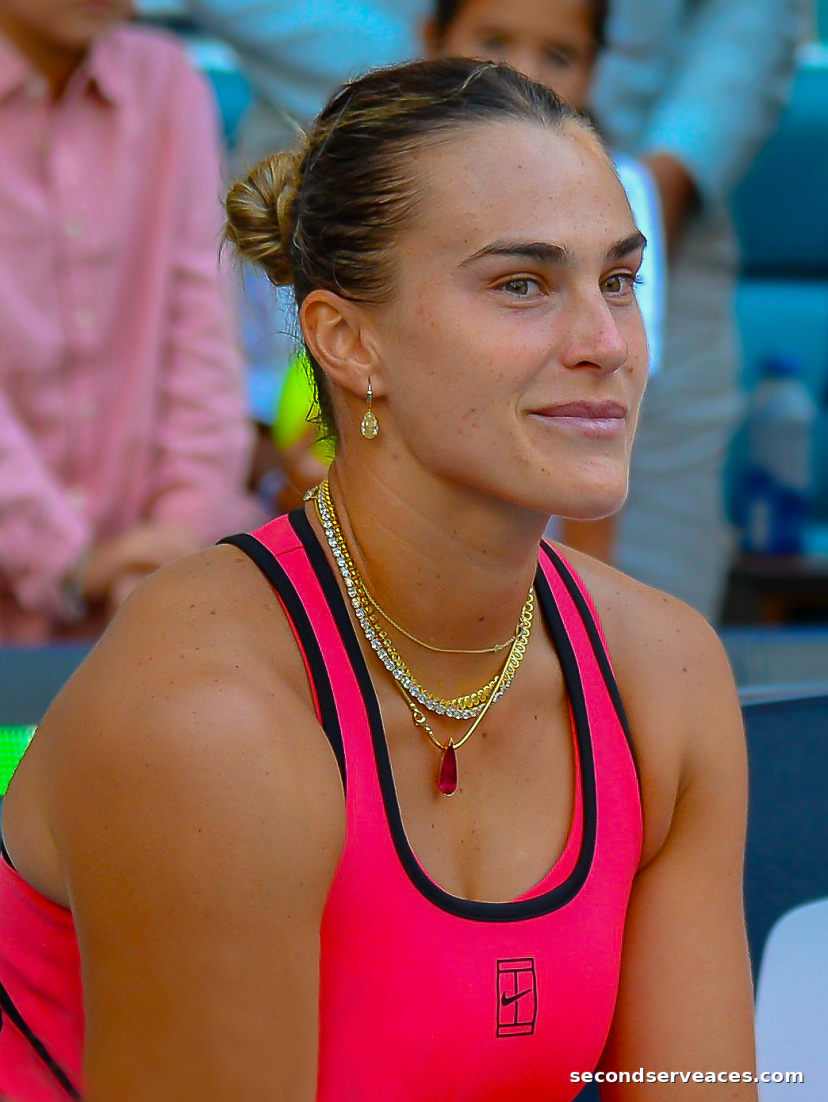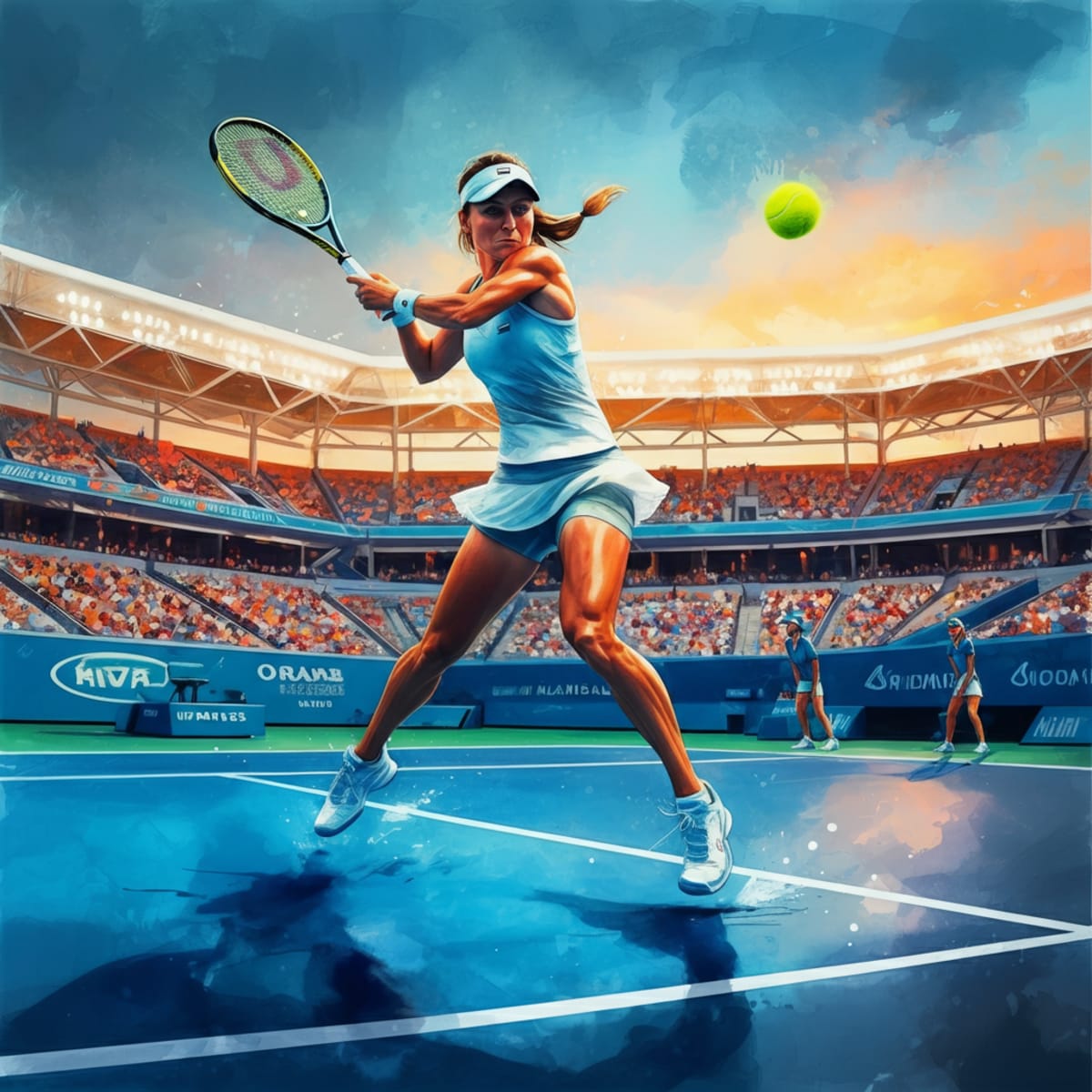
March in professional tennis demands a brutal physical calculus. To conquer both the arid, high-friction grit of the Californian desert and the suffocating, oceanic humidity of South Florida within a four-week span requires a rare distillation of athletic endurance. On Saturday, four-time Grand Slam champion Aryna Sabalenka solved that exact meteorological and geometric equation, defeating Coco Gauff to claim the Miami Open.
Listen to the Second Serve Podcast
Get our daily AI-synthesized audio briefings and match reviews on the go.
This particular triumph yields her 24th career title. More fundamentally, it completes the geographically grueling endeavor known as the Sunshine Double, an achievement that operates as a supreme litmus test for hardcourt adaptability. Capturing Indian Wells and Miami in immediate succession is a feat less about sheer shot-making and more about surviving the wild atmospheric swing between two fundamentally opposed micro-climates.
The Tactical Breakdown
When Sabalenka meets a defender of Gauff’s elasticity, the court shrinks into a battle of opposing physics: absolute terminal velocity versus lateral absorption. The Belarussian’s fundamental tactical doctrine relies on structural disruption. Instead of engaging in protracted, looping baseline rallies—which favors the American's relentless defensive perimeter—Sabalenka purposefully flattens the parabolic arc of her groundstrokes.
The Biomechanics of Disruption
To overcome an opponent who seemingly covers every cubic inch of the baseline, Sabalenka had to execute a highly specialized risk profile. The tactical mechanics underpinning this victory reveal a player operating at the absolute zenith of her court-positioning awareness.
- Vector Manipulation: Sabalenka frequently shifts the trajectory of her forehand down the line, mathematically halving Gauff's recovery window and forcing the American to hit defensive squash-shots from extreme outward stretches.
- Return Aggression: By stepping well inside the baseline on second serves, the 24-time titlist rushes the server’s initial split-step, suffocating the ensuing rally before it ever truly breathes.
- Rally Tolerance vs. Strike Points: While elite defenders thrive in the attritional mud of a thirty-shot rally, Sabalenka opts for decisive strike points, terminating exchanges with heavy topspin drives that penetrate the deeper thirds of the court, pinning her opposition against the back fence.
The Bigger Picture
Historical precedents in this sport are notoriously stubborn. Since the inception of the Sunshine Double in 1985, the women’s locker room has seen only four prior athletes complete the transcontinental sweep: Steffi Graf, Kim Clijsters, Victoria Azarenka, and Iga Swiatek.
Sabalenka now occupies that rarified, airless stratosphere. Yet, there is a fascinating, almost poetic cyclicality to her specific trajectory. Five years prior, in 2019, she solved this exact two-tournament labyrinth in the doubles discipline alongside Elise Mertens. To transition from a doubles tactician—sharing the geometric burdens of the court—to a solitary singles juggernaut orchestrating the entire offensive symphony is an evolution of profound magnitude.
Hardcourt tennis is, at its core, a ruthless examination of joint health, rotational torque, and psychological stamina. By conquering both the desert and the coast, Sabalenka has not merely added another trophy to her palmarès; she has etched her biomechanical signature deeply into the historical strata of the game.
What Aryna Sabalenka Plays With
Wilson Blade 98 v9 (16x19)
Luxilon ALU Power 125
Analyze Aryna Sabalenka vs. Coco Gauff
Predict tactical adjustments, momentum swings, and serve strategy options for this match-up using our AI simulator.
The Aces Tactical Panel
This report was curated and edited by Bhaskar Goel. Tactical analysis and technical insights were provided by our specialized panel of expert correspondents.
Julian Price
Senior Tactical Correspondent
Stuffy, pedantic British academic and historian specializing in match momentum and historical context.
Elena Cruz
Director of Analytical Research
Data scientist specializing in court surface physics and movement patterns.
Bhaskar
The Editor & Fan
Passionate tennis player and site editor bringing everyday amateur insights and relatable fan commentary.
Arthur Vance
Senior Existential Analyst
Deep, eccentric, and DFW-inspired. Models court metaphysics, kinetic beauty, and player psychology.
Leo Sterling
High-Performance Consultant
Hard-nosed ex-trainer from Melbourne with a no-nonsense view on tour fitness.