Tennis is a lonely sport. You step out onto the hard court, and it’s just you, your racket, and the suffocating echo of your own doubts. There’s no bench to retreat to, no teammate to tag in when your lungs are burning and the lactic acid is searing through your quads. It’s an open book, written in sweat and topspin, exposing exactly who you are under the searing sun. But sometimes, life off the court provides the armor you need to survive the battle on it.
Listen to the Second Serve Podcast
Get our daily AI-synthesized audio briefings and match reviews on the go.
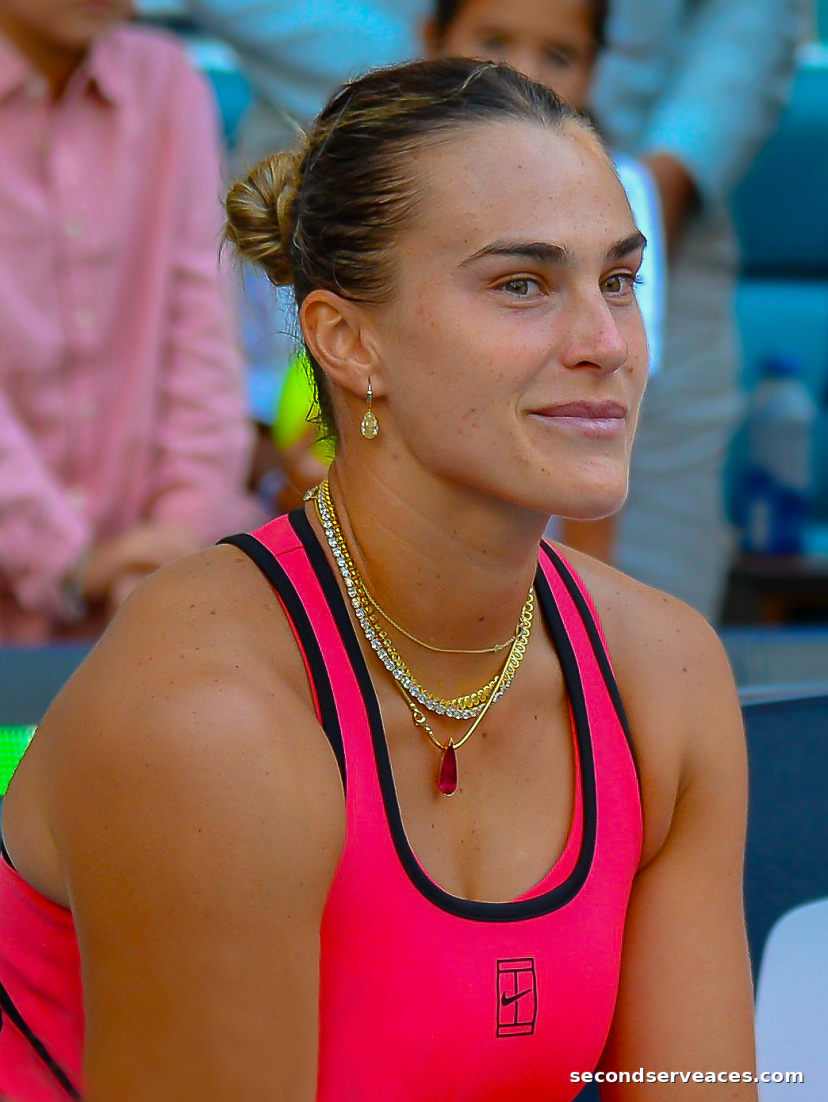
Aryna Sabalenka didn't just survive the mental grind of the desert this week; she conquered it in a fashion that feels almost scripted. In a culmination of psychological resilience and brute athletic force, Sabalenka captured the Indian Wells title, but the hardware is only a fraction of the story.
She called it a week she will remember for the rest of her life, and frankly, who could blame her? Here are the facts of a truly staggering few days in the California desert:
- The Ultimate Escape: Sabalenka stared down the barrel of a championship point, finding a way to save it before ultimately raising the trophy.
- Life-Changing Milestones: Amidst the grueling match schedule, she got engaged.
- A New Companion: As if a ring and a trophy weren't enough, she also added a puppy to her growing family.
- The Hardware: She walks away as the Indian Wells champion, cementing her status as a premier force on the WTA tour.
When you are happy off the court, the geometry of the court suddenly seems to make more sense. The lines look wider. The net looks lower. But don't let the fairy-tale week fool you—when her back was against the wall, Sabalenka had to dig into the trenches and rely on her undeniable fitness and tactical execution.
The Tactical Breakdown
Let’s talk about the mechanics of saving a championship point. In that singular moment, when the crowd goes silent and the match momentum is heavily tilted against you, technique often takes a backseat to sheer will. But will alone doesn't hit the ball deep into the corners; reliable patterns do.
Sabalenka’s game is built on an unapologetic, suffocating power. Historically, her serve has been the barometer of her confidence. We all remember the days when double faults haunted her service games, acting as a psychological cage. But her evolution into a Grand Slam champion and Indian Wells conqueror is rooted in the stabilization of her toss and the kinetic chain of her delivery. To hit your spots when staring down a loss requires a mastery of muscle memory.
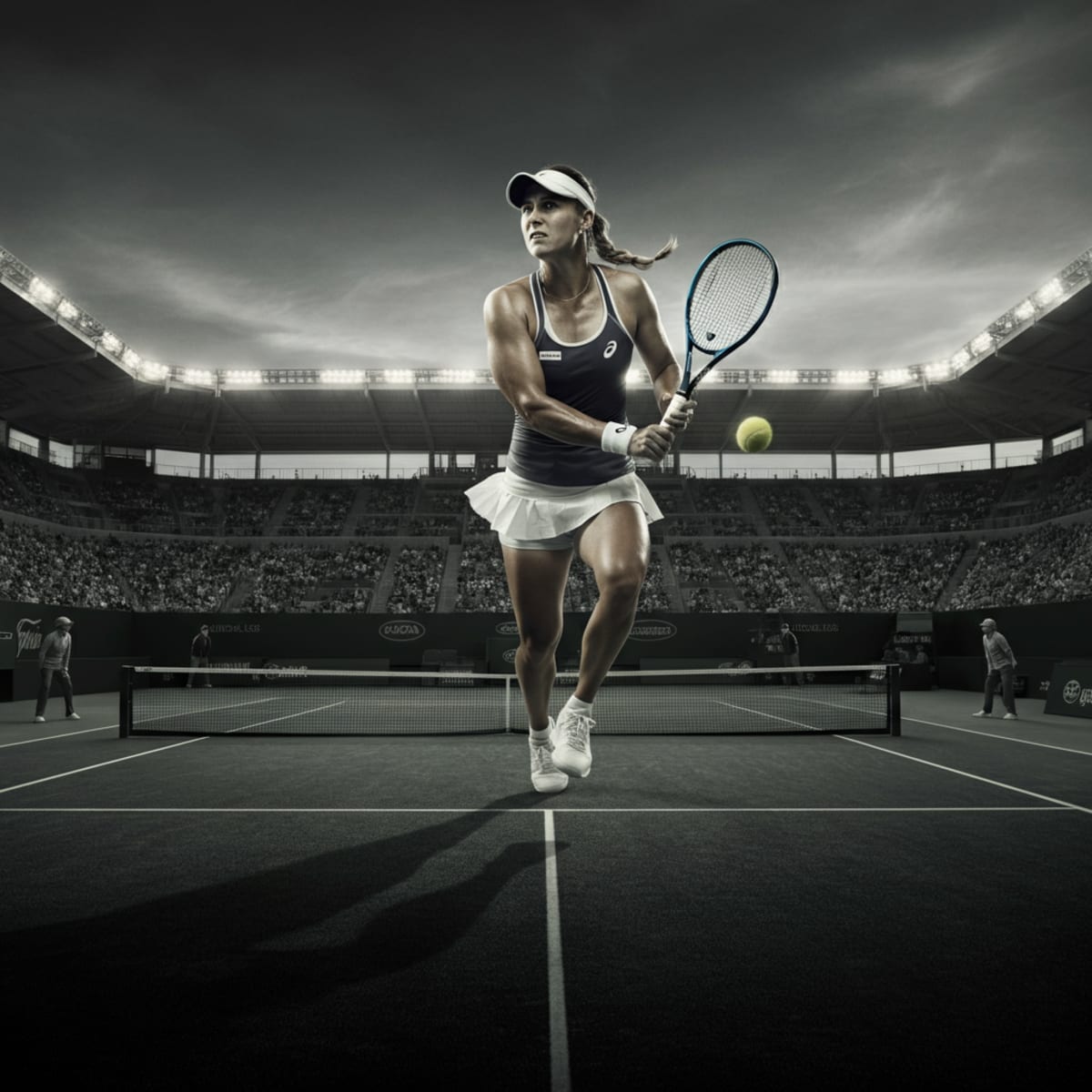
On the hard courts of Indian Wells, the conditions are notoriously tricky. The desert air is thin, allowing the ball to fly off the racket, but the gritty surface grips the ball, rewarding heavy topspin and high rally tolerance. Sabalenka’s tactical genius lies in her ability to flatten out her drives when she finds a short ball, effectively taking time away from her opponent. When facing that championship point, the natural human instinct is to play it safe, to push the ball back and pray for an unforced error. Sabalenka’s DNA doesn't allow for pushing. She dictates. By stepping inside the baseline and commanding the center of the court, she forces her opponents to hit from defensive, low-percentage positions.
Controlling the Baseline Grind
The tactical battle on a hard court ultimately comes down to who controls the middle third of the baseline. Sabalenka uses her imposing forehand not just as a finishing weapon, but as a crowbar to pry open the court. By consistently hitting deep, heavy balls, she pushes her opponent backward, generating the short, angled replies she needs to approach the net. It is a grueling, physical brand of tennis that demands elite cardiovascular fitness. You can't play Sabalenka's style if your legs are gone. Her ability to execute this high-octane strategy, even on match point down, is a testament to her off-season conditioning and mental fortitude.
The Bigger Picture
This Indian Wells victory is more than just another title; it is a profound statement about where Aryna Sabalenka is in her career trajectory. Tennis history is littered with players who possessed immense physical talent but lacked the psychological armor to sustain greatness. For a long time, the question wasn't whether Sabalenka had the tools to dominate the WTA tour, but whether she had the peace of mind to deploy them consistently.
This week provides the answer. The juxtaposition of a joyful personal life—an engagement, a new puppy—with the violent, uncompromising nature of her groundstrokes paints the picture of a complete athlete. The greats of the sport, from Steffi Graf to Serena Williams, often found that their most dominant periods on court coincided with a sense of stability off it.
Looking ahead, this result sends a shockwave through the locker room. The hard court season is her domain, and the ability to win when not playing her absolute best—to grind through a championship point against her—proves that she is no longer just a streaky ball-striker. She is a closer. As the tour pivots and the rivalries at the top of the women's game continue to intensify, Sabalenka has established herself as the ultimate immovable object.
You play this game to find out what you are made of. This week in the desert, amidst rings, puppies, and match points, Aryna Sabalenka looked in the mirror and liked what she saw. And the rest of the tour should be terrified.
What Aryna Sabalenka Plays With
Wilson Blade 98 v9 (16x19)
Luxilon ALU Power 125
Simulate Aryna Sabalenka Match Scenarios
Simulate high-pressure scenarios, score leverage points, and tactical responses for ATP and WTA players.
The Aces Tactical Panel
This report was curated and edited by Bhaskar Goel. Tactical analysis and technical insights were provided by our specialized panel of expert correspondents.
Julian Price
Senior Tactical Correspondent
Stuffy, pedantic British academic and historian specializing in match momentum and historical context.
Elena Cruz
Director of Analytical Research
Data scientist specializing in court surface physics and movement patterns.
Bhaskar
The Editor & Fan
Passionate tennis player and site editor bringing everyday amateur insights and relatable fan commentary.
Arthur Vance
Senior Existential Analyst
Deep, eccentric, and DFW-inspired. Models court metaphysics, kinetic beauty, and player psychology.
Leo Sterling
High-Performance Consultant
Hard-nosed ex-trainer from Melbourne with a no-nonsense view on tour fitness.