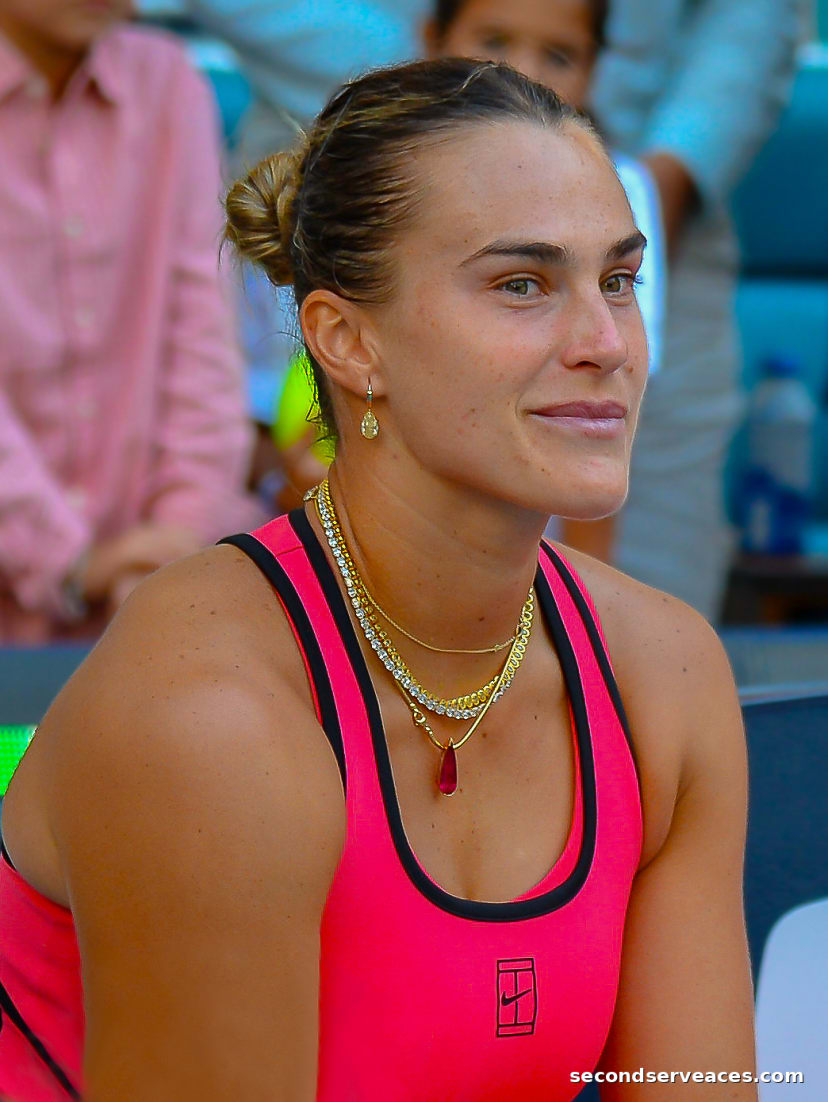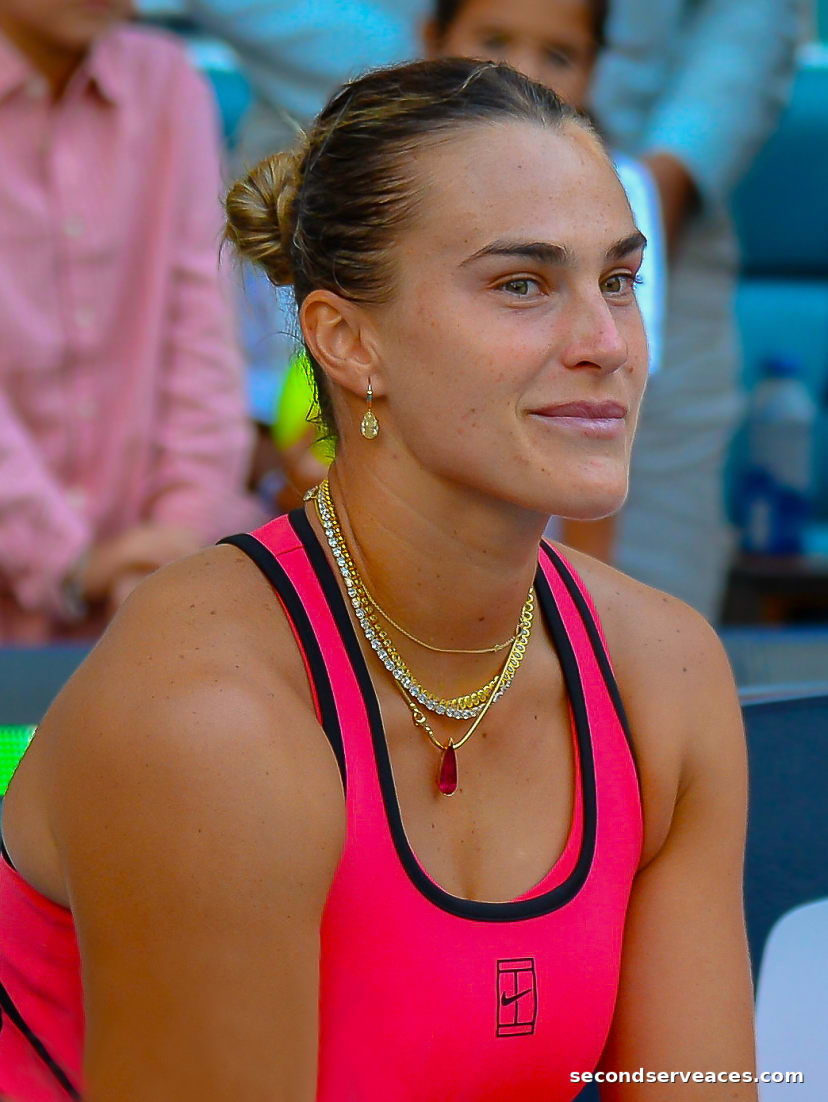
Professional tennis operates as a rather ruthless kinetic centrifuge, spinning players across continents and time zones with a dizzying, relentless frequency. It is an ecosystem that demands perpetual motion. Yet, when the human bodies responsible for producing this highly lucrative motion inevitably require rest, the bureaucratic machinery of the sport often groans in protest. We are currently witnessing precisely this brand of institutional friction, centered around World No. 1 Aryna Sabalenka, Iga Świątek, and the Dubai Tennis Championships.
Listen to the Second Serve Podcast
Get our daily AI-synthesized audio briefings and match reviews on the go.
During a recent media availability at the Miami Open, Sabalenka articulated a sentiment that suggests a profound structural fatigue with the tour's current demands. She told reporters that she may simply never return to play in Dubai. This potential boycott is not born of a sudden distaste for the venue's hard courts, but rather a direct reaction to recent administrative rhetoric. Specifically, Dubai Tournament Director Salah Tahlak publicly suggested that both Sabalenka and Świątek should be docked ranking points for their respective withdrawals from the WTA 1000 event this past February.
To fully grasp the absurdity of penalizing athletes for preserving their physical integrity, one must look past the boardroom and down onto the baseline.
The Tactical Breakdown
At first glance, a withdrawal is merely an administrative asterisk—a hole in the draw. But dynamically speaking, resting is a tactical necessity, intricately tied to the extreme biomechanical demands of modern shot-making. Sabalenka’s game is built around a philosophy of uncompromising baseline aggression. Her forehand is not merely struck; it is detonated, relying on a hyper-calibrated kinetic chain that transfers energy from her legs, through her core, and into a violently accelerating racquet head.
Historically, players who attempt to execute this brand of high-octane geometry while fatigued suffer immediate, cascading consequences. Consider the mechanics:
- Serve Placement Patterns: Sabalenka’s serve dictates the terms of engagement. When leg drive diminishes due to cumulative exhaustion, her toss drops, the net clearance lowers, and double faults multiply exponentially.
- Rally Tolerance: Engaging in grueling 15-shot exchanges requires peak fast-twitch muscle response. Fatigued players lose that vital half-step, forcing them to overhit rather than construct points organically.
- Match Momentum: In WTA 1000 events, the margins are microscopic. A sluggish first set, brought on by inadequate recovery, often surrenders an insurmountable advantage to an opportunistic opponent.
Świątek faces a similar physiological calculus. The Polish star generates mesmerizing revolutions of topspin off the forehand wing, a feat requiring extreme grip positioning and brutal lateral court coverage. The torque she places on her ankles and hips to slide into hard-court returns is immense. When the body signals that a tendon is fraying or a muscle is nearing failure, stepping onto the court is not bravery; it is a tactical miscalculation of the highest order. Pushing through such red-line exhaustion to avoid the wrath of a tournament director risks long-term injury, jeopardizing Grand Slam ambitions for the sake of an intermediary stop on the calendar.
The Bigger Picture
Tahlak’s suggestion to dock ranking points touches the third rail of professional sports: the tension between an athlete's bodily autonomy and a tournament's commercial viability. The Dubai Tennis Championships, boasting its elite WTA 1000 classification, relies heavily on marquee names to drive television rights, ticketing, and sponsorship revenue. When the World No. 1 and the tour's most dominant clay-court specialist both withdraw, the tournament's intrinsic value inherently drops.
However, advocating for punitive ranking deductions ignores the fundamental reality of an eleven-month season. It frames the athletes not as humans navigating a brutal physical gauntlet, but as expendable assets obligated to perform regardless of their physiological state. Sabalenka's threat to boycott the event entirely is a fascinating exertion of leverage. She is reminding the institution that the product being sold is, ultimately, her.
We have seen this paradigm play out before in tennis history, most notably when top-tier players have actively avoided mandatory events to protect their peace or their health—the Williams sisters' long-standing, principled absence from Indian Wells serves as the ultimate historical precedent for wielding absence as a form of power.
If the tour continues to demand more weeks, more mandatory appearances, and more physical collateral from its elite competitors, the snapping of the elastic is inevitable. Sabalenka and Świątek withdrawing from Dubai was merely a symptom of a much larger, systemic exhaustion. If tournament directors respond to this exhaustion not with structural empathy, but with threats of ranking sabotage, they may find themselves hosting tournaments where the most vital players simply choose to be somewhere else. And in the high-stakes economy of professional tennis, a tournament without its stars is rapidly approaching its own existential break point.
What Aryna Sabalenka Plays With
Wilson Blade 98 v9 (16x19)
Luxilon ALU Power 125
Analyze Aryna Sabalenka vs. Iga Świątek
Predict tactical adjustments, momentum swings, and serve strategy options for this match-up using our AI simulator.
The Aces Tactical Panel
This report was curated and edited by Bhaskar Goel. Tactical analysis and technical insights were provided by our specialized panel of expert correspondents.
Julian Price
Senior Tactical Correspondent
Stuffy, pedantic British academic and historian specializing in match momentum and historical context.
Elena Cruz
Director of Analytical Research
Data scientist specializing in court surface physics and movement patterns.
Bhaskar
The Editor & Fan
Passionate tennis player and site editor bringing everyday amateur insights and relatable fan commentary.
Arthur Vance
Senior Existential Analyst
Deep, eccentric, and DFW-inspired. Models court metaphysics, kinetic beauty, and player psychology.
Leo Sterling
High-Performance Consultant
Hard-nosed ex-trainer from Melbourne with a no-nonsense view on tour fitness.