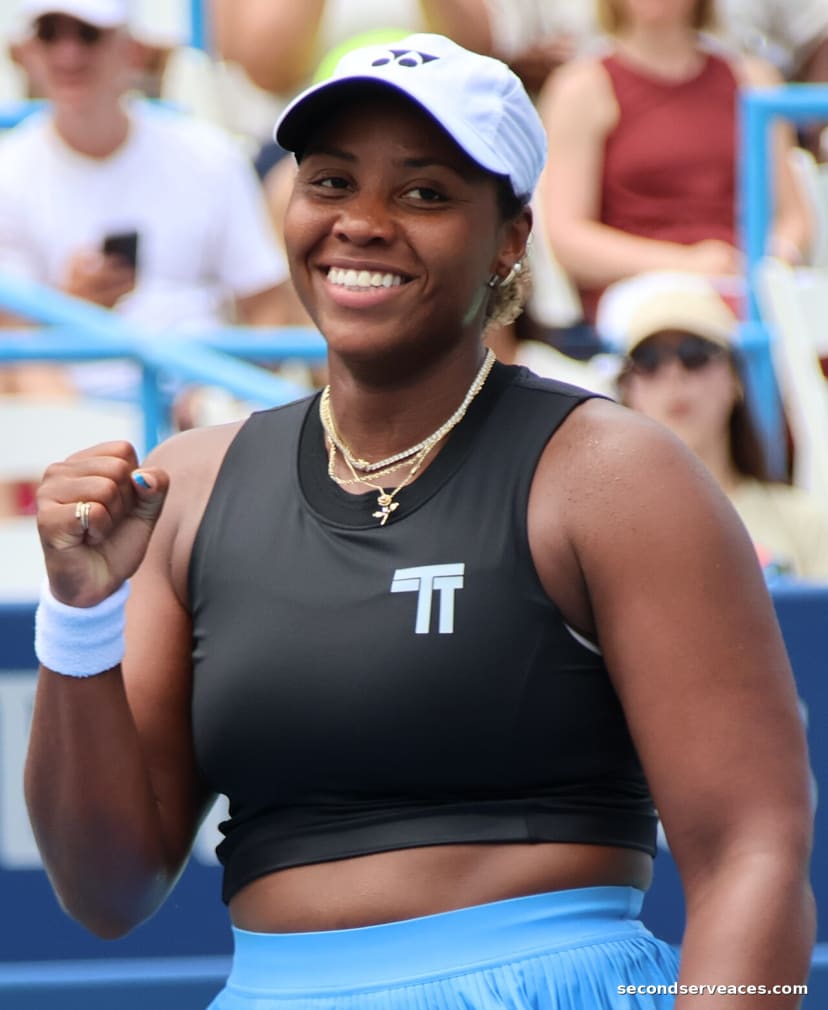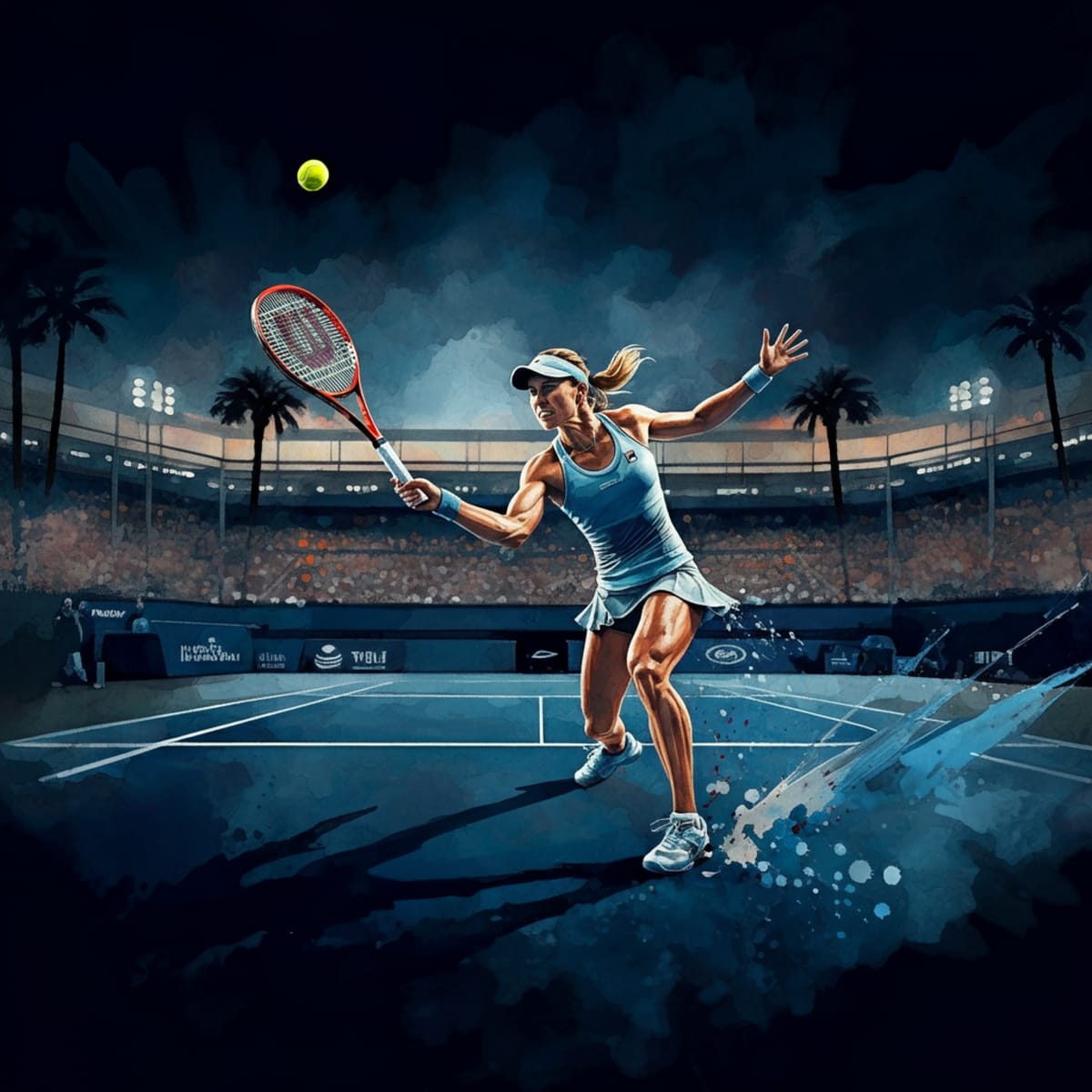
The Coachella Valley presents a unique aerodynamic paradox for the professional tennis player. During the day, the ball flies through the thin, arid desert air with terrifying velocity, only to catch violently on the high-friction Plexipave surface upon bouncing. To conquer this topography requires a specific breed of biomechanical violence. Enter Aryna Sabalenka, who has finally deciphered the algorithmic complexities of the desert, capturing her first career Indian Wells title with a deeply satisfying revenge victory over Elena Rybakina.
Listen to the Second Serve Podcast
Get our daily AI-synthesized audio briefings and match reviews on the go.
To watch these two operate on opposite sides of the net is to witness a fundamental argument about the nature of kinetic energy. Theirs is a rivalry defined by immense, concussive ball-striking, but the methodology of their power could not be more distinct. Sabalenka’s triumph in the California desert was not merely an emotional exorcism of past defeats against Rybakina; it was a physical imposition of will, an assertion of heavy topspin over linear propulsion.
The Tactical Breakdown: A Collision of Vectors
To understand the mechanics of this revenge victory, one must look at the way the ball interacts with the gritty Indian Wells surface. Rybakina is arguably the cleanest ball-striker on the WTA Tour, generating flat, penetrating groundstrokes that skid through the court. Sabalenka, conversely, operates with immense centrifugal torque, producing a heavy ball that dives and kicks, demanding that the opponent constantly adjust their strike zone.
The Topspin Versus Flat-Strike Dichotomy
Sabalenka’s path to the championship hinged on disrupting Rybakina’s preferred geometric patterns. When Rybakina is allowed to strike the ball from a stationary position at waist height, the point is effectively over. Sabalenka navigated this by manipulating the Y-axis of the rally. Consider the specific adjustments required in a matchup of this magnitude:
- Depth Over Pace: Sabalenka historically relies on overwhelming pace, but in the heavy desert evening conditions, pure pace can be absorbed and redirected. By prioritizing looping depth, Sabalenka pushed Rybakina behind the baseline, mitigating the flat trajectory of her opponent's strikes.
- The Kinetic Chain of the Return: Rybakina’s serve is a biomechanical marvel—a fluid, unreadable motion. Sabalenka managed to neutralize this by crowding the baseline on second serves, taking the ball on the rise, and utilizing the pace already embedded in the ball rather than over-swinging.
- Targeting the Extremities: The revenge narrative was fulfilled not by out-hitting Rybakina down the center, but by exploring the outer centimeters of the singles alleys, forcing Rybakina into lateral movement—the one area where the Kazakh's linear game can become structurally compromised.
There is a profound, almost terrifying beauty in watching a player like Sabalenka actively override her own basal instincts. Instead of pulling the trigger at the first sight of a short ball, she constructed points with a patient brutality, waiting for the precise geometric opening before uncoiling.
The Bigger Picture: Channeling the Centrifugal
Securing a maiden Indian Wells title is a rite of passage for the game's apex predators. Often dubbed the 'fifth Grand Slam', the tournament tests a player's stamina, their adaptability to wildly fluctuating temperatures, and their psychological resilience in one of the sport's largest stadiums. For Sabalenka, lifting this particular trophy represents a maturation of her tactical identity.
This result alters the immediate topography of the WTA hierarchy. The Sabalenka-Rybakina dynamic has blossomed into one of the most compelling stylistic clashes in modern tennis. Every time they meet, the sport is treated to a high-stakes chess match played at 100 miles per hour. A revenge victory of this caliber proves that Sabalenka is no longer just a player of immense physical gifts; she is an elite problem solver. She has learned to marry her raw, concussive power with an architect’s understanding of court geometry.
As the tour eventually transitions from the American hard courts to the European clay, this victory will serve as a psychological anchor. Sabalenka has demonstrated an evolved capacity to channel her aggression, turning what was once a chaotic storm of unforced errors into a disciplined, repeatable framework. The desert, with all its aerodynamic friction and glaring heat, has finally yielded to her geometry.
What Aryna Sabalenka Plays With
Wilson Blade 98 v9 (16x19)
Luxilon ALU Power 125
Analyze Aryna Sabalenka vs. Elena Rybakina
Predict tactical adjustments, momentum swings, and serve strategy options for this match-up using our AI simulator.
The Aces Tactical Panel
This report was curated and edited by Bhaskar Goel. Tactical analysis and technical insights were provided by our specialized panel of expert correspondents.
Julian Price
Senior Tactical Correspondent
Stuffy, pedantic British academic and historian specializing in match momentum and historical context.
Elena Cruz
Director of Analytical Research
Data scientist specializing in court surface physics and movement patterns.
Bhaskar
The Editor & Fan
Passionate tennis player and site editor bringing everyday amateur insights and relatable fan commentary.
Arthur Vance
Senior Existential Analyst
Deep, eccentric, and DFW-inspired. Models court metaphysics, kinetic beauty, and player psychology.
Leo Sterling
High-Performance Consultant
Hard-nosed ex-trainer from Melbourne with a no-nonsense view on tour fitness.