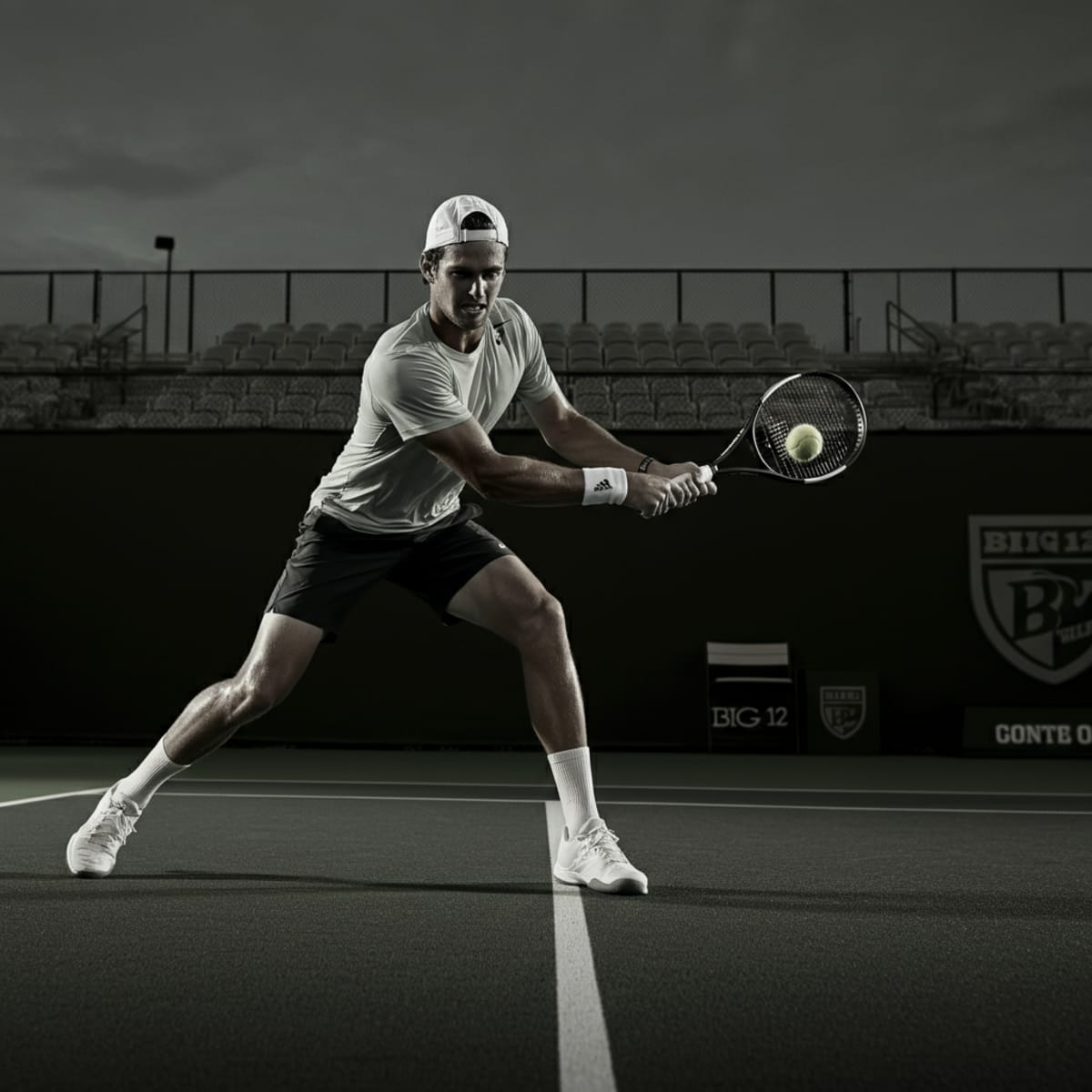
Tennis is fundamentally a sport of attrition, a ruthless equation of geometry, biomechanics, and oxygen debt. But when the thermometer hits triple digits, the game transforms from a tactical chess match into a pure, unfiltered survival test. At the LaNelle Robson Tennis Center, beneath a punishing 100-degree desert sun, the No. 15 Arizona Wildcats embraced the suffering. Stepping onto the blistering hard courts, they systematically dismantled No. 2 TCU with a decisive 4-0 match score, taking outright command of the Big 12 conference standings.
Listen to the Second Serve Podcast
Get our daily AI-synthesized audio briefings and match reviews on the go.
Out on the island of a singles court, there is nowhere to hide when the elements turn against you. Your lungs burn, the grip slips in your hand, and the ball begins to look like a fuzzy yellow blur. Yet, Arizona thrived in the furnace. This victory did not just happen in a vacuum; it was the culmination of an absolute tear through the upper echelons of collegiate tennis.
By the Numbers: The Wildcats' Relentless Run
- 11 Consecutive Victories: A streak built on supreme fitness and unyielding locker-room culture.
- 16-3 Overall Record: Arizona is peaking exactly when the schedule gets steepest.
- Three Top-30 Scalps in Seven Days: Before suffocating No. 2 TCU, the Wildcats dispatched No. 28 Columbia and ground down No. 8 Baylor.
The defining moment of the afternoon belonged to Zoran Ludoski on court No. 4. Dropping a tight first set 5-7 in that kind of suffocating heat is usually a death sentence for a player's legs and lungs. Most competitors fold, content to let the match momentum slip away in the harsh conditions. Instead, Ludoski dug his heels into the baseline, recalibrated his groundstrokes, and ripped through the next two sets 6-1, 6-2, clinching the final point before the remaining matches even needed to conclude.
The Tactical Breakdown
How do you sweep the second-ranked team in the nation without dropping a single match point? You weaponize the environment. In 100-degree heat, a hard court becomes a trampoline. The air is thinner, the balls fly faster, and heavy topspin kicks violently out of the opponent's strike zone. Arizona's roster clearly understood the assignment: elevate rally tolerance and force TCU into low-percentage, high-risk shots.
Ludoski's turnaround on court No. 4 is a textbook example of mid-match tactical evolution. After surrendering the opening set, he recognized that trading flat, linear blows from the baseline was a losing proposition in the heat. By increasing the margin over the net and utilizing aggressive court geometry, Ludoski likely pinned his opponent deep behind the baseline. Historically, when a player shifts to heavy topspin patterns in extreme heat, the opponent is forced to hit contact points above the shoulder. It drains the legs, exhausts the core, and inevitably leads to short balls.
Furthermore, sweeping a heavyweight team requires absolute discipline on break points. You cannot afford to play passive tennis when the opportunity to break serve arises. Arizona dictated the terms of engagement, moving forward to shrink the court and cutting off passing lanes with clinical net approach frequency. They turned defense into offense seamlessly, exploiting the microscopic drops in TCU's footwork as the mercury climbed.
The Bigger Picture
Taking down three top-tier programs—Columbia, Baylor, and TCU—in a single week requires more than just raw talent; it requires a collective mental fortitude that borders on the obsessive. Arizona's current 16-3 record is a testament to the brutal, behind-the-scenes fitness regimens that separate the good programs from the legendary ones.
To navigate a gauntlet of this magnitude, a collegiate team must rely on rotational depth. Relying on one or two star players is a recipe for a mid-season breakdown. The sheer volume of talent required to maintain this level of intensity is staggering. Looking at the wider ecosystem of players involved in these high-stakes duals—names like Alejandro Arcila, Cole Stelse, Filip Gustafsson, Glib Sekachov, Oliver Bonding, Jay Friend, Duncan Chan, Colton Smith, and Casper Christensen—it becomes clear that modern collegiate tennis has never been deeper or more physically demanding.
This stretch fundamentally alters the hierarchy of the Big 12. Arizona has crossed the threshold from 'dangerous underdog' to 'hunted frontrunner.' Opponents will now circle the Wildcats on their calendars, knowing that a matchup against Arizona guarantees a grueling physical war. If they can maintain this physical baseline and continue to problem-solve mid-match as Ludoski did, the Wildcats have the structural foundation to make a devastatingly deep run into the postseason. The desert is officially their domain.
Analyze Alejandro Arcila vs. Cole Stelse
Predict tactical adjustments, momentum swings, and serve strategy options for this match-up using our AI simulator.
The Aces Tactical Panel
This report was curated and edited by Bhaskar Goel. Tactical analysis and technical insights were provided by our specialized panel of expert correspondents.
Julian Price
Senior Tactical Correspondent
Stuffy, pedantic British academic and historian specializing in match momentum and historical context.
Elena Cruz
Director of Analytical Research
Data scientist specializing in court surface physics and movement patterns.
Bhaskar
The Editor & Fan
Passionate tennis player and site editor bringing everyday amateur insights and relatable fan commentary.
Arthur Vance
Senior Existential Analyst
Deep, eccentric, and DFW-inspired. Models court metaphysics, kinetic beauty, and player psychology.
Leo Sterling
High-Performance Consultant
Hard-nosed ex-trainer from Melbourne with a no-nonsense view on tour fitness.