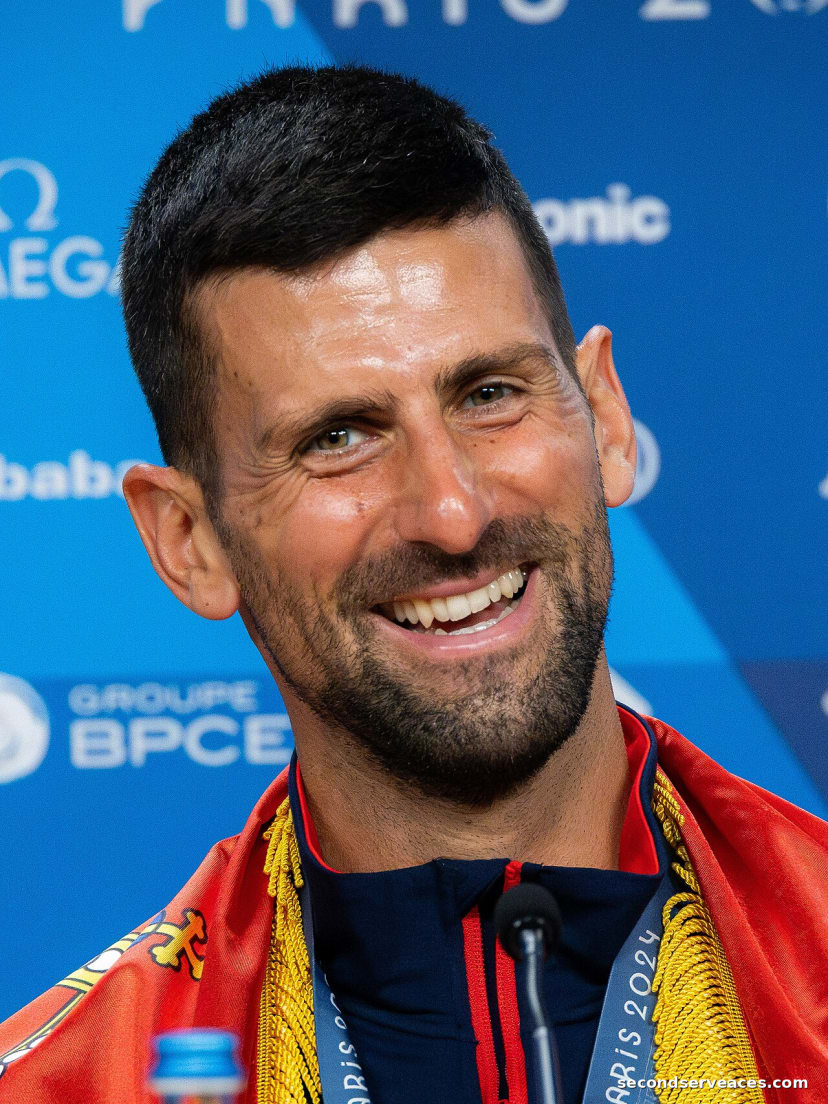
The professional tennis ecosystem is fundamentally unforgiving. The moment a marquee name steps off the gas pedal, the noise begins. Novak Djokovic will not compete at this year's Miami Open, a decision that immediately triggered a wave of unwarranted skepticism from certain corners of the tennis public. After grinding through his early spring schedule, Djokovic had initially appeared set to compete in Miami following his Indian Wells campaign. Instead, he pulled the ripcord.
Listen to the Second Serve Podcast
Get our daily AI-synthesized audio briefings and match reviews on the go.
Enter Andy Roddick. The former US Open champion expressed pointed frustration over the backlash directed at Djokovic’s withdrawal. Having navigated the brutal demands of the ATP calendar himself, Roddick understands the physical tax exacted by the sport's highest levels better than most armchair analysts. To him, the criticism isn't just unfair; it ignores the stark biological realities of a grueling, year-round tour.
According to the official updates, Djokovic withdrew from the tournament due to a right shoulder injury. While fans lament the absence of the world number one on the South Florida hard courts, examining the structural and strategic mechanics of the game reveals exactly why stepping away was the only viable move.
The Tactical Breakdown
When casual observers hear “shoulder injury,” they often imagine a mild ache. When a tennis technician hears it, they see a complete systemic collapse of a player's offensive and defensive capabilities. The right shoulder is the vital fulcrum for a right-handed player’s entire baseline strategy. Let’s dissect the mechanical toll this specific injury extracts on a hard court.
Serving on modern, high-friction surfaces requires explosive power and pinpoint accuracy. Djokovic is not a brute-force server; his effectiveness lies in disguise, location, and spin variation. If his right shoulder—specifically the rotator cuff and the deceleration muscles—is compromised, several critical tactical pillars crumble:
- The Kinetic Chain Failure: The serve relies on energy transferring from the legs, through the core, and out through the arm. A compromised shoulder halts that energy transfer, resulting in a dramatic drop in velocity and spin rate.
- Break Point Vulnerability: When facing a break point, elite players rely on their ability to hit extreme targets—the slider out wide on the ad side or the kick serve out wide on the deuce side. Without absolute shoulder stability, hitting the lines becomes a low-percentage gamble.
- Forehand Rally Tolerance: Generating heavy topspin to keep opponents pinned behind the baseline requires uninhibited shoulder rotation. If the shoulder cannot execute the necessary low-to-high swing path effortlessly, the ball lands short. On a fast hard court, a short ball is an immediate invitation for the opponent to step in and attack.
Playing defensive, grinding tennis is impossible when every aggressive forehand triggers a sharp physical consequence. Furthermore, returning high-velocity first serves requires the shoulder to act as a shock absorber. Blocking back a 130-mph serve to neutralize the point simply cannot be done effectively with structural shoulder pain. If a player cannot execute these foundational shots, match momentum completely abandons them. Trying to play through it doesn't just result in a loss; it invites severe, career-threatening damage.
The Bigger Picture
Looking at the broader landscape of the ATP Tour, Roddick’s defense of Djokovic highlights a generational shift in how elite players manage their bodies. The "Sunshine Double"—the back-to-back Masters 1000 events at Indian Wells and Miami—is notoriously punishing. Players are forced to transition from the dry, thin air of the California desert to the heavy, humid, swamp-like conditions of South Florida.
Historically, the physical toll of these two tournaments has derailed seasons. Hard courts are entirely unrelenting on the joints, sending shock absorption directly into the ankles, knees, hips, and shoulders. Roddick, whose own career was heavily impacted by the physical grind of the tour, knows that surviving professional tennis in your mid-thirties requires absolute ruthlessness regarding your schedule.
Stepping back to heal a right shoulder injury is a calculated, macro-level strategy. The European clay-court swing is looming, followed rapidly by Wimbledon and the Paris Olympics. Clay demands an even higher degree of topspin generation and muscular endurance. By sacrificing the immediate gratification of a Miami Open appearance, Djokovic is protecting his long-term viability for the majors.
Ultimately, the backlash against his withdrawal reflects a misunderstanding of elite sports pacing. Players are not machines designed for perpetual motion. Roddick speaking out serves as a necessary reality check for the sport. Sometimes, the most important tactical decision a champion can make is knowing exactly when to walk away from the baseline, pack the bags, and let the body heal.
What Novak Djokovic Plays With
Head Speed Pro
Luxilon ALU Power 125
Asics Court FF 3 Novak
Analyze Andy Roddick vs. Novak Djokovic
Predict tactical adjustments, momentum swings, and serve strategy options for this match-up using our AI simulator.
The Aces Tactical Panel
This report was curated and edited by Bhaskar Goel. Tactical analysis and technical insights were provided by our specialized panel of expert correspondents.
Julian Price
Senior Tactical Correspondent
Stuffy, pedantic British academic and historian specializing in match momentum and historical context.
Elena Cruz
Director of Analytical Research
Data scientist specializing in court surface physics and movement patterns.
Bhaskar
The Editor & Fan
Passionate tennis player and site editor bringing everyday amateur insights and relatable fan commentary.
Arthur Vance
Senior Existential Analyst
Deep, eccentric, and DFW-inspired. Models court metaphysics, kinetic beauty, and player psychology.
Leo Sterling
High-Performance Consultant
Hard-nosed ex-trainer from Melbourne with a no-nonsense view on tour fitness.