Just as the grueling clay-court season comes into focus, World No. 6 Amanda Anisimova is restructuring her inner circle. The American has officially ended her highly productive two-year coaching partnership with Hendrik Vleeshouwers, opting to navigate the upcoming Charleston Open without a permanent replacement in the box.
Listen to the Second Serve Podcast
Get our daily AI-synthesized audio briefings and match reviews on the go.
Timing a coaching change requires a delicate balancing act, especially for a player securely entrenched inside the top 10. The Vleeshouwers era was objectively transformative for Anisimova. Over their 24 months together, the Dutch coach helped refine her volatile baseline aggression into a consistently lethal weapon.
During their tenure, Anisimova's developmental milestones were undeniable:
- Climbing to a career-high ranking of World No. 3.
- Capturing two WTA 1000 titles.
- Reaching back-to-back Grand Slam finals.
Despite dropping slightly to her current position of World No. 6, the foundation built over the last two years remains structurally sound. Now, the question becomes: what tactical gaps is Anisimova trying to close by bringing in a fresh voice?
The Tactical Breakdown
Anisimova’s game is built on elite, first-strike ball striking. Her ability to take the ball preposterously early—particularly off the backhand wing—robs opponents of recovery time. When her feet are set, she possesses some of the cleanest kinetic chain mechanics on the WTA Tour, redirecting pace with minimal backswing.
What Vleeshouwers successfully injected into her game was court geometry and rally tolerance. Before his arrival, Anisimova's tendency was to pull the trigger prematurely, resulting in high unforced error counts. By shifting her return position slightly and focusing on depth over sheer velocity in neutral rallies, her baseline operations became far more sustainable.
Whoever steps into the coaching vacancy next will need a distinct understanding of her tactical non-negotiables. You do not try to turn a flat, early-timing hitter into a heavy-topspin grinder. Instead, the next phase of Anisimova's tactical evolution must focus on forward transition. If she can incorporate a higher frequency of net approaches to finish the points she dominates from the baseline, she will expend significantly less energy in the early rounds of two-week tournaments.
The Bigger Picture
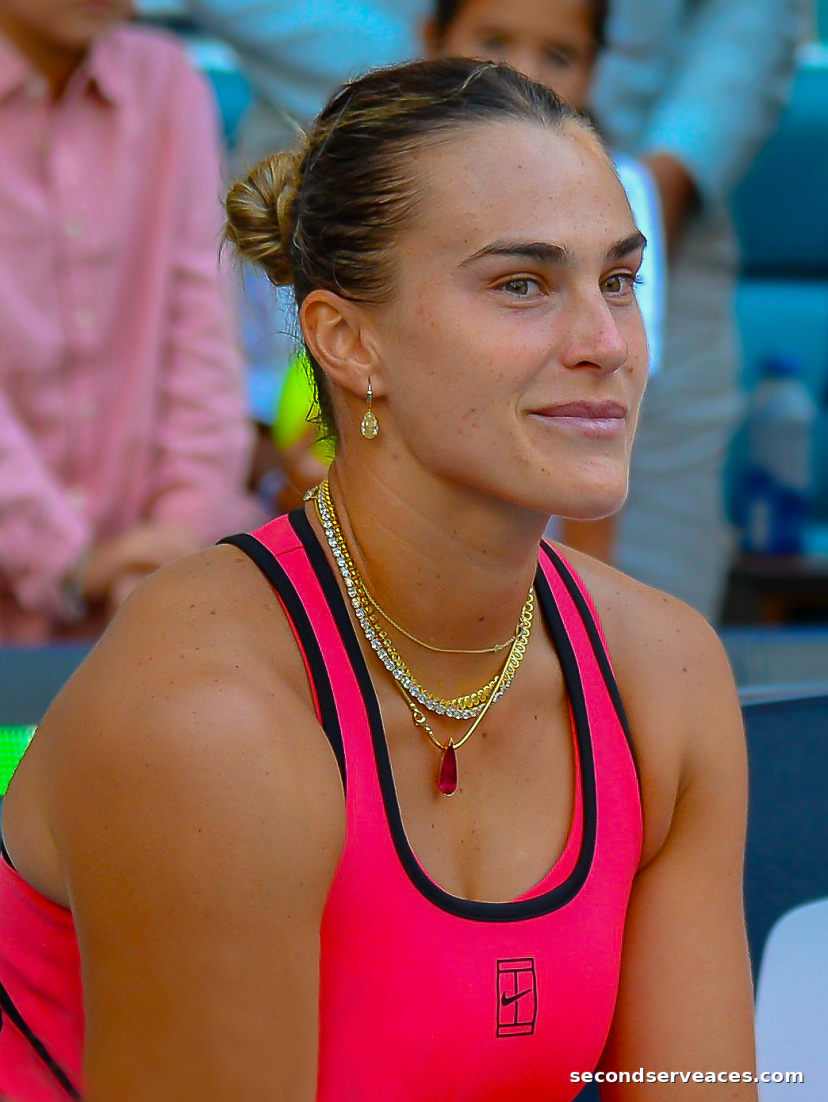
At the highest echelon of the sport, stagnation is regression. While top peers like Aryna Sabalenka and Coco Gauff continually tweak their serving mechanics and forehand grips, Anisimova's decision to shift her developmental inputs feels like a calculated move to secure a maiden Grand Slam title.
Her immediate scheduling choices reflect a veteran understanding of load management. Anisimova will enter the Charleston Open as the second seed, utilizing the unique green clay to find her footing. Crucially, she has opted to skip both the Linz and Stuttgart tournaments. This is a brilliant strategic block of rest. Clay-court tennis demands exceptional physical endurance, and by preserving her legs now, she is explicitly prioritizing deep runs at the upcoming WTA 1000 events in Madrid and Rome.
Madrid, with its higher altitude, specifically rewards Anisimova's flat, penetrative groundstrokes. The ball flies faster through the thin air, making her down-the-line backhand nearly unplayable when calibrated correctly. As she steps onto the dirt in South Carolina this week, the tennis world will be watching closely. Not just to see how she strikes the ball, but to see how she problem-solves in real-time without her trusted tactician in the stands.
What Aryna Sabalenka Plays With
Wilson Blade 98 v9 (16x19)
Luxilon ALU Power 125
Analyze Amanda Anisimova vs. Aryna Sabalenka
Predict tactical adjustments, momentum swings, and serve strategy options for this match-up using our AI simulator.
The Aces Tactical Panel
This report was curated and edited by Bhaskar Goel. Tactical analysis and technical insights were provided by our specialized panel of expert correspondents.
Julian Price
Senior Tactical Correspondent
Stuffy, pedantic British academic and historian specializing in match momentum and historical context.
Elena Cruz
Director of Analytical Research
Data scientist specializing in court surface physics and movement patterns.
Bhaskar
The Editor & Fan
Passionate tennis player and site editor bringing everyday amateur insights and relatable fan commentary.
Arthur Vance
Senior Existential Analyst
Deep, eccentric, and DFW-inspired. Models court metaphysics, kinetic beauty, and player psychology.
Leo Sterling
High-Performance Consultant
Hard-nosed ex-trainer from Melbourne with a no-nonsense view on tour fitness.