
The Washington Breakthrough and Elite Scalps
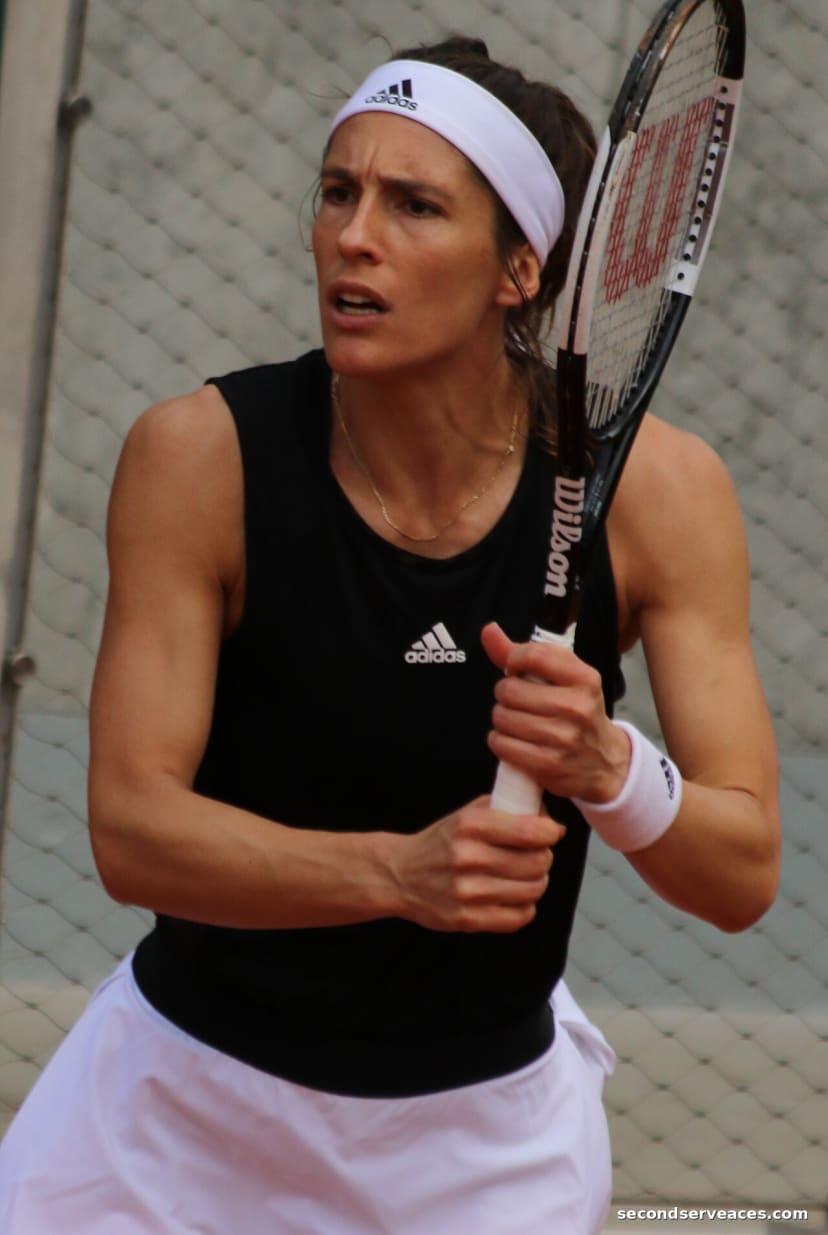
The competitive landscape of Philippine tennis shifted permanently when 21-year-old left-hander Alexandra Eala secured her maiden WTA singles title in Washington. Eala showcased her aggressive baseline playstyle, dismantling top-tier opponents with disciplined court positioning and heavy topspin. Her physical durability and high-performance racquet specs allowed her to match the heavy groundstrokes of elite opponents, proving her capability on fast-printing hard courts.
Listen to the Second Serve Podcast
Get our daily AI-synthesized audio briefings and match reviews on the go.
Following this milestone victory, Eala reached a career-high WTA ranking of world number 20, just over a year after making her Grand Slam debut at the 2025 French Open. Her progress up the global ladder, tracked closely on the official WTA rankings, marks the fastest rise of any Southeast Asian player in recent memory. By maintaining a high percentage of baseline conversion points, Eala has proven that her technical foundation can withstand the grueling demands of the professional tour.
Eala's rapid ascent has caught the attention of the locker room, drawing praise from several top-tier players. Her performance metrics and tactical consistency were highly visible during her recent North American campaign, drawing parallels to other high-stakes matchups on the tour, such as the competitive dynamics we analyzed in our coverage of the Coco Gauff praises Alexandra Eala Canadian Open clash.
Decathlon Data and the Grassroots Equipment Surge
From a gear perspective, the commercial impact of Eala's success is quantifiable. French sporting goods retailer Decathlon reported a 66 percent spike in beginner tennis racquet sales in the Philippines over the past year. This massive surge in equipment acquisition indicates that recreational players are transitionally moving from casual spectatorship to active court participation, looking for durable, high-value entry-level gear.
The technical specifications of beginner racquets sold during this spike highlight a consumer preference for lightweight, oversized graphite composite frames. These frames offer a generous sweet spot and excellent shock absorption, making them ideal for players developing their kinetic chain and swing path. For local retailers, the 'bang for buck' factor has driven inventory decisions, with mid-tier models flying off the shelves to satisfy the sudden demand.
This retail surge is not merely a temporary trend; it represents a structural shift in how recreational sports are funded at the household level in Manila. Families are investing in durable footwear, high-tension polyester strings, and training balls. The sudden commercial viability of tennis has caught local distributors by surprise, prompting rapid restocks of performance gear usually reserved for more mature tennis markets.
Overcoming the Philippine Infrastructure Deficit
Despite the massive surge in player interest, the physical infrastructure of Philippine tennis faces severe constraints. The country currently possesses fewer than 1,000 tennis courts nationwide, with many surfaces suffering from sub-optimal maintenance, cracked concrete, and inadequate lighting. This lack of quality court access represents a major bottleneck for developing consistent ball-striking habits among the newly inspired demographic.
The developmental gap is also evident in the professional ranks. Currently, there are just four ATP-ranked men representing the Philippines—none of whom sit inside the top 1,000 of the official ATP rankings. Eala stands entirely alone as the sole ranked Filipina on the WTA tour, bearing the competitive expectations of an entire nation as she navigates elite-level draws.
To maximize court efficiency under these conditions, local clubs have adopted creative scheduling and multi-use court configurations. However, training on fast, low-bouncing public concrete courts differs significantly from the uniform acrylic hard courts found on the professional circuit. For players trying to emulate Eala's heavy topspin, the lack of standardized surfaces remains a technical hurdle.
Groundbreaking on the National Tennis Centre north of Manila
To address these structural limitations, the Philippine Tennis Association (PhilTA) has finalized plans to break ground this year on a National Tennis Centre located north of Manila. This state-of-the-art facility is designed to serve as the high-performance hub for the nation's elite juniors. By centralizing coaching resources and physical therapy equipment, the center aims to streamline the developmental pathway.
The centerpiece of this development is an 8,000-capacity stadium court designed to meet international broadcasting and playing specifications. The stadium will feature modern acrylic cushioning layers to reduce joint stress, alongside advanced LED lighting arrays to allow for night matches. This infrastructure upgrade will position the Philippines to host future ITF and WTA-level events, bringing professional competition directly to local fans.
For young players, having a centralized training facility with multiple court surfaces is a major asset. Access to clay and standard hard courts will allow athletes to develop versatile sliding techniques and tactical adaptability without needing to travel abroad. This long-term investment could finally bridge the gap between recreational enthusiasm and professional execution.
Rivalry Matchup & Player Profiles
To understand the technical baseline of Alexandra Eala's success, we can compare her profile directly with Naomi Osaka, whom she defeated during her historic run to the Washington title.
| Metric | Alexandra Eala | Naomi Osaka |
|---|---|---|
| WTA Rank | 20 | 13 |
| Age | 21 | 28 |
| Country | Philippines | Japan |
| Height | 1.75 m (5 ft 9 in) | 1.80 m (5 ft 11 in) |
| Handedness | Left-handed | Right-handed |
| Play Style | Aggressive baseliner | Aggressive baseliner |
| Career Titles | 1 WTA Tour, 2 WTA 125 | 7 WTA Tour (4 Grand Slams) |
Alexandra Eala leads their professional head-to-head record 1-0, following her 6-4, 6-2 victory over Naomi Osaka in the semifinals of the 2026 Mubadala DC Open. Eala's left-handed forehand proved highly effective in breaking down Osaka's backhand wing, utilizing wide angles to pull the former world number one off the court. The tactical matchup highlighted Eala's ability to absorb heavy pace and redirect the ball early on the rise.
While Osaka possesses superior raw serve speed and extensive big-stage experience, Eala's lateral movement and defensive transition allowed her to neutralize the Japanese star's first-strike tennis. This head-to-head dynamic demonstrates that Eala's technical specifications are fully equipped to handle the heavy ball of modern hardcourt champions, setting a high standard for the future of Philippine tennis.
Essential Matchday Add-Ons
Tournament-tested accessories and high-frequency consumables every competitive player keeps in their bag.
Tourna Grip Original Dry Feel Overgrip (10-Pack)
4.8 ★ (12,000+ reviews)
The gold standard for sweaty hands. Proprietary dry feel absorbs moisture better as play intensifies.
Luxilon ALU Power 125 Silver String Set
4.9 ★ (3,500+ reviews)
Unrivaled control and spin potential used by over 50% of the ATP Top 100 players.
Babolat Custom Damp Vibration Dampener (2-Pack)
4.7 ★ (4,200+ reviews)
Customizable dampening with removable central O-ring for fine-tuning court feedback and sound.
Penn Championship Extra Duty Tennis Balls (4-Can Pack)
4.7 ★ (8,900+ reviews)
Official ball of USTA League Tennis with extra-duty felt designed for abrasive hard courts.
Analyze Alexandra Eala vs. Naomi Osaka
Predict tactical adjustments, momentum swings, and serve strategy options for this match-up using our AI simulator.
The Aces Tactical Panel
This report was curated and edited by Bhaskar Goel. Tactical analysis and technical insights were provided by our specialized panel of expert correspondents.
Julian Price
Senior Tactical Correspondent
Stuffy, pedantic British academic and historian specializing in match momentum and historical context.
Elena Cruz
Director of Analytical Research
Data scientist specializing in court surface physics and movement patterns.
Bhaskar
The Editor & Fan
Passionate tennis player and site editor bringing everyday amateur insights and relatable fan commentary.
Arthur Vance
Senior Existential Analyst
Deep, eccentric, and DFW-inspired. Models court metaphysics, kinetic beauty, and player psychology.
Leo Sterling
High-Performance Consultant
Hard-nosed ex-trainer from Melbourne with a no-nonsense view on tour fitness.
Related Reports


Quick Answers
What is Alexandra Eala's career-high WTA ranking?+
Alexandra Eala reached a career-high WTA ranking of world number 20, just over a year after making her Grand Slam debut at the 2025 French Open.
Which top players did Alexandra Eala defeat to win her first WTA title?+
Eala defeated former world number one Naomi Osaka and top-ten staple Jessica Pegula en route to her maiden WTA title in Washington.
How is the Philippines addressing its shortage of tennis infrastructure?+
The Philippine Tennis Association plans to break ground this year on a National Tennis Centre north of Manila, featuring an 8,000-capacity stadium.