Alexandra Eala Enters Stuttgart Open Main Draw After Zheng Withdrawal
The Stuttgart Open landscape shifted significantly this week as Alexandra Eala secured a direct entry into the main draw. The opportunity arises following the unfortunate injury-related withdrawal of Qinwen Zheng, allowing Eala to bypass the rigorous qualifying rounds when play commences on April 13. For Eala, who recently navigated a challenging exit at the hands of Karolina Muchova in Miami—a result that saw her drop 17 spots in the WTA rankings—this transition to the Stuttgart clay provides an immediate chance to recalibrate her season.
Listen to the Second Serve Podcast
Get our daily AI-synthesized audio briefings and match reviews on the go.
The Tactical Breakdown
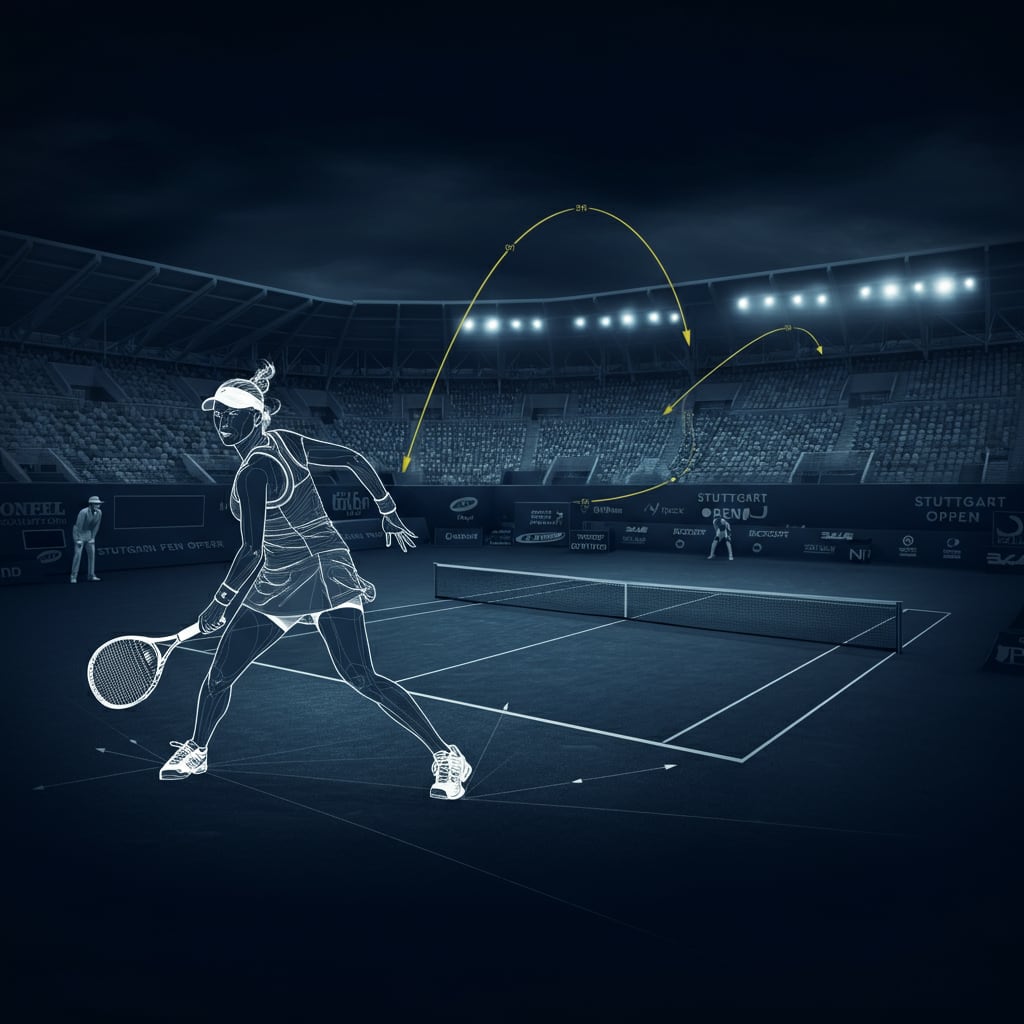
Stuttgart, historically defined by its indoor clay surface, demands a specific brand of tennis. Unlike the abrasive, high-bounce outdoor clay of Roland Garros, the Porsche Tennis Grand Prix rewards players who can manipulate court geometry indoors. Eala’s game must emphasize depth and spin-induced redirection to navigate this surface.
- Rally Tolerance: Indoor clay allows for a slightly faster pace than outdoor variations, meaning players like Eala must prioritize high-percentage targets during baseline exchanges.
- Serve Placement: Given the surface, the serve isn't just about pace; it’s about opening up the court. Players must target the T to compress the opponent’s return window, specifically avoiding short balls that allow an opponent to dictate via inside-out forehands.
- Net Transitions: Success in Stuttgart often belongs to those who use the clay to set up short balls, inviting them to transition forward and close at the net—a hallmark of the style championed by players like Martina Navratilova or Betty Stöve in the tournament’s early years.
The Bigger Picture
The Stuttgart Open is a tournament steeped in tradition, originating in 1978 when matches were contested on indoor carpet. The legacy of the event is synonymous with legends like Tracy Austin, who captured four consecutive titles between 1978 and 1981, setting a standard for consistency on this unique surface. For Eala, competing in this environment is a vital developmental checkpoint.
After the volatility of the Miami hard-court swing and the subsequent ranking adjustment, Eala’s ability to pivot quickly to clay will define her spring trajectory. Much like the tactical evolution seen in players like Jannik Sinner or the court craft of legends like Roger Federer, Eala must demonstrate that her recent ranking movement is merely a statistical variance, not a permanent plateau. Stuttgart serves as a proving ground; the pressure is immediate, but the opportunity to reset against a high-caliber field is exactly what a rising player needs to reclaim momentum.
What Carlos Alcaraz Plays With
Babolat Pure Aero 98
Babolat RPM Blast 1.30
Babolat VS Original (12-Pack)
Nike Vapor Pro 2
Analyze Alexandra Eala vs. Karolina Muchova
Predict tactical adjustments, momentum swings, and serve strategy options for this match-up using our AI simulator.
The Aces Tactical Panel
This report was curated and edited by Bhaskar Goel. Tactical analysis and technical insights were provided by our specialized panel of expert correspondents.
Julian Price
Senior Tactical Correspondent
Stuffy, pedantic British academic and historian specializing in match momentum and historical context.
Elena Cruz
Director of Analytical Research
Data scientist specializing in court surface physics and movement patterns.
Bhaskar
The Editor & Fan
Passionate tennis player and site editor bringing everyday amateur insights and relatable fan commentary.
Arthur Vance
Senior Existential Analyst
Deep, eccentric, and DFW-inspired. Models court metaphysics, kinetic beauty, and player psychology.
Leo Sterling
High-Performance Consultant
Hard-nosed ex-trainer from Melbourne with a no-nonsense view on tour fitness.