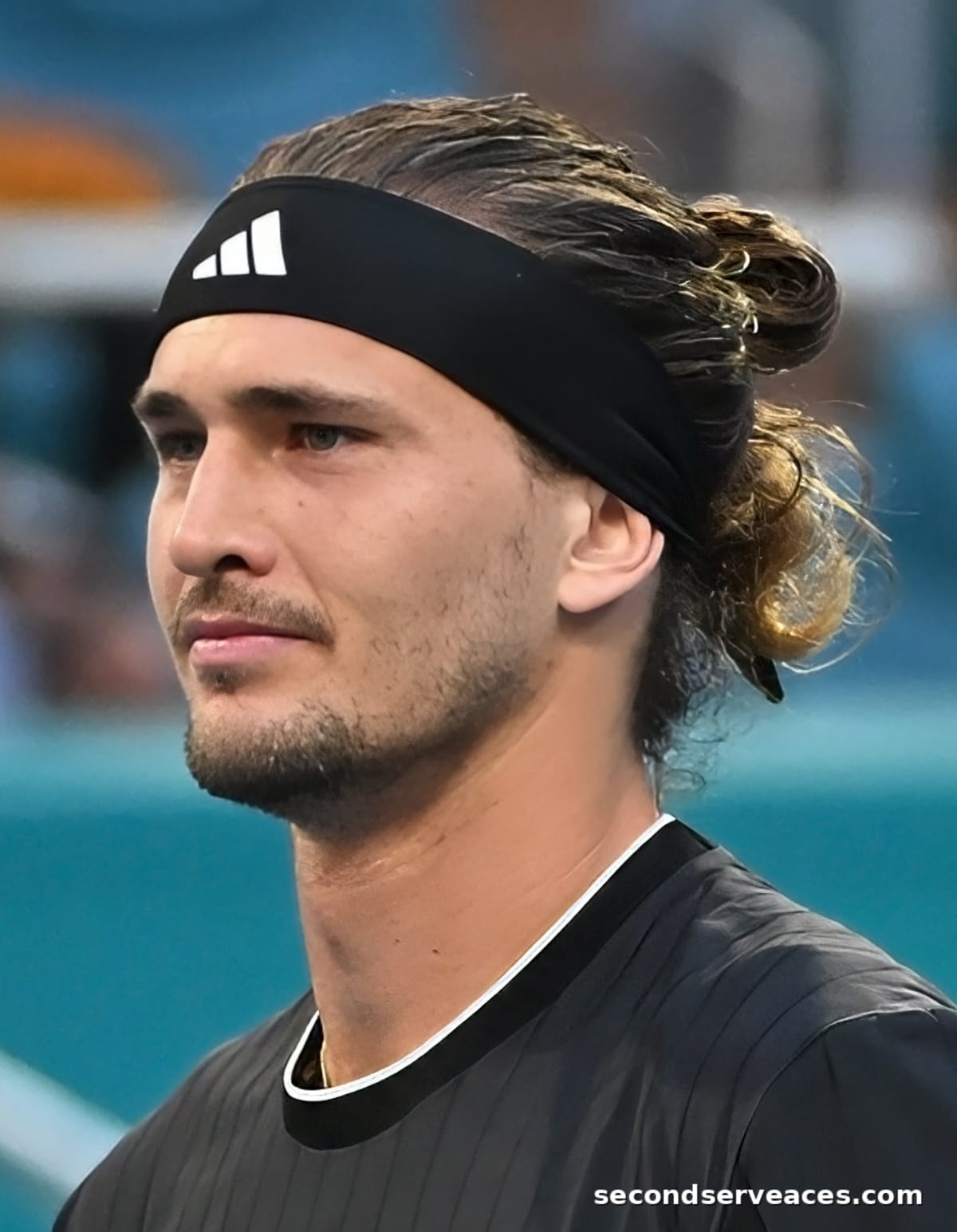
It is a rare pleasure in the modern era to witness a Grand Slam final contested with such rigorous adherence to strategic discipline. In a clash of contrasting styles on the blue hard courts of Flushing Meadows, Alexander Zverev defeated Ben Shelton 6-3, 7-6, 5-7, 6-2 to secure his second major singles title of the 2026 season. The German, currently positioned at No. 2 in the ATP rankings, showcased the methodical baseline mastery that has defined his exceptional 25-2 Grand Slam match record this year.
Listen to the Second Serve Podcast
Get our daily AI-synthesized audio briefings and match reviews on the go.
While the flamboyant American youngster attempted to disrupt the tempo with his trademark athletic surges, Zverev’s veteran poise ultimately dictated the terms of engagement. By neutralizing Shelton's explosive serve and exploiting the open court, the German completed a sensational hard-court campaign, adding the New York trophy to his Roland Garros triumph and his runner-up finish on the lawns of Wimbledon.
The Opening Salvo: Zverev Establishes Baseline Dominance in the First Set
From the opening game, Zverev sought to establish physical ascendancy from the back of the court. Standing well behind the baseline to absorb Shelton's high-velocity deliveries, the German utilized his cross-court backhand to lock the young left-hander into grueling, multi-shot rallies. Zverev manipulated the court geometry with superb depth, preventing Shelton from stepping inside the baseline to dictate with his heavy forehand.
Shelton, who had reached his maiden Major final after engineering a brilliant quarterfinal victory over Carlos Alcaraz—as detailed in our analysis of the biggest upsets of the 2026 US Open—struggled early with his footing and shot selection. A costly string of unforced errors in the fourth game handed Zverev the crucial break. The German consolidated with clinical efficiency, losing a mere four points on his first serve to take the opening set 6-3 in a swift thirty-eight minutes.
The Mid-Match Crucible: A High-Stakes Second-Set Tiebreak
The second set offered a far more compelling tactical puzzle. Shelton adjusted his service placement, employing a slice wide to Zverev’s forehand wing to pull the tall German out of his comfort zone. The American’s serving numbers improved dramatically, aided by his ability to save two break points at 3-3 with courageous net rushes. The baseline exchanges grew increasingly intense, reminiscent of the classic, physical battles of 1970s Forest Hills, though played at a modern, hyper-accelerated tempo.
With neither player yielding on serve, the set progressed to a tiebreak. It was here that Zverev’s experience proved decisive. While Shelton attempted high-risk winners, Zverev remained a model of consistency, drawing errors with deep, central depth. A brilliant backhand passing shot down the line gave Zverev the mini-break, and he closed out the tiebreak seven points to four to establish a commanding two-set lead, as we noted in our comprehensive championship analysis.
The Left-Handed Resurgence: Shelton Strikes Back in the Third Set
Refusing to capitulate before his home crowd, the 23-year-old American began the third set with renewed vigor. Shelton began incorporating more variety, using his heavy topspin forehand to push Zverev deep before drop-shotting with delicate touch. His serve, reminiscent of the legendary Roscoe Tanner's left-handed thunder, began finding the corners of the service box with unerring accuracy, keeping the German off-balance.
Zverev’s intensity dipped slightly, particularly on his second-serve delivery, where he began to surrender court position. Serving at 5-6, the German committed consecutive forehand errors under pressure, handing Shelton his first break of the match. The Arthur Ashe crowd erupted as the American secured the set 7-5, momentarily shifting the match momentum and forcing a fourth set.
The Final Ascent: Zverev Reasserts Control to Seal the Match
Any thoughts of a dramatic five-set comeback were quickly dispelled by Zverev's business-like start to the fourth set. The German reestablished his baseline metronome, eliminating unforced errors and targeting Shelton's backhand wing. According to official statistics from the ATP Tour, Zverev won 82% of his first-serve points throughout the contest, a metric that shielded him from further break-point pressure.
Shelton’s physical exertions from earlier rounds began to take an obvious toll. His first-serve percentage plummeted to 48% in the fourth set, allowing Zverev to tee off on second-serve returns. The German broke in the third and fifth games, cruising to a 6-2 conclusion to secure the title. The victory cements Zverev's status as the dominant force of the 2026 season, marking his 26th career singles title.
## Rivalry Matchup & Player Profiles| Metric | Alexander Zverev | Ben Shelton |
|---|---|---|
| Rank | No. 2 | No. 4 |
| Country | Germany | United States |
| Age | 29 | 23 |
| Height | 6 ft 6 in (1.98 m) | 6 ft 4 in (1.93 m) |
| Handedness | Right-handed | Left-handed |
| Play Style | Aggressive baseliner | Aggressive all-court player |
| Career Titles | 26 | 7 |
The rivalry between Alexander Zverev and Ben Shelton continues to be dominated by the German, who now holds a perfect 6-0 head-to-head record against the young American. Despite Shelton's rapid ascent to the No. 4 ranking and his explosive athletic capabilities, Zverev’s defensive capabilities and superior baseline depth have consistently neutralised Shelton’s aggressive, all-court game style.
Their encounter in the 2026 final at the US Open represents their most prestigious matchup to date. While Shelton proved he has the weapons to trouble the very best by defeating the defending champion and Carlos Alcaraz en route to the final, Zverev's tactical consistency and experience in best-of-five-set finals remain the benchmark that the young American must strive to reach.
What Alexander Zverev Plays With
Head Gravity Pro
Head Hawk Touch 1.25
Analyze Alexander Zverev vs. Ben Shelton
Predict tactical adjustments, momentum swings, and serve strategy options for this match-up using our AI simulator.
The Aces Tactical Panel
This report was curated and edited by Bhaskar Goel. Tactical analysis and technical insights were provided by our specialized panel of expert correspondents.
Julian Price
Senior Tactical Correspondent
Stuffy, pedantic British academic and historian specializing in match momentum and historical context.
Elena Cruz
Director of Analytical Research
Data scientist specializing in court surface physics and movement patterns.
Bhaskar
The Editor & Fan
Passionate tennis player and site editor bringing everyday amateur insights and relatable fan commentary.
Arthur Vance
Senior Existential Analyst
Deep, eccentric, and DFW-inspired. Models court metaphysics, kinetic beauty, and player psychology.
Leo Sterling
High-Performance Consultant
Hard-nosed ex-trainer from Melbourne with a no-nonsense view on tour fitness.
Related Reports

Quick Answers
What was the final score of the 2026 US Open men's final?+
Alexander Zverev defeated Ben Shelton 6-3, 7-6, 5-7, 6-2 to win the title.
What was Alexander Zverev's Grand Slam match record in the 2026 season?+
Zverev compiled an impressive 25-2 record across the four Grand Slam tournaments in 2026.
How many Grand Slam titles did Alexander Zverev win in 2026?+
Zverev won two Grand Slam titles in 2026, capturing trophies at both Roland Garros and the US Open.