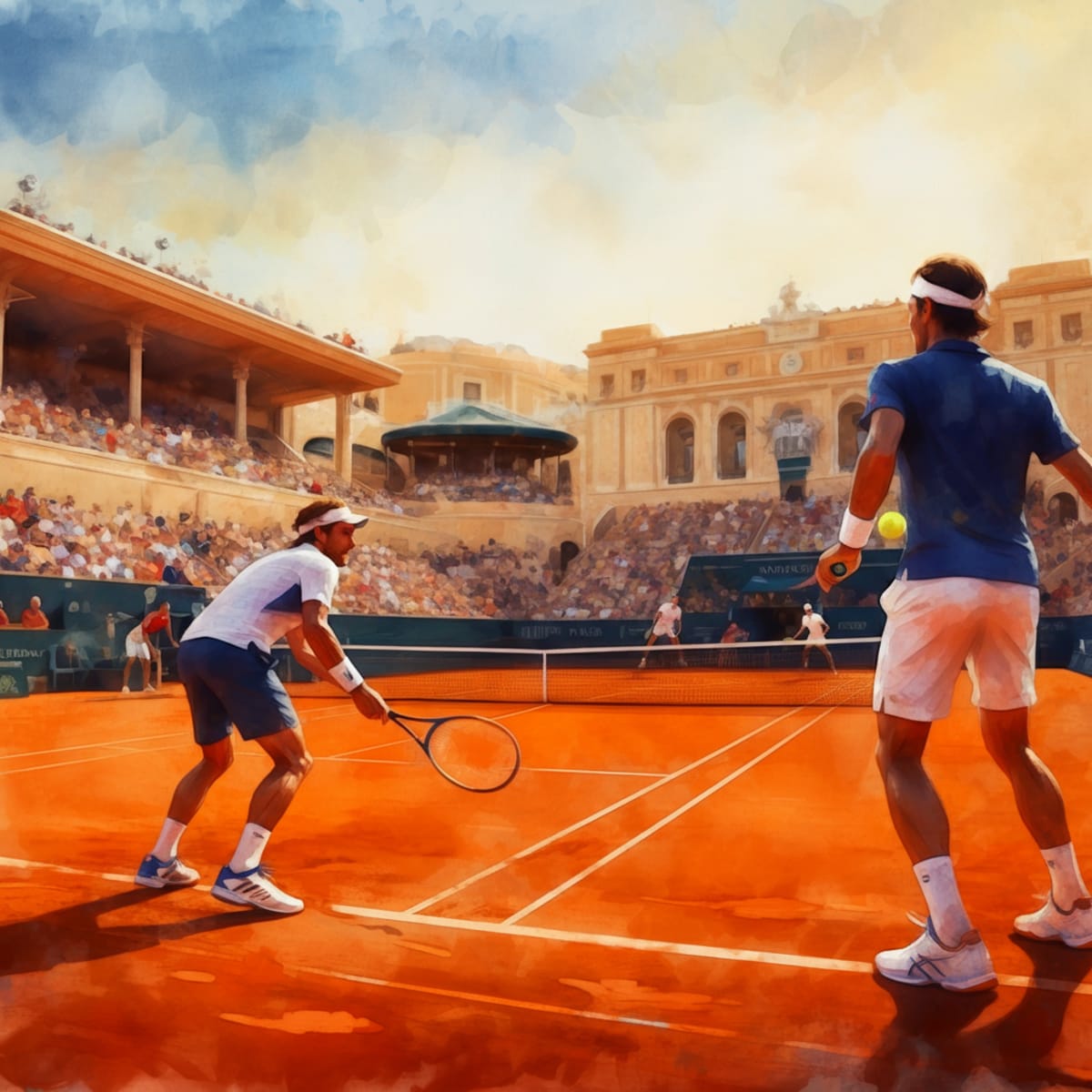
The weight of the world No. 1 ranking hangs heavy on the clay of Monte Carlo.
In the granular, pulverized orange dust of the Monte-Carlo Masters, geometry takes on a heavy, physical urgency. On April 12, 2026, at 2pm BST, two architects of the modern game—Carlos Alcaraz and Jannik Sinner—will contest a final that is less a match and more a territorial dispute over the future of the ATP Tour. With the world No. 1 ranking currently flickering in the balance, this is high-stakes physics.
The Semifinal Foundation
Alcaraz enters the final after a 6-4, 6-4 dismissal of Valentin Vacherot. It was a clinical, rhythmic performance that underscored his ability to manipulate the court’s bounce, treating the clay surface as a canvas for high-velocity topspin. Conversely, Sinner’s 6-1, 6-4 clinical dismantling of Alexander Zverev was a master-class in mechanical efficiency. Remarkably, Sinner did not face a single break point, turning Zverev’s serve-heavy strategy into a series of static, unthreatening sequences.
A Rivalry of Fine Margins
The historical ledger currently stands at 10-6 in favor of Alcaraz. Yet, looking at the raw numerical output, one observes the narrowing gap. These two young men possess an intuitive understanding of match momentum that few peers can replicate. For Sinner, the path is existential: a victory here is not merely a tournament win; it is a displacement of the current guard, pushing him to the zenith of the global rankings.
The Physics of the Final
When these two clash, the ball often travels in arcs that defy traditional coaching manual expectations. The clay court slows the kinetic energy just enough to allow both players to reset their foundations, yet neither is content to engage in a war of attrition. We are looking at a contest of pure force versus tactical spatial management. Can Alcaraz force the error, or will Sinner’s pristine service metrics hold firm under the singular pressure of a championship point?
The Aces Tactical Panel
This report was curated and edited by Bhaskar Goel. Tactical analysis and technical insights were provided by our specialized panel of expert correspondents.
Julian Price
Senior Tactical Correspondent
Distinguished British academic and historian specializing in match momentum.
Elena Cruz
Director of Analytical Research
Data scientist specializing in court surface physics and movement patterns.
Marcus Thorne
Global Tour Insider
Veteran reporter with deep ties to the global ATP/WTA locker rooms since '98.
Arthur Vance
Technical Equipment Analyst
Former club player obsessed with technical specs, racket tension, and underdog grit.
Leo Sterling
High-Performance Consultant
Hard-nosed ex-trainer from Melbourne with a no-nonsense view on tour fitness.