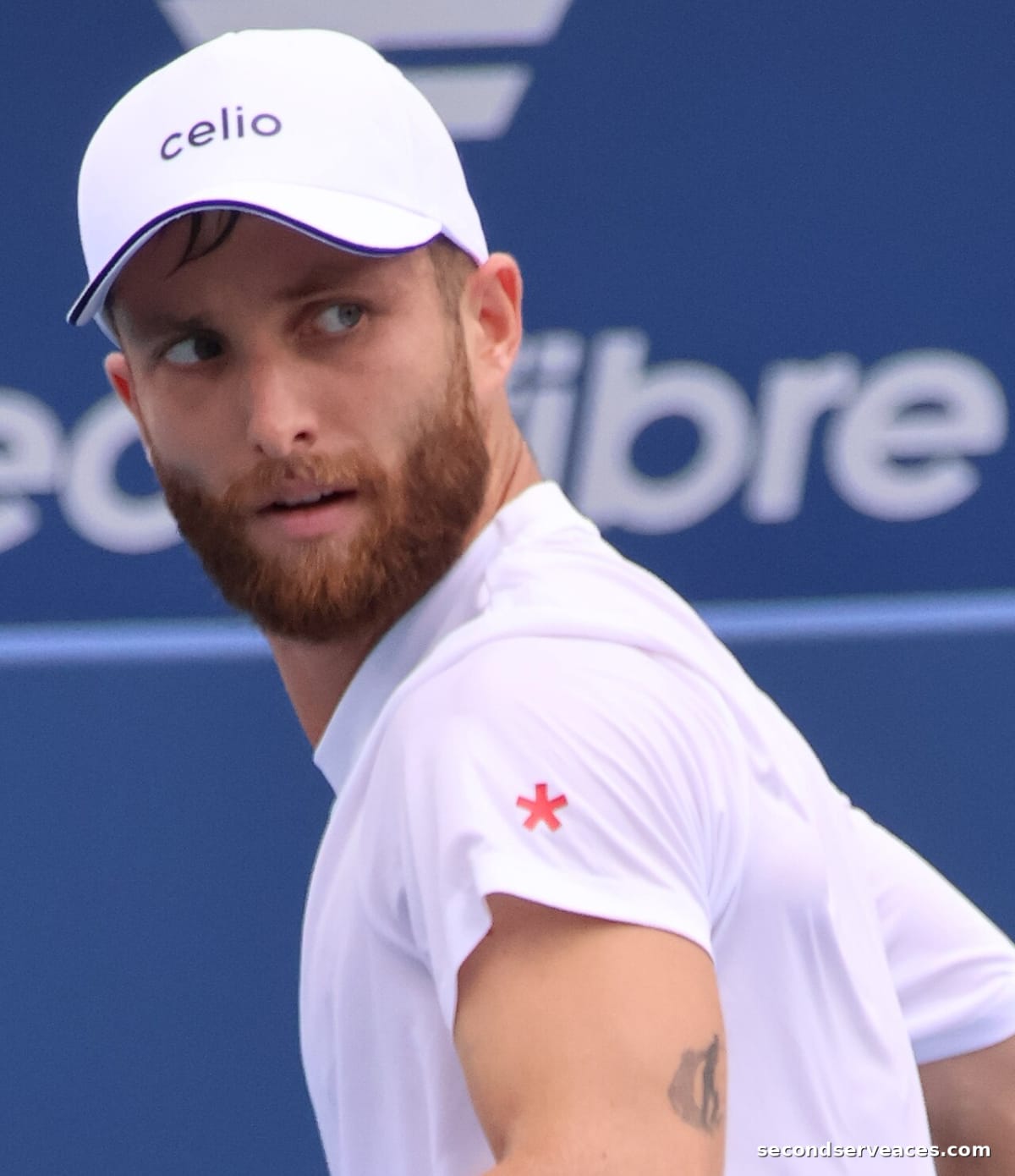
The physical toll of the North American summer hardcourt swing has reached its seasonal tipping point. Ahead of the final Grand Slam of the year, a staggering 12 players have officially withdrawn from the ATP Winston-Salem tournament, opting to preserve their physical durability. This massive exodus highlights the delicate balance modern professionals must strike between securing match play and risking repetitive strain injuries on unforgiving, high-friction outdoor hard courts.
Listen to the Second Serve Podcast
Get our daily AI-synthesized audio briefings and match reviews on the go.
High-Volume Attrition Reshapes the Winston-Salem Grid
Arthur Rinderknech leads the list of absentees as the highest-ranked withdrawal at World No. 29. The Frenchman's decision to pull out opens up a major vacancy in the upper tiers of the bracket. When top-30 players withdraw, it completely alters the seeding distribution, giving lower-ranked competitors a direct path to deeper rounds without facing heavy-hitting baseline ball-strikers in the opening matches.
To fill these sudden vacancies, the tournament has integrated high-caliber alternates into the main draw. Players like Marcos Giron, the ultra-powerful server Giovanni Mpetshi Perricard, and clay-court specialist Francisco Comesana have gained direct entry. This influx of fresh legs introduces contrasting tactical styles, moving the draw's dynamic from a war of attrition to a showcase of high-velocity serving and varied court positioning.
For fans and analysts tracking the physical wear and tear of the tour, these late-summer changes are a reminder of how grueling the hardcourt transition can be. Players who spent the early summer sliding on clay and grass must suddenly adapt to the abrupt stopping forces of acrylic surfaces, which place immense stress on the patellar tendons and lower back joints.
The Physical Cost of Late-Summer Hardcourt Momentum
The physical demands of the summer swing are perfectly illustrated by Thiago Agustin Tirante. The Argentine withdrew following back-to-back grueling campaigns at the ATP Masters 1000 events in Montreal and Ohio. These deep runs, which demanded high-intensity baseline movement on hot, high-bounce surfaces, propelled Tirante to a career-high ranking of No. 41. However, the heavy workload took its toll, forcing him to prioritize recovery over immediate competitive play.
According to the official ATP rankings, Tirante's rise to No. 41 is a testament to his aggressive baseline style, but maintaining that ranking requires careful scheduling. Playing consecutive weeks on high-friction hard courts can lead to micro-tears in the tendons and chronic fatigue. For a player who relies on explosive first serves and heavy topspin forehands, resting before the major in New York is the mathematically sound decision for long-term durability.
Similarly, Jaime Faria has experienced a rapid rise that necessitated a strategic pause. Faria reached a career-high ranking of No. 70 after navigating the qualifying draw to reach the round of 16 in Ohio. His run was highlighted by a stunning upset over world-class left-hander Ben Shelton, a match where Faria converted 60% of his break point opportunities and won 78% of his first-serve points. We recently detailed Shelton's tactical trajectory in our analysis of the Ben Shelton Canadian Open victory and his upcoming prospects, which underscores how physical fatigue can impact even the tour's most explosive servers.
Tactical Advantages for the Fresh Alternates
The entry of Giovanni Mpetshi Perricard completely rewires the service dynamics of his section of the draw. Averaging over 18 aces per match on fast hard courts, Mpetshi Perricard relies on a stiff 18x20 string pattern to control his flat, 140 mph first serves. His presence means opponents cannot rely on comfortable rhythm-building rallies; instead, they must excel in block-return efficiency and maximize their rare break point chances.
Marcos Giron brings a completely different tactical profile to the table. Known for his low-to-the-ground court coverage and exceptional counter-punching durability, Giron excels at redirecting pace. On the medium-fast Winston-Salem courts, his ability to absorb heavy groundstrokes and transition from defense to offense with flat down-the-line backhands makes him a highly dangerous alternate. He converts break points at a solid 41% clip, making him a nightmare for opponents who struggle with consistency.
Francisco Comesana rounds out the notable alternate entries, bringing his heavy-topspin clay-court pedigree to the North American hard courts. While hard courts offer less natural slide, Comesana's extreme western forehand grip allows him to generate high clearance over the net, forcing opponents back behind the baseline. This structural variety among the alternates ensures that the remaining seeded players will face highly unpredictable tactical matchups in every single round.
Rivalry Matchup & Player Profiles
| Metric | Corentin Moutet | Thiago Agustin Tirante |
|---|---|---|
| Rank | 60 | 50 |
| Age | 27 | 25 |
| Country | France | Argentina |
| Height | 5'11" (180 cm) | 6'1" (185 cm) |
| Handedness | Left-handed | Right-handed |
| Play Style | Creative variety (slice, drop shots, tactical positioning) | Aggressive baseliner (powerful groundstrokes, strong serve) |
| Career Titles | 0 | 0 |
Moutet's creative variety, featuring heavy slice, drop shots, and tactical court positioning, contrasts sharply with Tirante's aggressive baseline power. Although Tirante has withdrawn from the event, understanding their tactical profile is essential for analyzing the hardcourt swing. Moutet leads their head-to-head record 1-0, having won their only professional meeting in a tight three-setter (6-3, 6-7, 6-2) at the 2024 Santiago Open.
In that Santiago matchup, Moutet's tactical use of the low slice disrupted Tirante's strike zone, limiting the Argentine's ability to dictate with his heavy forehand. Moutet converted 5 out of 9 break points (55%) while winning 71% of his first-serve points. Tirante's aggressive groundstrokes generated 32 winners but were offset by 38 unforced errors, demonstrating how Moutet's defensive geometry can frustrate high-powered baseliners.
As the tour transitions to New York, both players represent contrasting philosophies of "bang for buck" tennis. Moutet's low-impact, creative style preserves physical durability, allowing him to play longer schedules without severe injury risk. Tirante, conversely, invests massive physical output into every strike, a high-risk, high-reward approach that yielded his career-high No. 41 ranking but ultimately forced his withdrawal from Winston-Salem.
What Ben Shelton Plays With
Yonex Ezone 98 (7th Gen)
Yonex Poly Tour Pro 125
Yonex Super Grap (12-Pack)
Analyze Corentin Moutet vs. Thiago Agustin Tirante
Predict tactical adjustments, momentum swings, and serve strategy options for this match-up using our AI simulator.
The Aces Tactical Panel
This report was curated and edited by Bhaskar Goel. Tactical analysis and technical insights were provided by our specialized panel of expert correspondents.
Julian Price
Senior Tactical Correspondent
Stuffy, pedantic British academic and historian specializing in match momentum and historical context.
Elena Cruz
Director of Analytical Research
Data scientist specializing in court surface physics and movement patterns.
Bhaskar
The Editor & Fan
Passionate tennis player and site editor bringing everyday amateur insights and relatable fan commentary.
Arthur Vance
Senior Existential Analyst
Deep, eccentric, and DFW-inspired. Models court metaphysics, kinetic beauty, and player psychology.
Leo Sterling
High-Performance Consultant
Hard-nosed ex-trainer from Melbourne with a no-nonsense view on tour fitness.
Related Reports
Quick Answers
Why did Thiago Agustin Tirante withdraw from the ATP Winston-Salem tournament?+
Tirante withdrew to recover and preserve his physical durability after back-to-back deep runs in Montreal and Ohio that pushed him to a career-high ranking of No. 41.
Who is the highest-ranked player to withdraw from the tournament?+
Arthur Rinderknech is the highest-ranked player to withdraw, entering the tournament week ranked No. 29 in the world.
Which players entered the main draw as alternates following the 12 withdrawals?+
Marcos Giron, Giovanni Mpetshi Perricard, and Francisco Comesana entered the main draw as alternates.